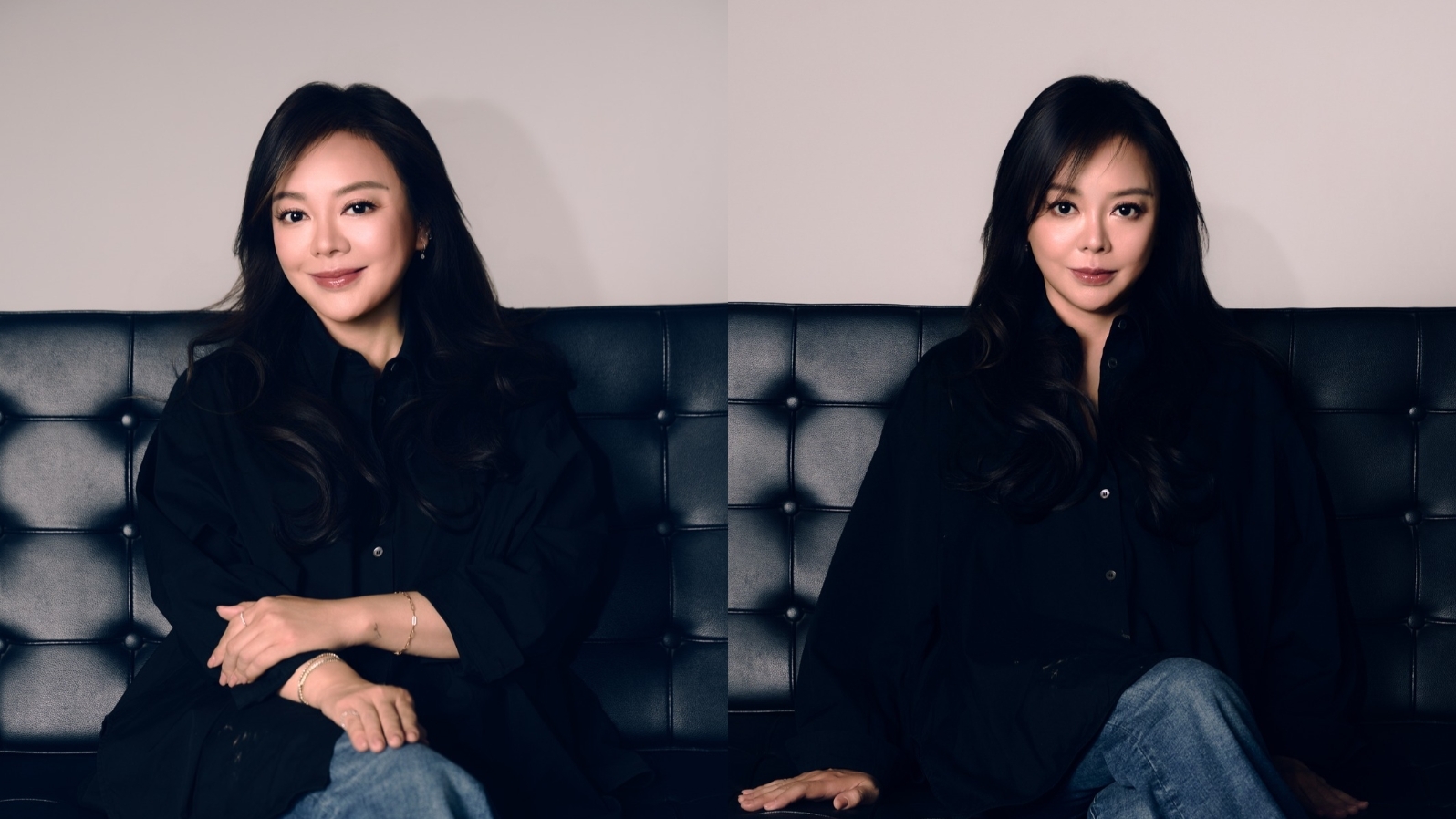
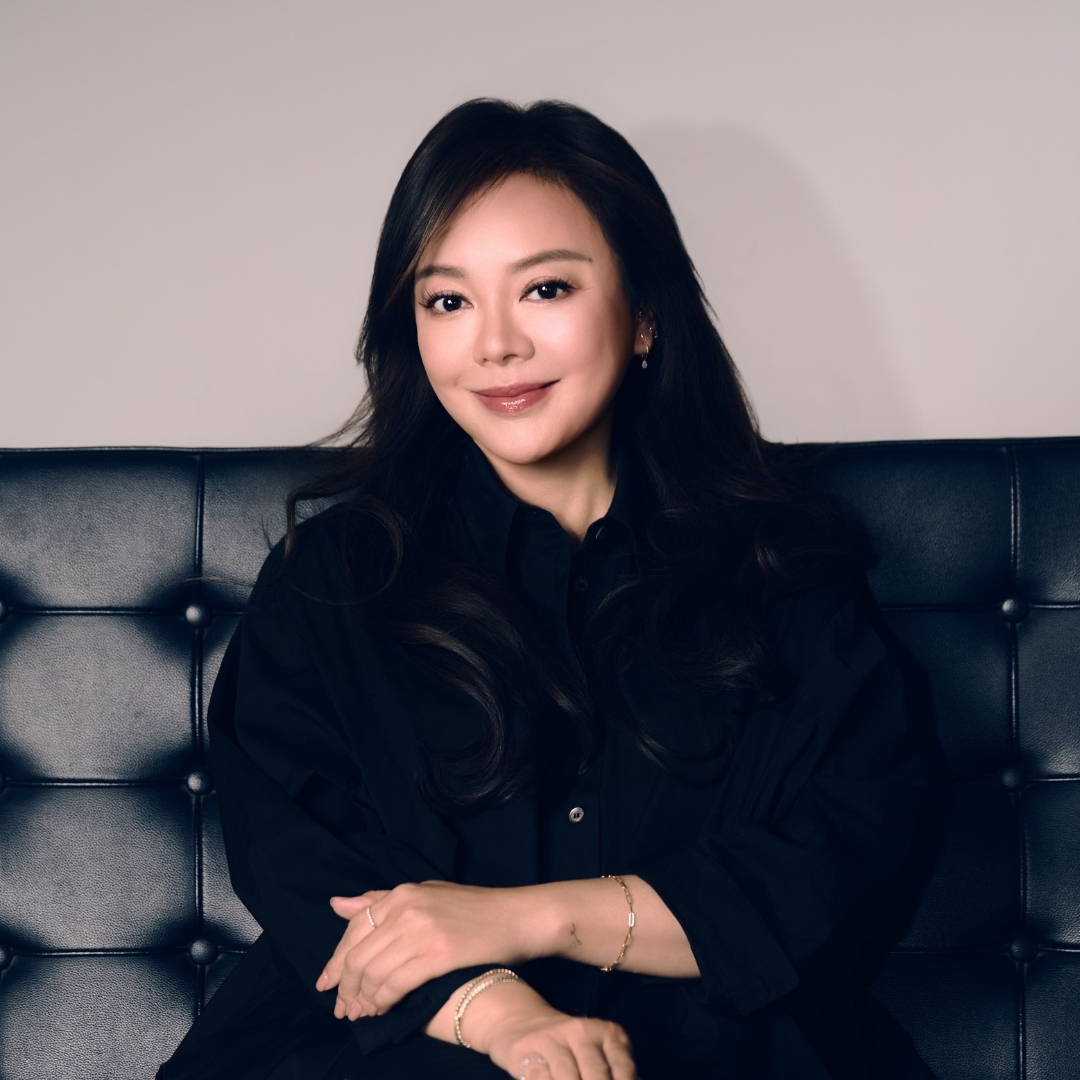
Erika Chen: Decoding Beauty

There is nothing particularly glamorous about the way Erika Chen chooses a product. She does not start with the packaging or the campaign, but rather with a question she has been asking since her days registering cancer drugs: does the science actually hold up?
Text: Caroline Tam
Photo: Victor
Art direction: Sol So
Connecting the Dots: Science, Salons, and Scale
Erika's route into the beauty distribution space was never conventional, shaped by a trajectory spanning four distinct vantage points: biologist, trichologist, salon franchise owner, and global brand distributor. A self-proclaimed beauty junkie, Erika grew up obsessed with hair and skincare ("even when I was, like, 14, 15, I'll be in my room, doing my hair") and initially dreamed of becoming a doctor. The idea of spending a decade studying in a lab coat put her off. "I wanted to be a doctor, but I didn't want to wear a lab coat," she laughs. Her scientific curiosity led her instead to pivot into pharmaceuticals, where she worked in drug registration for cancer treatments and coordinated clinical trials. In that world, she notes, "there's no gray": either the data supports the claim or it does not. That training never left her.
Yet, her love for beauty and hair care was a constant parallel. Wanting to apply her scientific foundation more directly to her passions, she trained as a certified trichologist, gaining a clinical framework for scalp and hair health. After marrying and having children, she found herself spending more and more time in salons. This led her into the operational side of the industry as a partner for the master franchise of Tony & Guy in Hong Kong, running salons for a decade. The experience gave her a rare operational perspective. "You could have the best product, but it's not adapted... if it's not used by the stylists, then the product is just a product," she notes.

Managing creative stylists eventually wore her down. When she sold her shares, she told herself she would never do hair again. The declaration did not last, and she soon forayed into product distribution. Distribution offered a different relationship with the same world: she could still work with stylists and products, but without the daily personnel management.
"Lab vs. Label"
Science remains her filter. "The science has to be a science story," Erika emphasizes. When evaluating a brand, the first test is personal: would she use it herself, and would she recommend it even if there were no commercial relationship? Then, she looks at mechanism, active ingredients, and whether the clinical numbers come from accredited third-party testing rather than a brand's own marketing survey.
She is particularly wary of products that simply rebottle standard ingredients like basic oils under a new green or clean label and call it innovation. "There's no creative process. There's no R&D process behind it. You're just rewording it." What still excites her are patented ingredients, new delivery systems, and the acceleration coming from biotech and AI-driven research. "I still get really excited when I figure out why something works and how it works."
Credibility is paramount. If a partner asks her to stand behind a claim she cannot defend chemically, she walks away. Her standard is simple: "Belief and proof come first, then the business."
Education, she insists, matters more than the sale. When she trains her team or speaks to stylists she focuses on why a product works on the scalp or the hair shaft, and when it will not. For everyday consumers standing in a crowded retail aisle, cutting through the noise can feel overwhelming. Erika encourages people to look beyond marketing jargon. She breaks it into five practical habits: first, decide whether the problem is scalp or hair, as they need different solutions; second, look for the named ingredient and the specific job it is supposed to do rather than vague terms like "strengthen" or "repair"; third, ask who measured the results and under what conditions; fourth, run your own test for a few weeks and see whether the benefit survives washing; fifth, be sceptical of any product that claims to do everything, and of any marketing that leans on fear or FOMO.

The same honesty extends to how she builds her own company. Running a franchise, she says, supplies a ready-made system and brand equity; the job is consistency. Building from scratch is different. "I am the brand. Every conversation with a principal, a retailer, a stylist, build my credibility. And there's no safety net." The culture she wants is one in which the team can explain the science and also say, honestly, when a product is not right for a particular salon or client. "I want a team that can explain why a product works and can say honestly when it won't, and doesn't oversell."
Leadership, Community, and Finding Balance
The industry she works in is still largely male-dominated on the brand and distribution side, though the retail floor is full of capable women. Erika has long hired mostly women and offers part-time arrangements so that staff who marry or have children do not feel forced to leave. She values the wider circle she has found in networks such as the JES Network, where professional women come together to exchange experiences, trade stories of both success and failure without performance, and support peers who successfully balance complex careers and family life. "Everybody's supporting each other."
For Erika, balance lies in daily small rituals: doing her own hair and makeup every morning, listening to music while walking through Central, the occasional mindless scroll. "I need these little happy moments in my life," she explains. Big moments are rare; the small ones keep the stress from swallowing everything. Erika's professional philosophy, which has followed her through her days as a biologist, trichologist, salon operator, and distributor, is grounded in genuine passion: "Do what you love, love what you do". The rest, she adds, follows if you are lucky enough to keep the work interesting and the knowledge flowing. "Life is fair, you have to work hard," she says. "Working hard doesn't guarantee success, but if you don't work hard, there's no success at all."

In five years, Erika hopes she is still doing exactly that: finding products whose science she can stand behind, sharing the knowledge, and treating every brand she represents as if it were her own. "I hope that I'll still be able to work with amazing friends, and share the knowledge, spread the love. I still want to do that."