Karen Chan, Chankalun: The Neon Girl Lighting Hong Kong's Future

The streets of Hong Kong used to hum after dark. Not just with the chatter of night markets or the clatter of mahjong tiles, but with something electrifying: a constant, low buzz from thousands of neon tubes.
Red for dai pai dong stalls, green for herbal tea shops, pink and blue cascading in vertical stacks three stories high, cantilevering over sidewalks, turning rain-slicked alleys into liquid light; the electric canopy was the city's unspoken language, a chaotic script that announced everything from pawn shops to late-night fortune tellers. Walking underneath it, you felt the city breathing: ambitious, unapologetic.
Today, that signature glow has dimmed to near extinction. Government safety crackdowns since around 2010, coupled with cheaper LED alternatives and aging infrastructure, have stripped away most of the estimated 120,000 signboards that once defined Hong Kong's nightscape. Recent accounts suggest that fewer than 500 traditional neon signs have survived; some estimates put the number even lower, around a few hundred or less, with many clustered in quieter corners of Yau Tsim Mong, a reminder of a language the city is slowly forgetting.
Preserving the Light
Yet the glow of neon refuses to fade. In galleries, design hubs, and a few stubborn workshops, a quieter revival is underway, shifting from commercial signage into deliberate craft: hand-bent glass, rare gases, bodies leaning into ribbon burners at precise angles now carry new meanings of memory, cultural identity, and even environmental commentary as a new generation reclaims the medium. Preservation groups like Tetra Neon Exchange salvage and restore heritage pieces; since its founding in 2020, the non-profit has received nearly 60 signs, with collections continuing into recent years, though exact updated totals remain fluid amid ongoing removals. Exhibitions such as Luminous Neon at the Hong Kong Design Centre's DX hub display rescued icons, like those from Golden Phoenix Grill Restaurant, Tai Ping Koon, Nam Cheong Pawn Shop, and others, alongside modern works, creating a visual dialogue between eras and sparking public reflection on craft and urban heritage. Books, films, and community mapping efforts argue for adaptation rather than pure nostalgia, ensuring the glow persists in new forms.
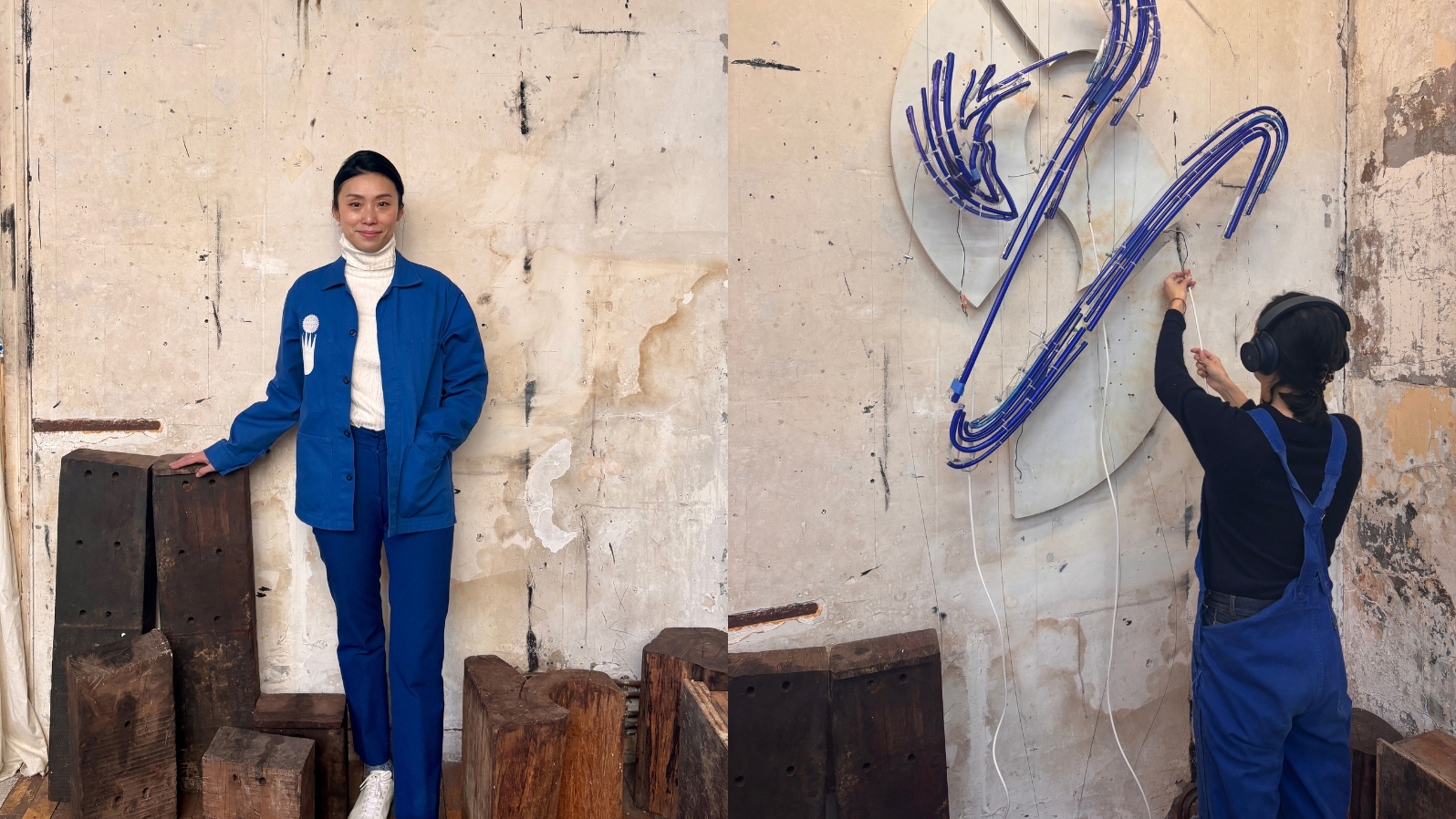
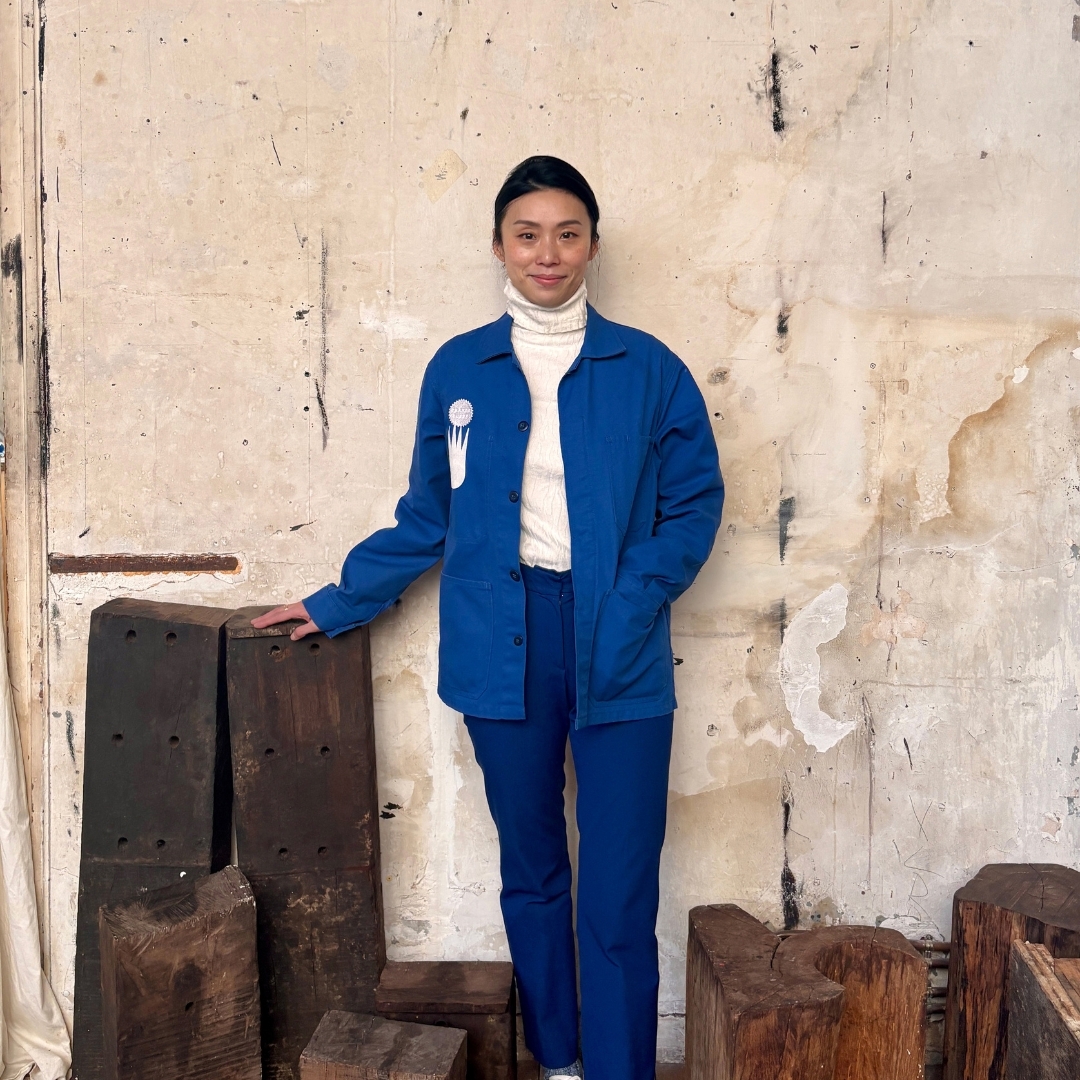
Among these efforts is neon artist Chankalun (Karen Chan), a Hong Kong-born artist who now splits her time between Paris and her home city, whose path traces both the decline and the stubborn persistence of this fading tradition.
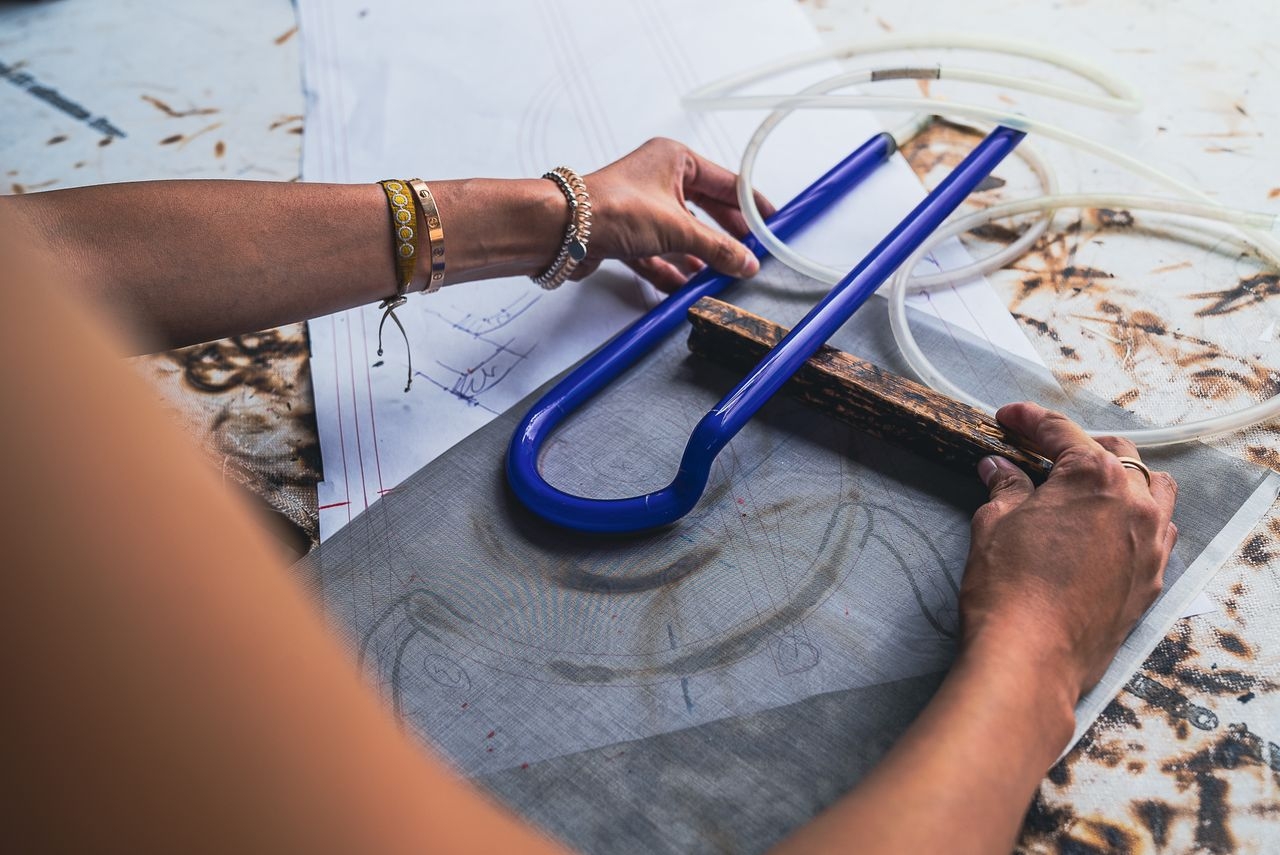
Photo Credit: July Brunner
The Neon Girl
Karen grew up watching those signs flicker outside her window. As a child, she trained in ballet from age six, drawn less to the dance itself than to the stagecraft: how lights and sets could pivot in seconds, rewriting the mood of an entire story. "I started performing ballet on stage when I was six," Karen recalls. "I was fascinated by how set design could change in seconds and completely shift the mood of a story. That early exposure to theatre: light, timing, atmosphere, quietly shaped how I think as an artist today."
That theatrical instinct carried her into set design studies in London and MFA Design and Technology in New York and Paris, then back to Hong Kong where, in 2018, she curated and organized the group exhibition My Light, My Hood at Hong Kong Art Space and Tai Kwun, a group show where six artists interpreted Hong Kong through different media. A veteran local neon master, Master Wong, framed their works in glowing tubes or added lightning bolts of neon to canvas. Conversations with him and the artists revealed neon's dual nature: constrained yet endlessly malleable. The combination hooked her.
Curiosity turned to immersion. Neon's barriers: its danger, its shrinking supply chains, and its male-dominated workshops only sharpened her resolve. She apprenticed with Master Huang Shun-Lo in Taiwan, learned precision bending in the Netherlands from Remy de Feyter, studied France's unique glass and fabrication traditions where neon technology was born in 1910, and trained formally at Lycée Dorian in Paris, earning a national certification amid French high-schoolers. In 2025, she dedicated herself fully to neon, stepping away from design jobs to focus on bending and creation. Through her project The Neon Girl, she documented techniques across six regions: Hong Kong, Taiwan, Japan, the U.S., France, the Netherlands, mapping how geography and history shape the craft. Recent works include pieces like Evening Sun on Lion Rock and Dawn of Lion Rock, shown at Art Basel Hong Kong's UBS Art Studio, paying homage to the city's resilient spirit through hand-bent forms symbolizing determination and unity.

Seeking Perfection Within Imperfection
Nowadays, her process starts with language. She studies ancient Chinese radicals and oracle-bone scripts, writing cursive forms repeatedly in ink until a gesture feels alive. That imperfect stroke then becomes a technical plan for bending. Karen treats tradition as a discipline, not a style. "Neon demands precision. Every bend is planned, every mistake is expensive." Meanwhile, Chinese calligraphy taught her something opposite: "how raw emotion and imperfection carry meaning, and how mistakes can become the work rather than ruin it," Karen explains.
The tension between calligraphy's raw emotion and neon's exacting physics defines her philosophy: "seeking perfection within imperfection." Time-based pieces like Terre evolve across installations in Oxford, Brussels, and Paris, incorporating heat marks, fingerprints, transport scars, each version carrying its history rather than aspiring to frozen perfection. "Each installation records its own making," Karen notes. "Like language and the brain, the work doesn't return to a fixed state; it changes as a living body. Terre survives through revision rather than perfection, carrying old and new forms at once."
Sustainability infuses her method. Neon, when properly made, is durable and repairable: "I design for disassembly, reuse hardware when possible, avoid disposable spectacle, and treat each installation as an evolving object that carries its own history rather than needing to be 'perfect' every time." Documentation, such as detailed notes on bends, gases, voltages, becomes preservation in itself, ensuring works can outlive their first showing. Light as Air, commissioned by La Prairie for Art Basel Hong Kong, repurposed recycled glass bottles into a floating piece whose brightness responded to real-time air quality data from Montreux. "What stayed with me most was how it broke expectations as part of my goals: many visitors told me they assumed a 'large neon installation' would be colorful, graphic, or slogan-like," she recalls. Rather, it was sculptural, interactive, and created in different shades of white, "poetic in a way they didn't associate with neon."
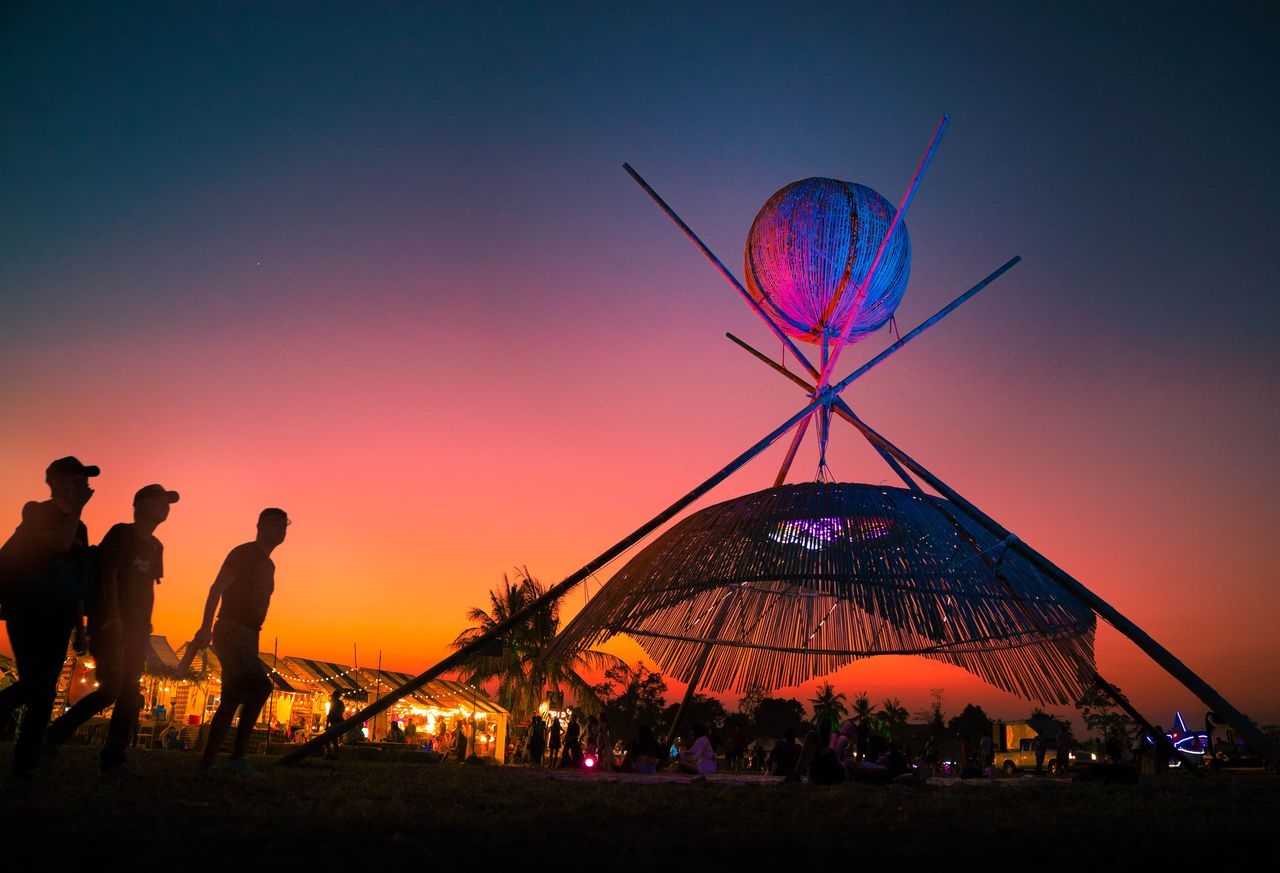
Photo Credit: Haiijaii Project
Reclaiming Neon
Back in Hong Kong, she co-founded HKCRAFTS, a non-profit dedicated to safeguarding endangered local crafts: birdcage making, mahjong carving, and, inevitably, neon. "Neon will only become rarer, and that scarcity will force a decision: either it becomes pure nostalgia, or it evolves as a contemporary craft with new contexts," Karen says. "I'm interested in the second path." Preserving Hong Kong's neon culture, she argues, does not mean copying old sign aesthetics. Instead, it means carrying forward the intelligence of the craft: "its speed, ingenuity, and street-born language, while giving it new content: vulnerability, care, and complexity that speaks to contemporary life, including women's experiences."
Through workshops and events, it opens doors for others, especially women, to enter trades long gated by tradition and access. Karen teaches at Parsons Paris and leads participatory projects that link art and design to empathy, urban identity, and observation. Technical ownership, she argues, liberates ideas from gatekeepers. "When you can design, bend, and build with your own hands, your ideas aren't limited by who is available—or who takes you seriously."
Hong Kong's streets may never regain their full neon density: LEDs are efficient, regulations are strict, economics are unforgiving. But in studios, exhibitions, and the hands of artists like Chankalun, neon endures as something more intimate: a handmade script of light and memory, bent by hands determined to keep the city's glow alive.
(Hero Image: Courtesy of l'AiR Arts)