Mia Heller's Magnetic Solution to Remove Microplastics from Water

While most people might see changing a water filter as just another annoying task to add to the to-do list, 18-year-old Mia Heller, a high school student from Warrenton, Virginia, saw a design flaw that begged for a better solution.
After watching her mother repeatedly replace membrane-based water filters, 18-year-old Mia turned her garage into a makeshift laboratory and vowed find a way to eliminate microplastics from drinking water without relying on the costly, high-maintenance membranes that plague existing systems. By 2025, she had successfully prototyped a machine capable of removing approximately 96 percent of microplastics from drinking water, earning accolades at the Regeneron International Science and Engineering Fair along the way.

The Microplastic Problem
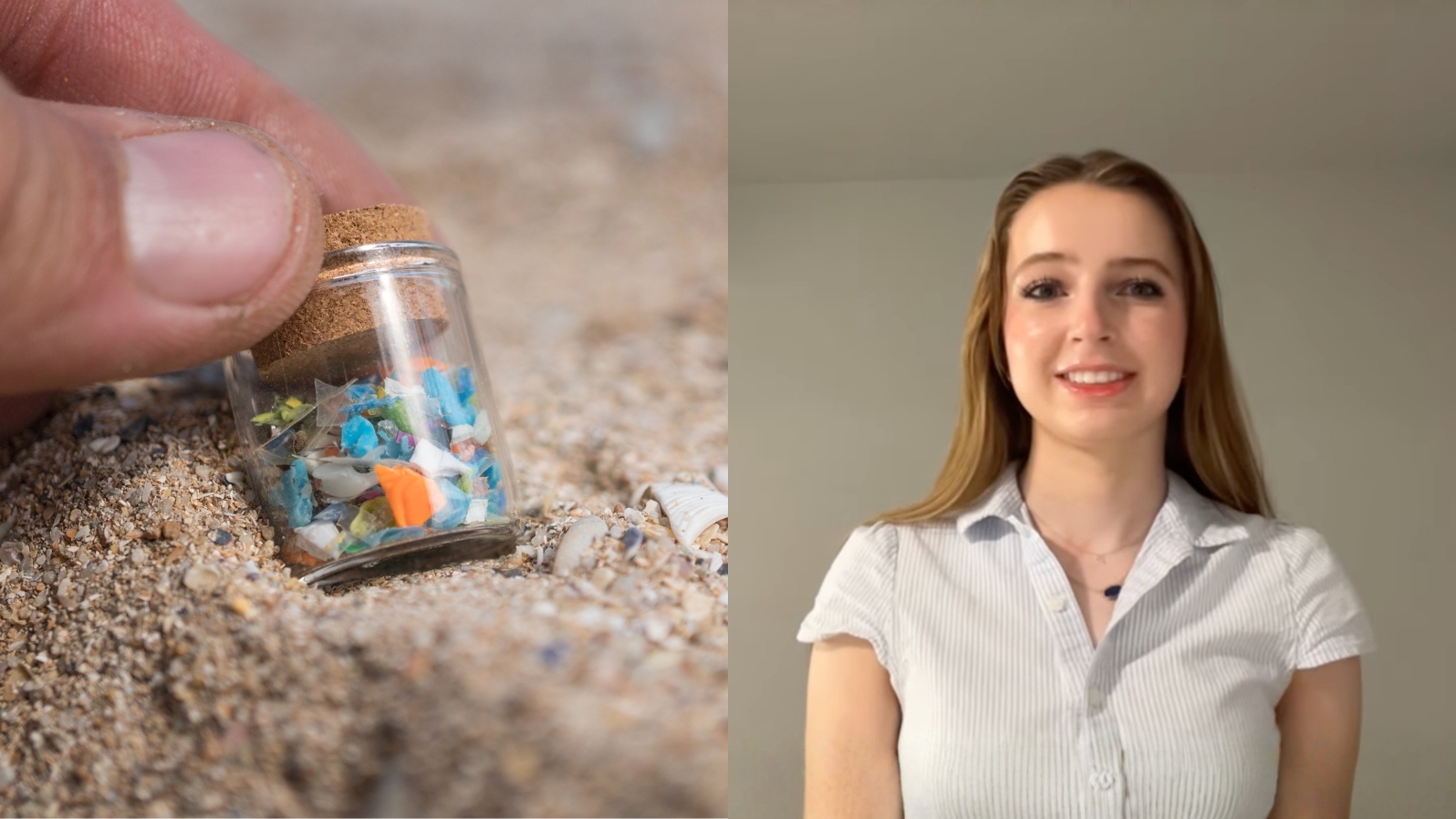
The idea was born from a local news report on PFAS and microplastic contamination in her community's water supply. Defined by the EPA as particles ranging from nanometers to five millimeters in size, microplastics originate from two primary sources: primary microplastics, which are intentionally manufactured for products like cosmetics or biomedical tools, and secondary microplastics, which result from the breakdown of larger plastic items like bottles, bags, and synthetic clothing.
These particles have been detected in over 1,300 species, including humans, with presence confirmed in brain tissue, placenta, testes, and other organs. Recent studies indicate that concentrations in human brain tissue have increased by about 50 percent in less than a decade, coinciding with rising global plastic production. While the medical community is still debating the full extent of the long-term health risks, early indicators suggest potential links to serious issues, including hormonal disruptions, cardiovascular disease, and neurological problems.
As plastic production continues to rise, so does the concentration of these particles in human daily intake. For many, relying on government-funded infrastructure isn't a viable option, making the need for accessible, at-home filtration more pressing than ever.
A Magnetic Leap Forward
Mia's path to a solution began with a realization that current water treatment methods were inefficient and overly reliant on expensive, solid membranes. She envisioned a system that could achieve the same results without the constant cycle of buying and throwing away used filters.
A student at Kettle Run High School with advanced coursework at Mountain Vista Governor's School in math, science, and technology, Mia channeled her curiosity into hands-on experimentation. By the summer of 2025, she was conducting tests in her garage and kitchen, ultimately developing a system based on ferrofluid: a magnetic, oil-based liquid that acted as a binding agent.
In the prototype she developed, the system works in a sophisticated, three-module setup that operates much like a closed-loop circuit. First, ferrofluid binds to microplastic particles as water passes through the device. A magnetic field then efficiently separates the bound contaminants, allowing clean water to flow out while the ferrofluid is recovered and reused. This approach eliminates the need for disposable membranes, significantly reduces waste, and offers the potential for lower long-term operating costs.
Roughly the size of a standard bag of flour, the device is designed to be compact enough to fit under a kitchen sink. When Mia tested the efficiency of her prototype, the results were striking. Using a custom-built turbidity sensor to measure solids, she found that her system successfully removed 95.52 percent of microplastics from the water. Even more impressively, it managed to recycle over 87 percent of the ferrofluid used in the process.

The Road Ahead
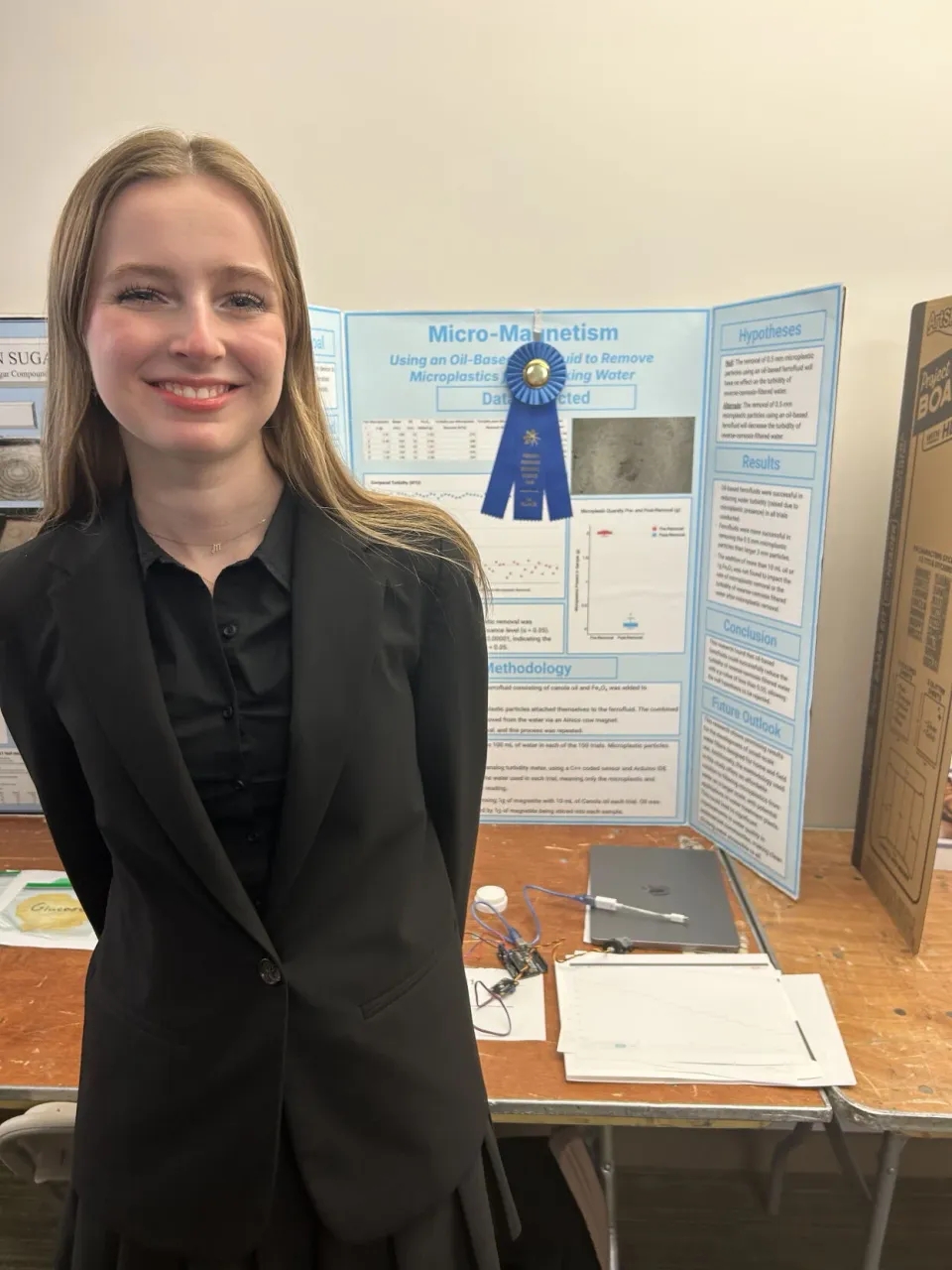
Mia's work has already caught the attention of experts who see real promise in her approach. At the 2025 Regeneron International Science and Engineering Fair, she received a $500 award from the Patent and Trademark Office Society for her inventive, cost-effective approach to water filtration.
Toxicologist Matthew J. Campen, who tracks the impact of pollutants on human health, has described the concept as a significant step in the right direction. He points out that while the invention is still in the prototype phase, the core engineering principle of using magnetism to isolate and remove plastic waste without leaving behind chemical residues is exactly the kind of innovation needed to combat the microplastic crisis.
However, challenges lay ahead. Currently, the production costs of high-quality ferrofluid remain a barrier for large-scale adoption. Mia is realistic about these limitations, noting that the technology is best suited for individual households rather than massive municipal treatment plants, at least for the time being.
Looking forward, the teen inventor is focused on the next phase of development: refining the results, ensuring the system's reliability, and exploring ways to make the technology more affordable. She has expressed a strong desire to bring this product to market, hoping that what started as a project to help her mother avoid expensive filter changes might eventually serve as a vital tool for families everywhere.