SUBCONTINENT: Riya Chandiramani and Sai Pradhan on Redefining Women, Identity, and Resistance

Under the dim glow of a former ping pong hall tucked beneath an eclectic red door on Second Street, two South Asian artists are rewriting the rules of visibility. Hong Kong-based artists, Riya Chandiramani and Sai Pradhan, have turned Ping Pong 129 Gintonería into a canvas for their new exhibition, SUBCONTINENT. Curated and hosted by venue owner Hugh Zimmern, the exhibition explores women, identity, and resistance, offering a platform where brown female voices can be amplified without apology.
Riya and Sai's collaboration stems from a natural alignment of their artistic journeys. "I have seen Riya's work in previous exhibits, and we connected over our work as one does in Hong Kong," Sai recalls. "Our collaboration came about quite naturally. We both noted how our distinctive styles dance around similar themes, and we appreciate each other's work." Riya echoes the serendipity, noting how Hugo had reached out earlier in the year to unite South Asian talents in his iconic spot. "We'd known of each other through the HK art world, but hadn't properly met," she says. "We had a coffee together and talked about our shared experience as 'third culture' South Asian artists in Hong Kong, as well as our thoughts on navigating the art world. That conversation prompted the desire to create something meaningful together, and the timing fortunately aligned with Hugh's vision."
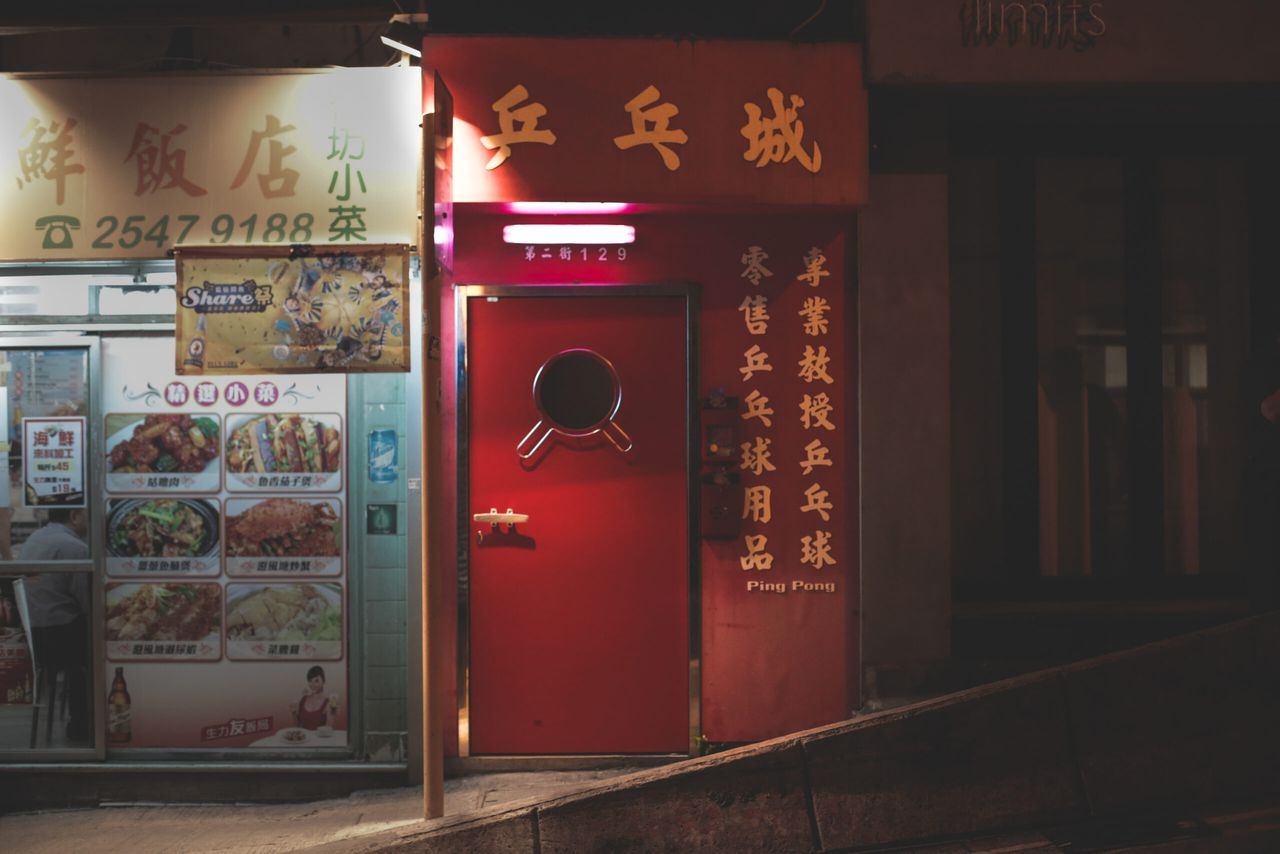
Ping Pong 129 Gintonería. Photo from Ping Pong 129 Gintonería official website.
What elevates SUBCONTINENT beyond a standard show is its immersive scope. Dubbed "Subcontinent Season," visitors can expect programming spotlighting South Asian music, food, and drinks, enhancing its cultural depth beyond the artwork. "What excites me about this exhibition is that it's not just about the art, it's a whole experience of South Asian culture from a new, unstereotypical perspective," Riya notes. For her, Ping Pong 129's "very special atmosphere" is a perfect fit: "There is always great art up on the walls, and it helps that I am a huge fan of gin, which they have a tremendous selection of."
Sai, a writer and artist whose essays and opinions have been published in literary journals like Sublunary Review and Pithead Chapel, offers a glimpse into her multifaceted life through SUBCONTINENT. Born in Mumbai and raised across India and the United States, she holds a BA in International Affairs from George Washington University and an LLM in International Law from the University of Edinburgh. Her path wasn't always centered on creation; years in tech, media, and advocacy in New York, Los Angeles, and Hong Kong pulled her toward corporate rhythms. Yet, inspired by Mary Oliver's words, "The most regretful people on earth are those who felt the call to creative work, who felt their own creative power restive and uprising, and gave to it neither power nor time," she made the decision to prioritize art and writing.
"I was an art-making and literary-oriented kid who ended up studying interesting things, living in many places, and landing in fascinating work environments," she reflects. "I used to regret having spent so much time in my corporate career, but over time, I have come to appreciate that it gave me my very particular experiences and observations." This shift has infused her work with layered depth, blending abstract and representational styles with texture and perspective to probe visibility, gaze, and women's labor.
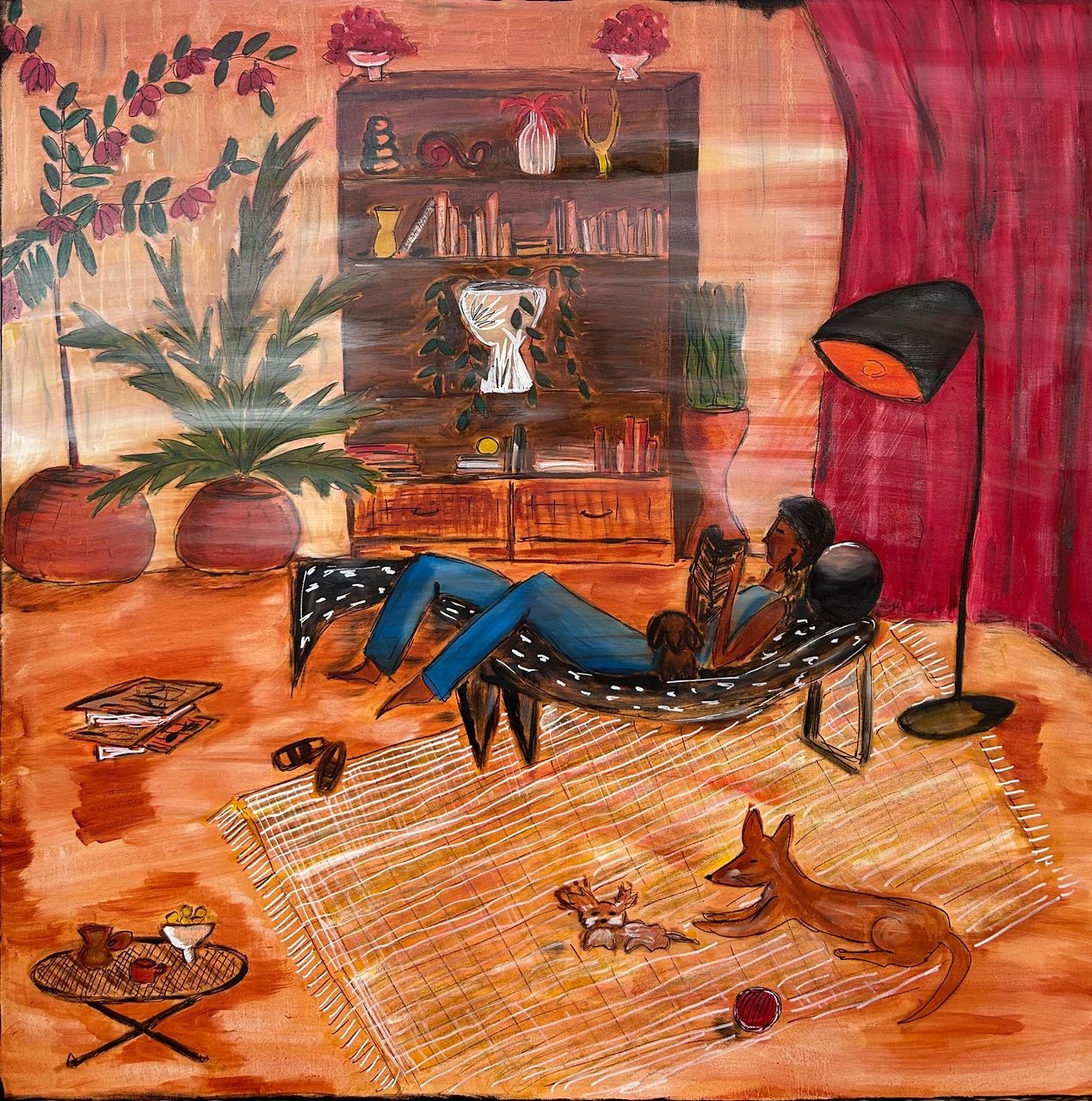
Unproductive by Sai Pradhan. Photo courtesy of Sai Pradhan.
In SUBCONTINENT, Sai showcases perceptions that invite lingering questions. The inspiration for With Regard to Eggs struck during a mundane yet loaded moment: waiting for her first mammogram. "I thought about the series while waiting for my first mammogram in an all-female health clinic, waiting for a diverse age-group of women in the same room in the same infantilizing robes we were given, all waiting for invasive examinations that may lead to good news or bad news tied to our aging processes, desires, and choices, and the idea unspooled from there and gathered more meaning over time," Sai shares. The work confronts the "biological expiry dates" imposed on women, with a gecko symbolizing time and a theatrical curtain blurring reality.
The piece also toys with viewpoint: Will viewers see the gecko in the corner first, symbolizing the passing of time, or will they spot the curtain separating performance from reality? "Perspective figures hugely in all the work—it is always such fun to contemplate what the artist might intend the viewer to look at, and what conclusions the viewer might draw from where their own eyes go and when," she explains.
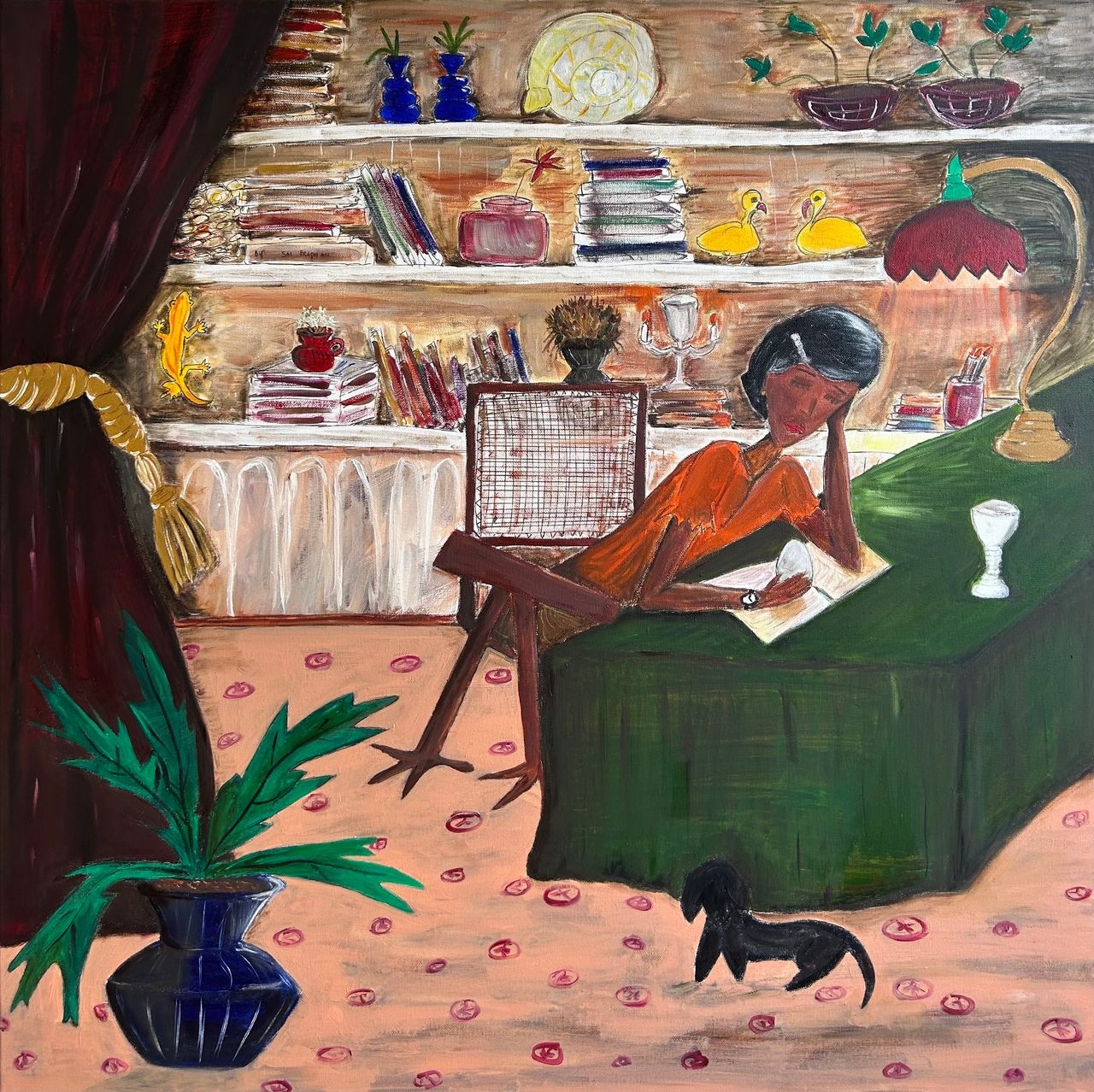
With Regard to Eggs by Sai Pradhan. Photo courtesy of Sai Pradhan.
Sai's studio in Hong Kong's southside, filled with heirlooms like her grandmother's brass planter and the energy of her three rescue dogs, shapes her process. "I often need to get out of my studio to let my thoughts percolate, and then return when I want to work," she says, surrounded by books, rattan chairs, and wild monstera roots that inspire her art's organic flow across philosophy, climate anxieties, and human commonalities like grief. Hong Kong's presence — beaches, hills, and even a gecko — infuses her work. "Nothing is too literal, but Hong Kong feels very present in them, one way or another," she explains. "I have lived in HK for 15 years and it has bled into me in more ways than I can probably articulate."
Riya's work in SUBCONTINENT fuses East and West to dismantle constructs. A Hong Kong native born in 1994 with a BA in Communications and minors in Fine Art and Chinese from the University of Pennsylvania, her journey intertwined art with personal reckoning. Painting since childhood under her graphic designer mother's influence, she navigated GCSE and A-Level art projects probing communism and capitalism's subtle similarities. University brought struggles with an eating disorder, leading to residential treatment at 21, where cereal — more specifically, Honey Bunches of Oats — became a nightly routine and lifeline. This symbol of nourishment birthed her Milkmade series, a parody of consumerism created with a blend of Mughal miniatures, Maoist reds, and cereal mascots reimagined as fierce goddesses. "The inclusion of breastfeeding breasts and splurging milk are included in my pieces... as a symbolisation of 'female bodies that can feed and give life,'" she notes. "This amazing power is completely overlooked."
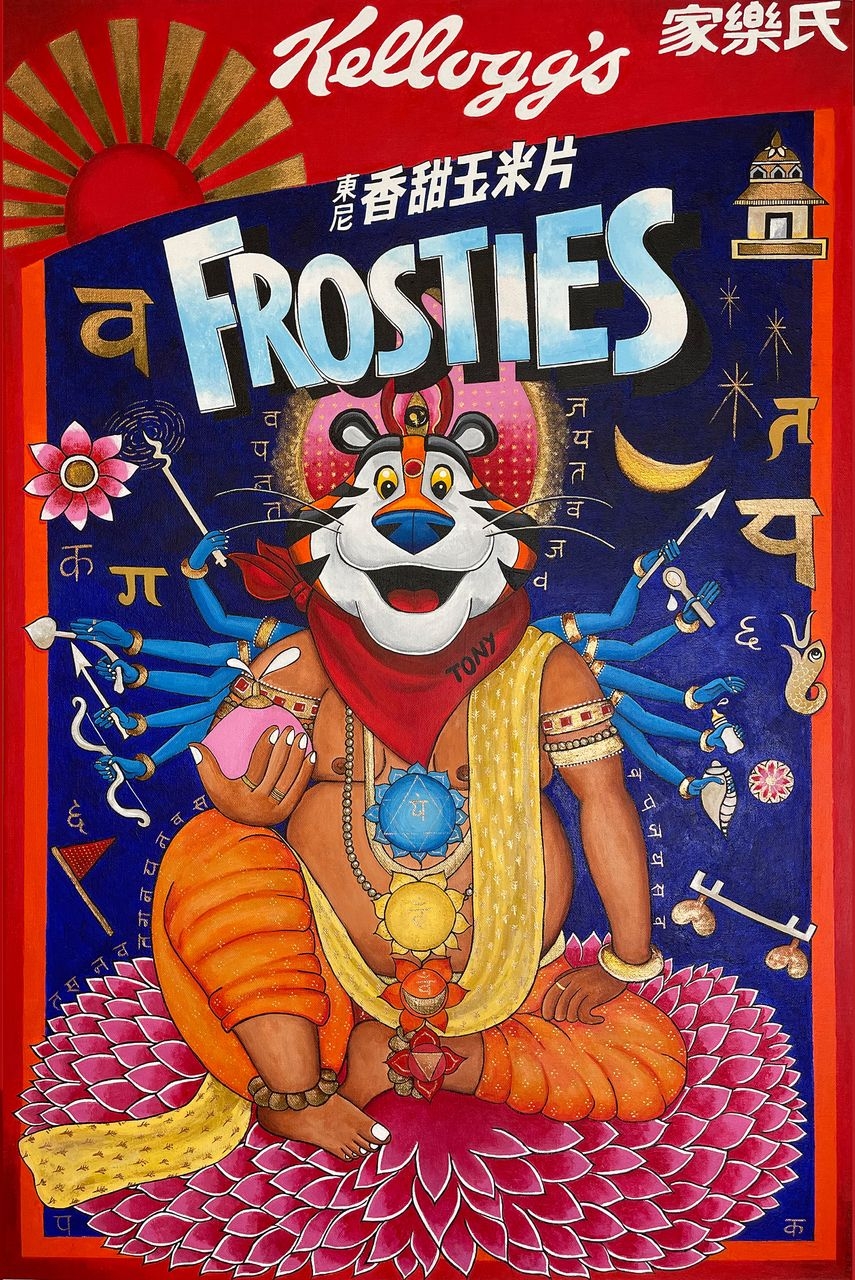
Behind Every Man, Riya Chandiramani. Photo from Riya Chandiramani's official website.
In SUBCONTINENT, she critiques marriage as a transactional cage. In her The Invisible Hand series, bridal mehndi adorning yellow rubber gloves are photographed and painted. "I first paint these patterns onto yellow household rubber gloves—a visual metaphor for the undervalued, unpaid domestic work often expected of women, and their secondary societal status," she describes. The process echoes the tension between the beauty of tradition and the utility of labor. Her resin sculptures, My Hand in Marriage and Obstacle Course, where she reimagines herself as Kali with boxing gloves, assert resistance: "The snakes symbolise societal obstacles, while the ladders represent double standards and expectations: don't be too loud, too assertive, too ambitious... reclaiming the narrative of women as passive objects or 'punching bags of society,' into one of empowerment."
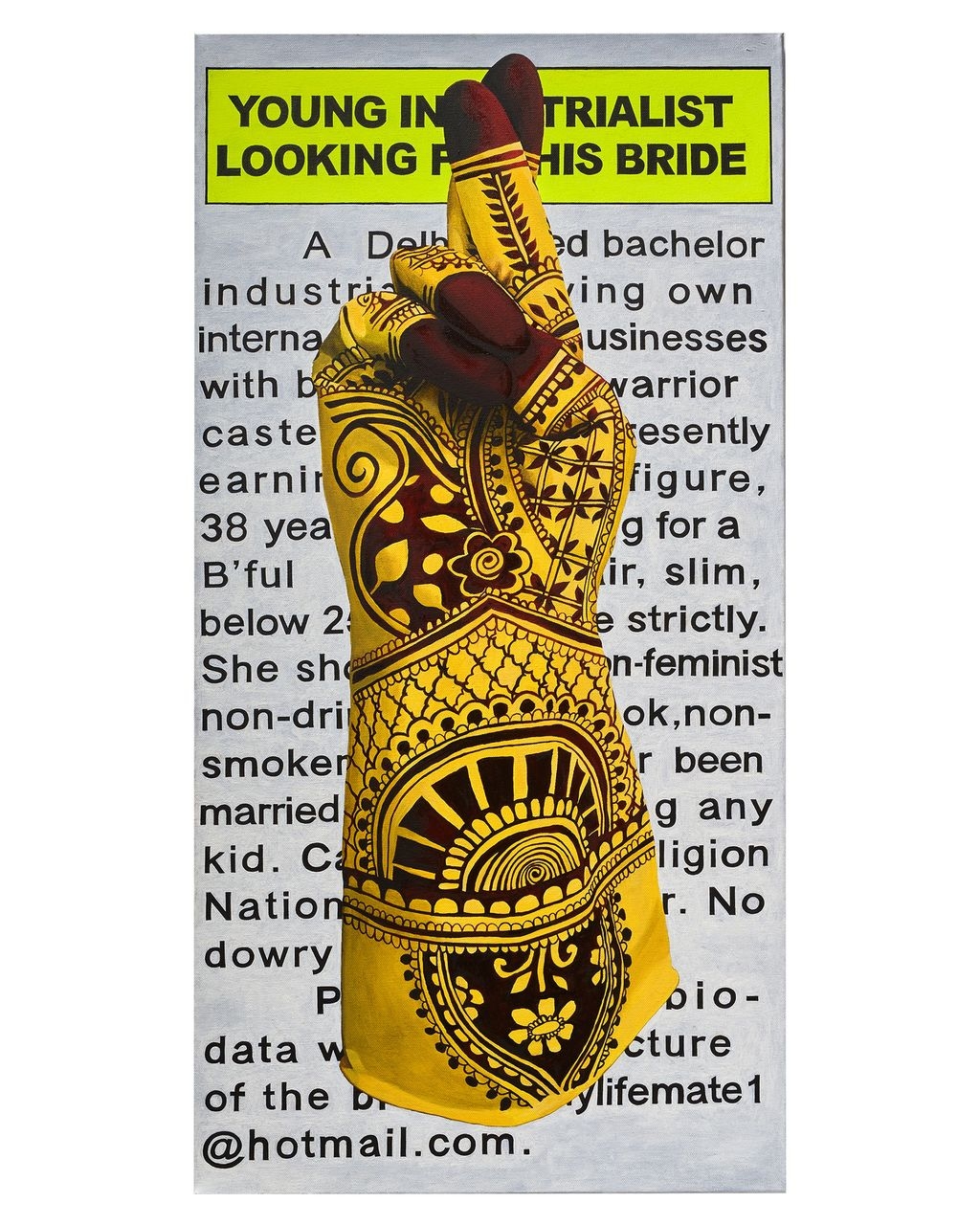
Bride Wanted by Riya Chandiramani. Photo courtesy of Riya Chandiramani.
Creation of Myth, a standout piece, reinterprets Michelangelo's Creation of Adam with crystal rhinestones, questioning marriage's myths: dowries as trades, diamond rings as De Beers' ploy. "In Indian customs, marriage is often referred to as 'Made in Heaven' and signifies a divine blessing of the match," Chandiramani notes. A gold halo nods to divinity; rose, mountains, and text pull from vintage ads. "The piece aims to ask the viewer the questions 'What do we as a society value about marriage?' 'Where do these ideas come from?' and 'Do we actually want life partners, or just what the status entails?'"
In spite of stylistic differences, their works complement each other uniquely. "The fun thing about themes in art is that they can be dialed up or dialed down to create their own harmony," Sai observes. "Something might first present as a loud or bold noise, with gentler notes floating up... With Riya's work that is included in this exhibit, I love that she showcases a literal gut punch and gestures, which can then reverberate into their own softer harmonies... All of this feels quite wonderfully matched to me."
Riya agrees: "I think Sai's work complements mine brilliantly—our work is so divergent in style, yet very much connected. For example, her piece With Regard to Eggs also explores societal expectations around women, particularly the idea of being 'leftover' as the biological clock ticks. Both of our inspirations are deeply personal, yet resonate broadly with shared experiences as 'third culture' Indian women navigating cultural and societal pressures."
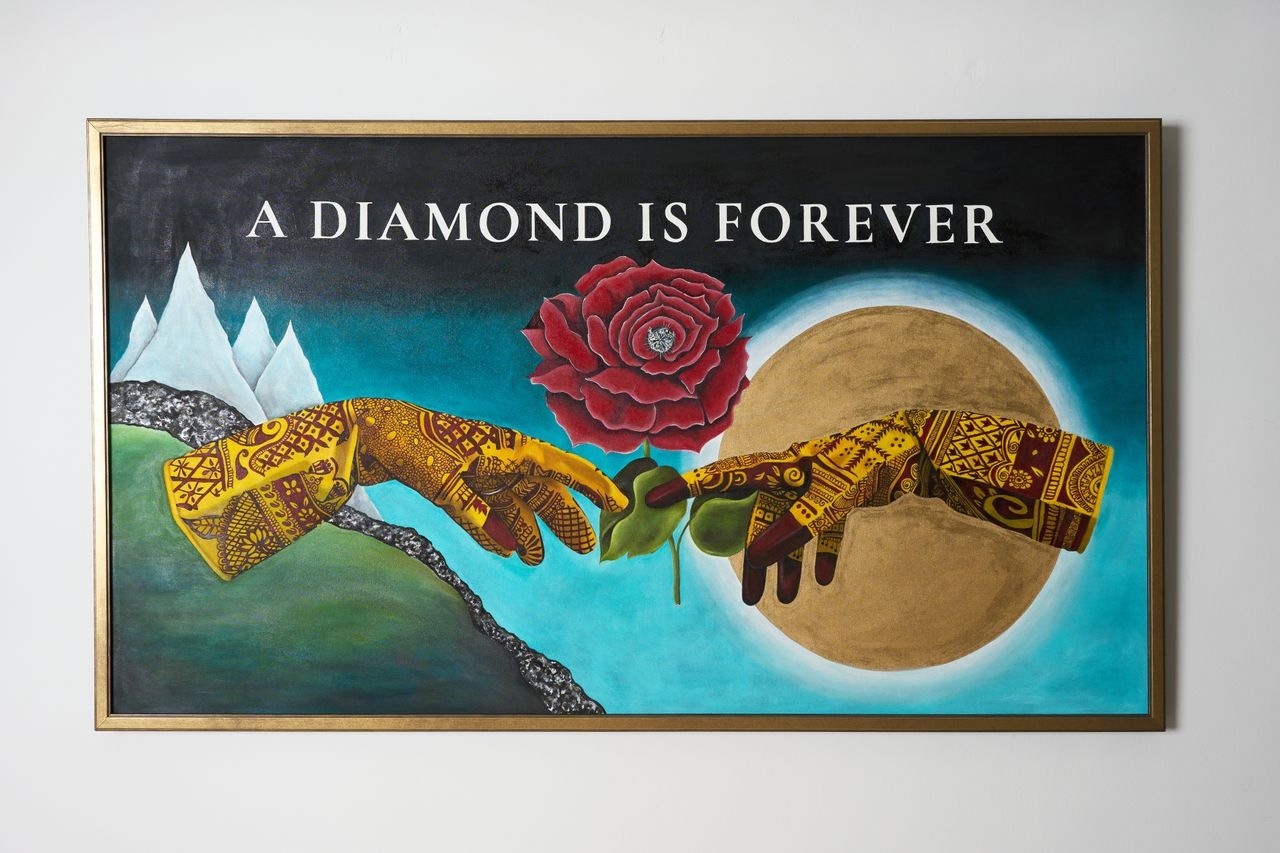
Creation of Myth by Riya Chandiramani. Photo courtesy of Riya Chandiramani.
Hong Kong's cultural crossroads deeply influence their narratives. For Riya, it bred early displacement: "Having been born and raised in Hong Kong, I am very much a product of this city. For a long time, I didn't quite know where I belonged. I think creating art has always been my way of carving out a sense of belonging, a way to piece together the different cultural influences and experiences that have shaped me." Returning post-recovery, the city felt reborn. "Being back in Hong Kong—a city with so many cultural intersections—has taught me that this feeling of displacement is not as unique as once I thought it was. So many of us straddle multiple identities, and I hope that SUBCONTINENT highlights this shared experience."
As ethnic minorities, both navigate representation and tokenism with resilience. "The short answer, though a cliché, is by being unapologetically myself," Riya asserts. "For years, I felt like I didn't fit into any box—I was not 'brown enough' for Indians from India, nor 'local enough' to be considered a real Hong Konger. Over the years I've learned to embrace those intersections and let go of the need to conform to limiting identifiers." She's wary of charity asks leveraging her identity: "I've often been asked to contribute to charity auctions and events here, possibly because I meet certain representative criteria as a female, brown artist in Hong Kong... Often, 'exposure' is offered instead of payment, which feels particularly unfair for smaller artists like myself." Representation, she insists, hinges on intention: "Representation is meaningful and thoughtful, while tokenism is performative... I've learned to set boundaries for myself to ensure I'm not participating in something performative, protecting both myself and the values I care about."
Sai navigates similarly: "This is an interesting and sometimes frustrating puzzle. I have no desire to be tokenized or boxed in as belonging to a specific culture... but I do also want to feel free to draw on whatever I choose from my life history and see my work take up space... As an artist, I can draw on my culture in my own way when I choose to, define my culture as I see fit... There should be space for any and all of that. I like that this exhibit gathers us up but lets us be ourselves." SUBCONTINENT's authenticity shines through: "We've been given the freedom and respect to tell our stories in a space that feels inclusive and accessible, without stereotypes or restrictions, and our opinions and feedback have been very much included in discussions about how to make the extended programming engaging, approachable and deliberate."
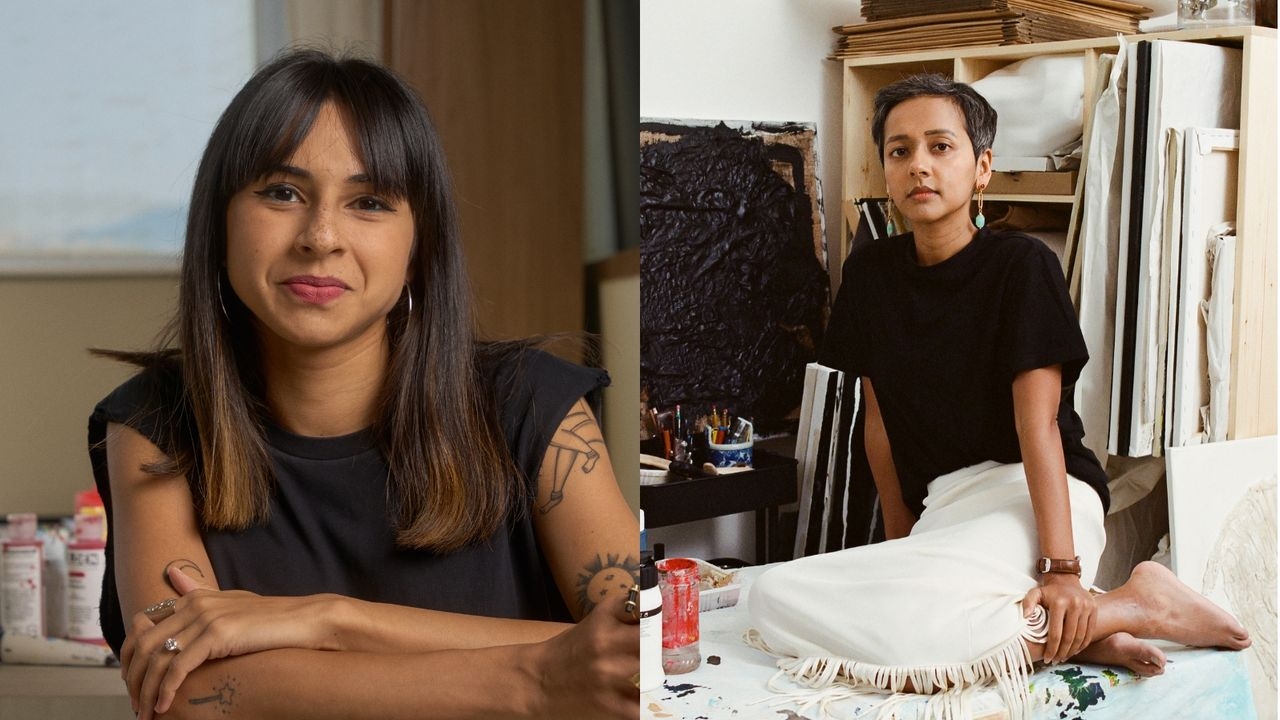
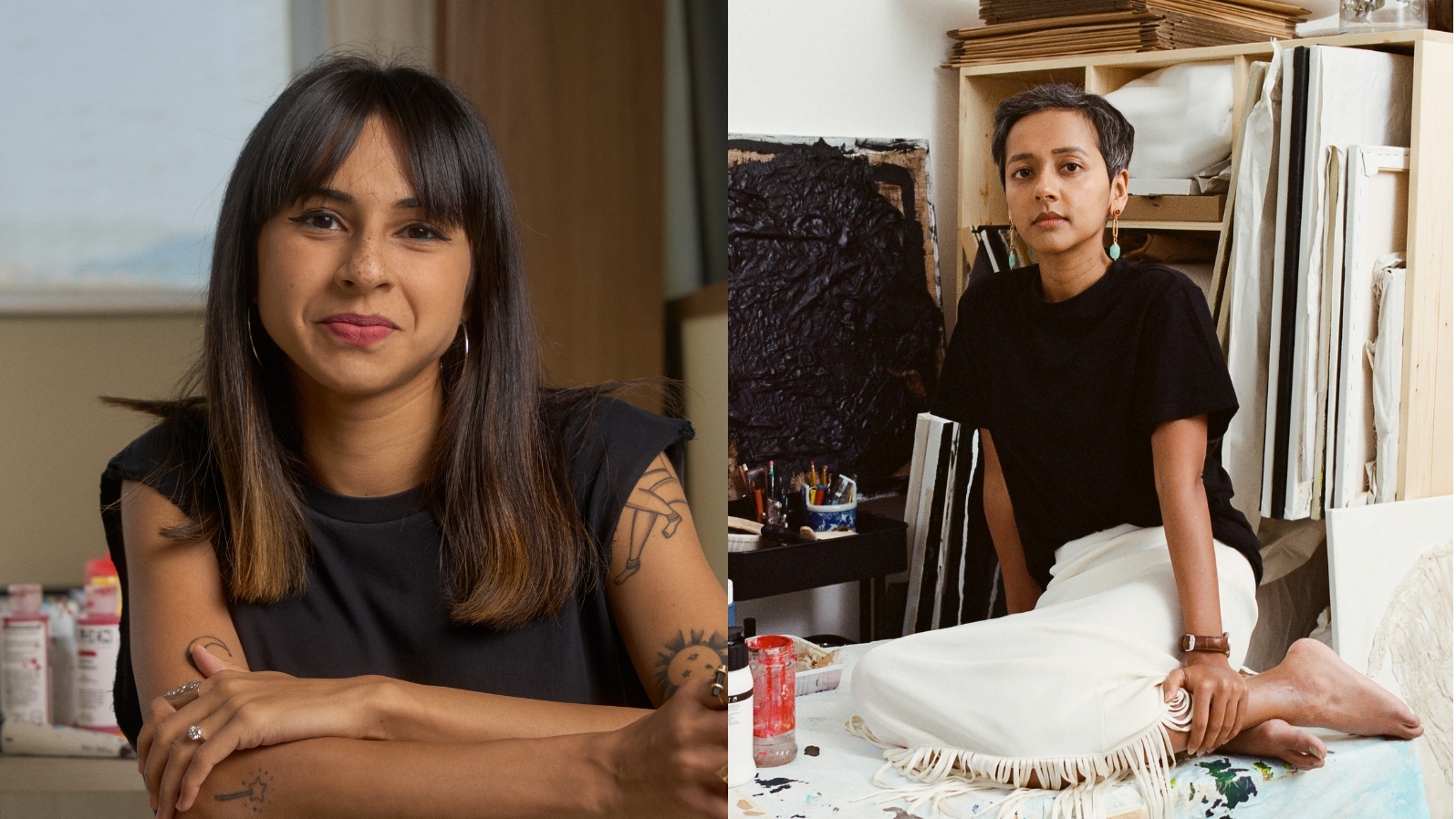
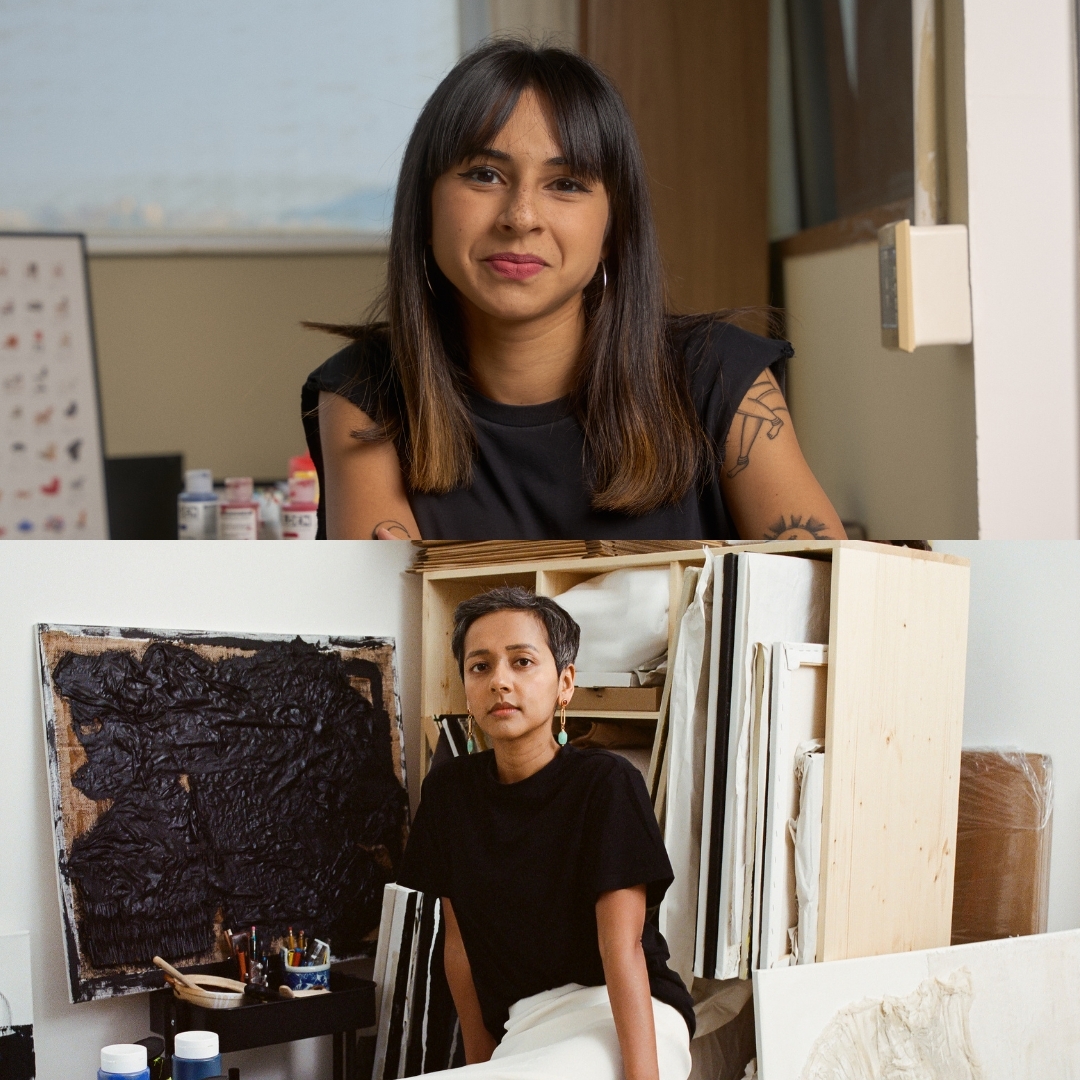
Hong Kong-based South Asian artists Riya Chandiramani (left) and Sai Pradhan (right). Photo courtesy of Riya Chandiramani and Sai Pradhan.
Through SUBCONTINENT, the pair aim to provoke reflection. "My hope is that visitors—viewers and art collectors, but also curators and fellow artists—see that the work of brown female artists belongs in a plenitude of spaces, and that our art is not reductive," Sai says. "We come from complex backgrounds, with a world of experiences that nourish what we choose to make. At the end of the day, I want us to be considered, to be seen." Riya adds: "I hope my art makes people think about the message behind the paintings. We live in a world where so many of our views are spoon-fed to us, whether by media, tradition, or societal norms, and I believe art has the power to challenge that... Even if someone doesn't like my work, my hope is that it encourages them to examine their beliefs, and maybe even confront biases they didn't realize they held." The themes transcend labels: "While this exhibition focuses on 'brown female' art, the themes are universal. You don't have to be brown or female to resonate with ideas of societal expectations, identity, or resistance. The goal isn't to divide people into categories, labels or boxes or identify ourselves as 'other'. It is to remind us of our shared experiences and perspectives."
Visit SUBCONTINENT at Ping Pong 129 Gintonéria, 129 Second Street, Sai Ying Pun, before November 10, 2025, to witness this empowering dialogue. Find out more HERE.