Karen Aruba: Preserving the Legacy of Hong Kong's Hand-carved Mahjong

Here, mahjong was more than just a game. It was the pulse of weekends, the glue of family gatherings, the quiet rebellion against the grind of city life as tiles clicked late into the night in cramped apartments. But by the early 2000s, that sound began to fade as factories closed, craftsmen scattered and the handmade tiles that had defined the game for decades gave way to very low cost mass-produced versions, slick and uniform, stripped of their human touch.
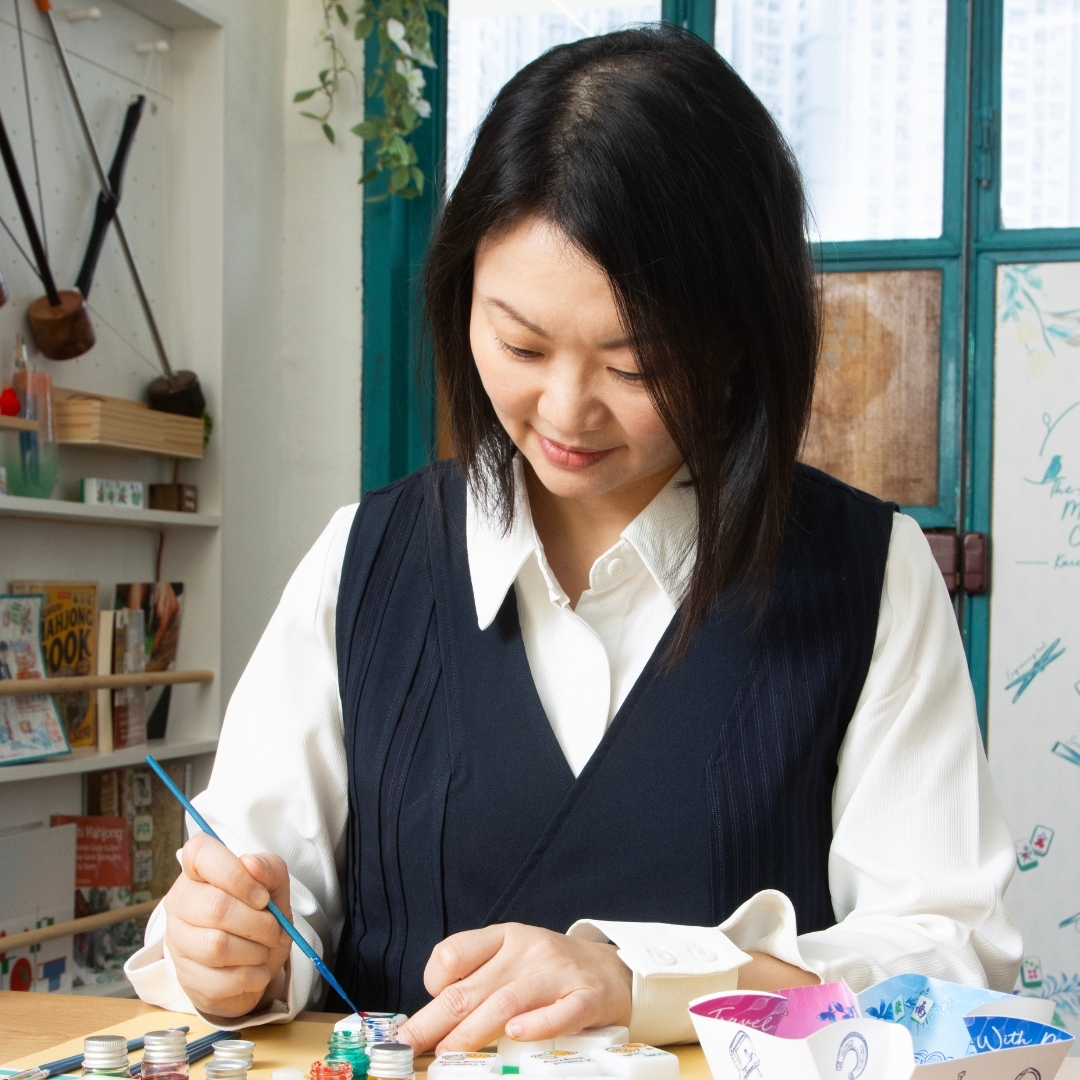
This is the world that artist Karen Aruba (Karen Cheung) grew up in, and the one she refuses to let disappear.
A Childhood Among the Tiles
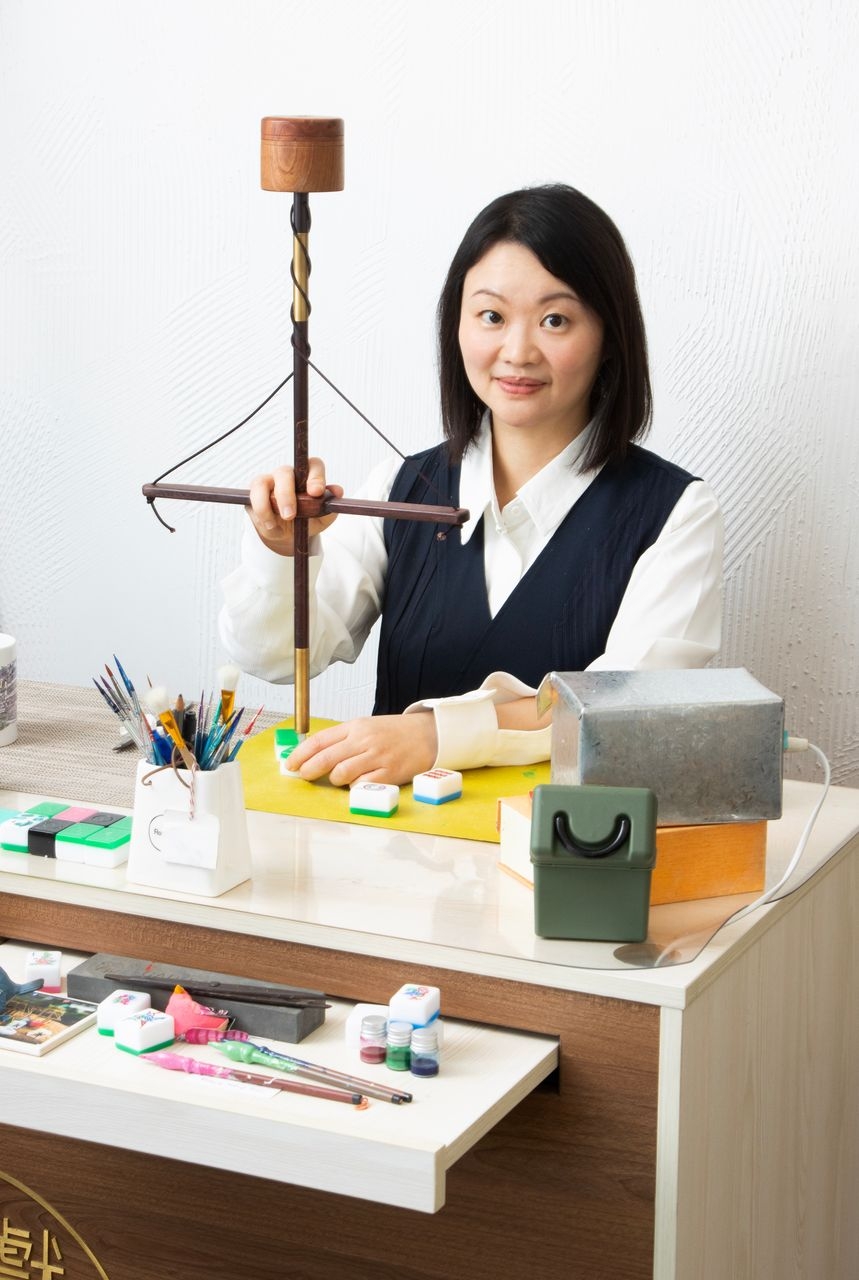
Her story began in 1963, when her grandparents founded the Fuk Hing Lung Mahjong Factory. It was a family affair from the start: her father, Cheung Sing Chung, Ricky, later known as Master Cheung, oversaw the production line, mastering every step from raw material to finished tile. Her uncle polished the pieces by hand. Her aunts and grandmother painted the intricate symbols. Her mother kept the books. At its peak in the 1980s and 1990s, the factory had around 15 workers, moving from Kowloon City to Kowloon Bay to meet the surging demand. At the time, mahjong was everywhere: people played it in homes, clubs, and street corners. The tiles flew across tables as the city boomed.
Karen was a child of that world. Growing up, she lived in the factory, surrounded by the scent of mahjong tiles, the scrape of tools, the quiet focus of hands at work. Then came a shift: Hong Kong transformed from a manufacturing powerhouse into a global financial center; cheap machine-made tiles flooded the market; demand for the handmade versions dried up as prices of Hong Kong manufactured products skyrocketed. The factory downsized, struggled, and finally closed in 2009. "It caused a lot of emotional problems for my family," Karen says. The laborers lost their jobs. Her family lost their livelihood. The tools, the patterns, and the accumulated knowledge of decades seemed destined for the scrap heap.
Reclaiming What Was Lost
For years, Karen carried that loss as she wondered what she could do to honor the spirit she had witnessed: the history, the art, the craftsmanship, the way everyone worked together in a family business. In the early 2000s, mahjong was still dismissed as an old-fashioned game, often linked to gambling. The turning point came in 2014, when the process of making mahjong was recognized as part of Hong Kong's intangible cultural heritage. It gave her the spark she needed to recreate her family's story as part of Hong Kong's memories.
Rebuilding was no small task. When the factory shut, her grandma had lost all the handmade tools; there was nothing left. Undeterred, Karen tracked down a retiring master who remembered her grandfather's name and gifted them a full set of carving tools in a precious act of generosity that connected generations of craftsmen and paved the road to her father's return to the craft after nearly a decade away, sparking the rebirth of their family legacy in a new creative form.
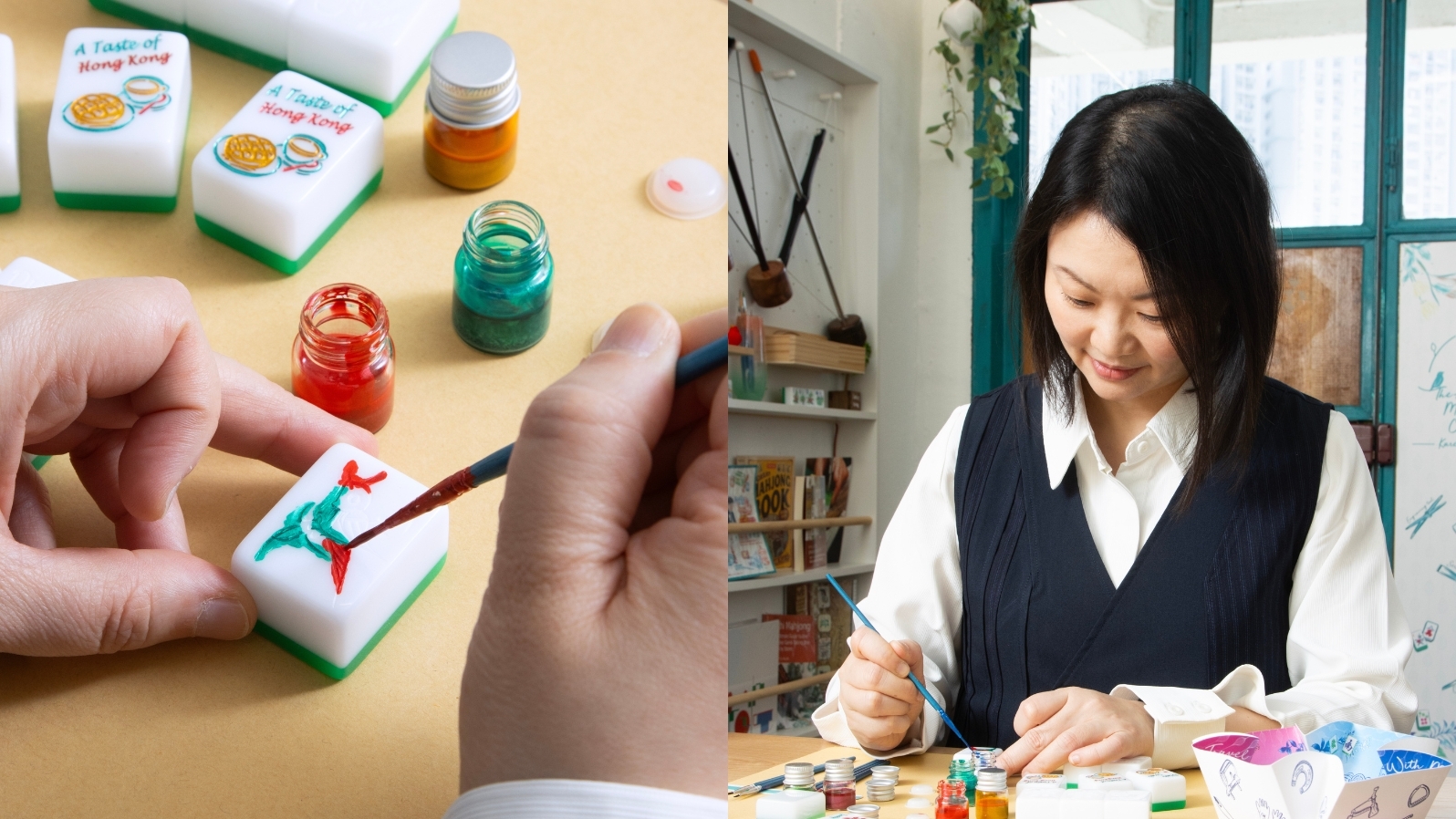
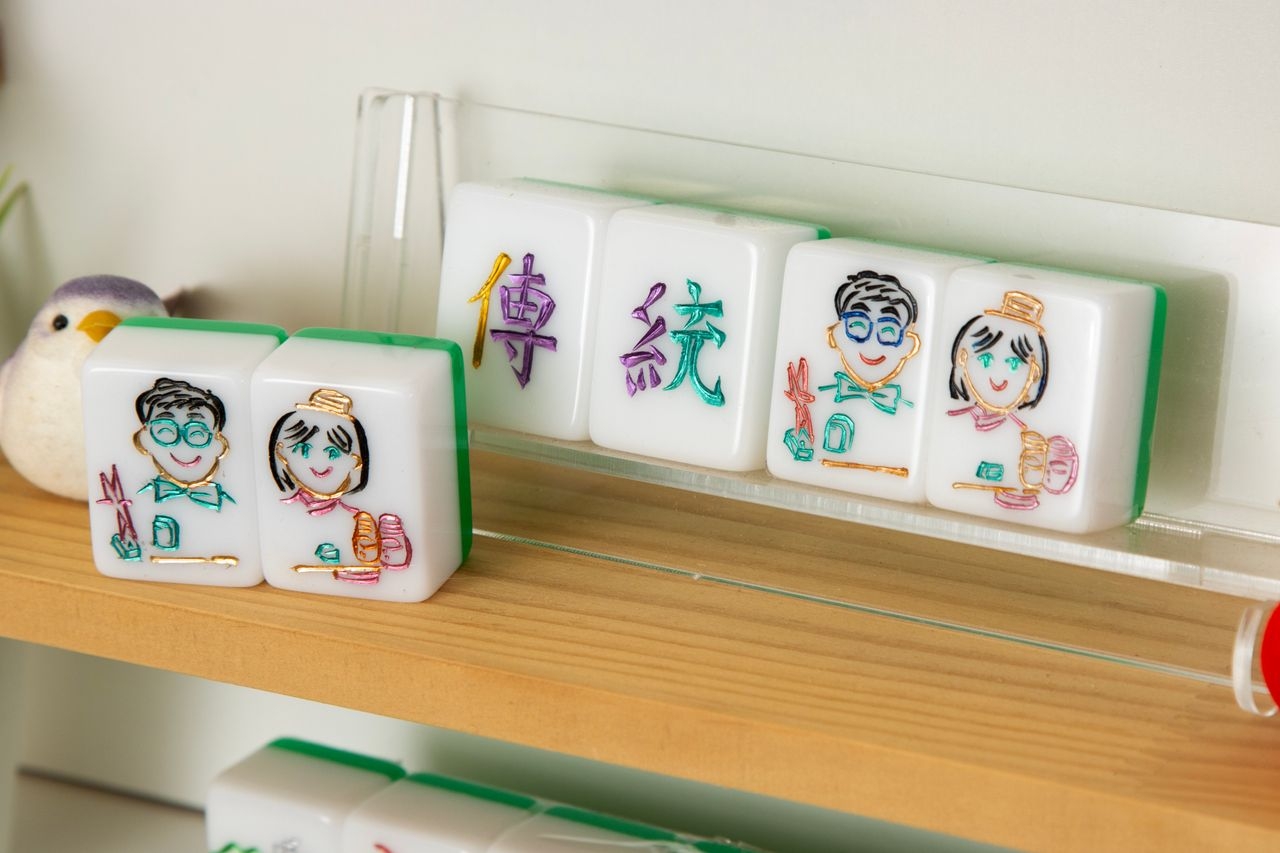
In 2020, she was granted a studio space collaborated with her father at the Jockey Club Creative Arts Centre, a location carrying a quiet endorsement that mahjong could be art. Here, her father demonstrates the craft to visitors and tourists, drawn by the story of a dying tradition. Workshops fill the space. One popular session lets participants design personalized tiles with meaningful numbers or messages. Her father carves them by hand, while guests try their hand at painting. Another series offers deeper classes in handcrafting, using self-developed resin materials that are easier to work with while still honoring the traditional feel.
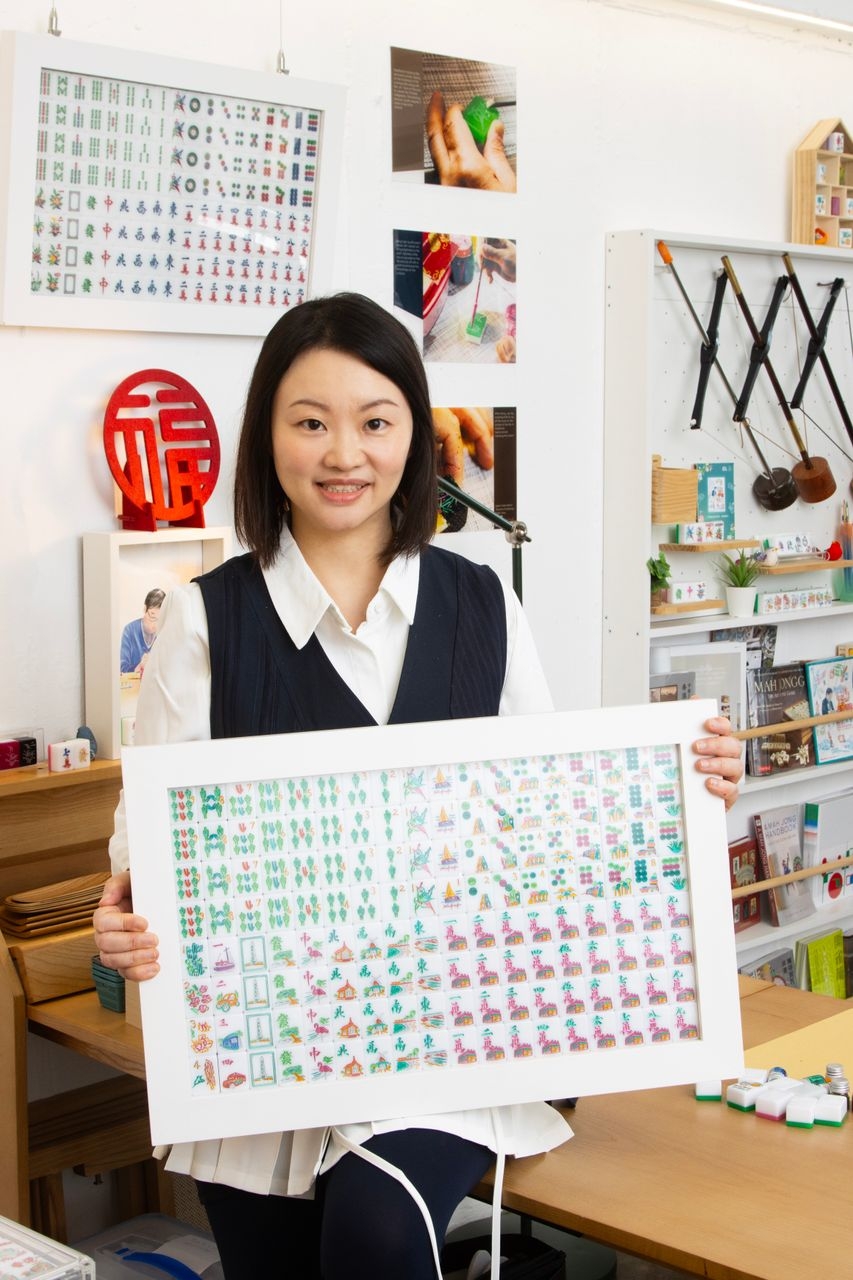
Hands Across Generations
During the quiet months of the pandemic, Karen began documenting everything. With her husband, she created a documentary, filming her father at work. She illustrated every step in a book, adding QR codes that link to instructional videos. "Without documentary, it's very difficult for young generations to learn and practice in their free time," she explains. The book became a bridge that turned complex techniques into something accessible.
Challenges persist. The perception that mahjong is tied to gambling runs deep, especially in Chinese communities. "We really spent a lot of effort to show people that mahjong can be a form of arts and craft," Karen says. It can represent Hong Kong itself, a signature of its culture. As mahjong has enjoyed a global revival in recent years, Karen's response has been to double down on education and preserve what matters. "I think it's important for people to understand tradition; it's a kind of respect," she explains. "Make sure you respect the people who contribute to the old elements before you want to create something new."
Her work is a careful balance. Traditional patterns stay sacred, carved by her father's practiced hands. For creative designs, she uses modern tools like laser engraving to ease the physical strain on him. At 70, he has undergone eye surgery, and she is mindful of his health. The creative sets she designs draw from Hong Kong's everyday icons: dim sum, trams, boats.
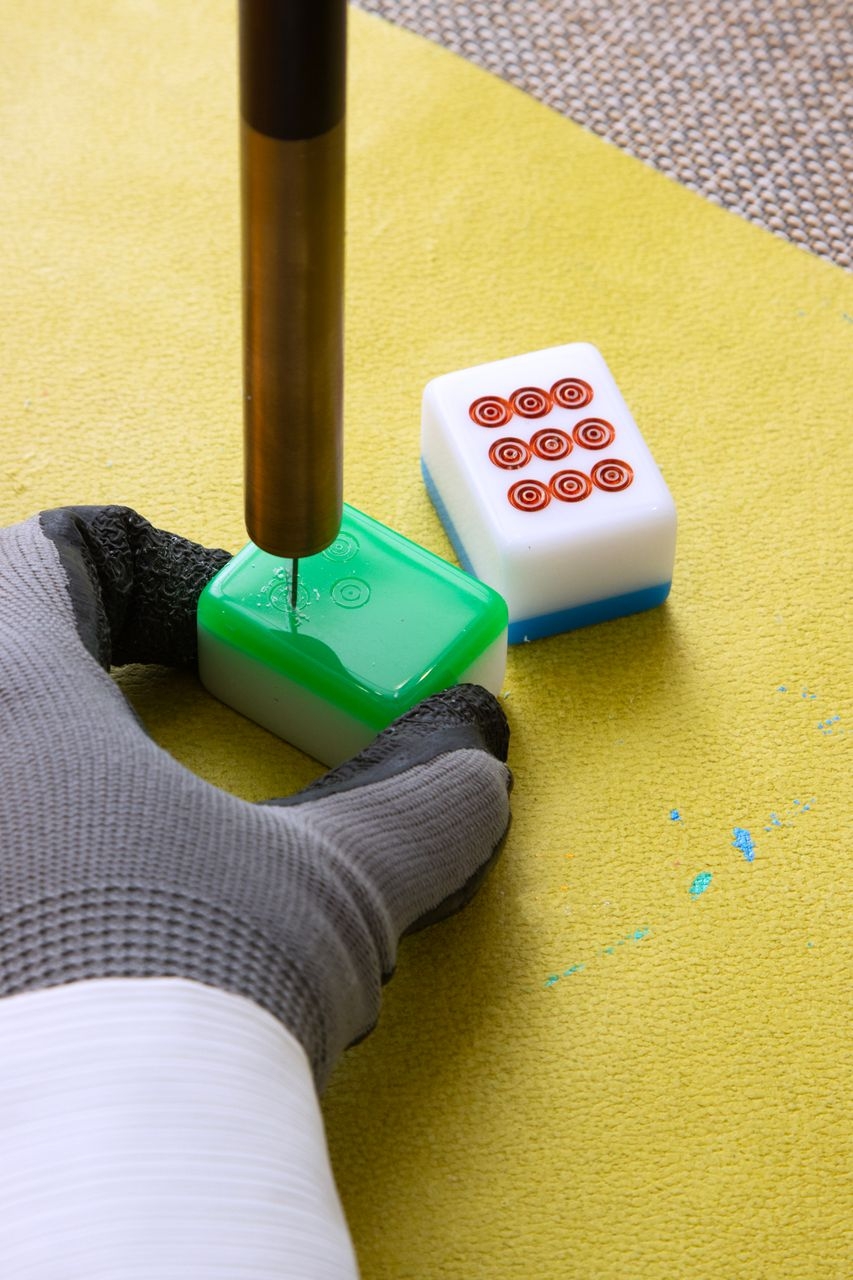
Painting Memories on Aruba
One of her favorites is the "Mahjong Wanderlust - Aruba Theme," a complete set of 144 tiles that reimagines traditional patterns with landmarks and everyday icons from the Caribbean island. The design draws from Karen's own childhood memories. She lived there for nearly a year by the Caribbean Sea with her mother's family, a time filled with island life that has stayed with her. "It's a truly happy island," she recalls. Those early experiences inspire the tiles today, weaving personal stories into the craft to keep family connections alive.
This is not a commercial venture in the usual sense. Karen calls it a passion project, pursued in her personal time. "If I don't focus on the commercial pressure, I can really focus on the soul of the arts and craft," she explains. Resources from commissioned work flow back into development. Exhibitions have grown from this freedom. One featured eight themed sets, from Hong Kong to Malaysia to Sweden, each telling a story through tiles. Collaborations with photographers and artists bring fresh perspectives. The process takes time: one set can take six months of sampling and discussion. But that is the point.
Keeping the Family Sound Alive
As an only child, Karen has always felt the weight of legacy. Yet she sees her role not as replicating the past exactly, but as keeping its spirit alive. She teaches basic skills in workshops, letting participants carve their own small pieces to take home. Waste tiles from past projects are saved for practice. "Sustainability is important in terms of the material, the resources, and also the skills," she emphasizes.
Her approach brings a distinctive warmth to the craft. As a woman in a field long dominated by men, she draws on her background as a teacher and storyteller. "Women can add a kind of softness and storytelling to help people understand," she says. Her early years teaching adults and secondary students helped her create clear, visual guides. She writes blog posts that trace the family history and the broader industry and interviews surviving craftsmen, preserving their voices. And every year, she donates a portion of proceeds to charity, supporting causes from vision care to housing for the homeless. "We are very lucky to be living in an international city where we can experience art," she says. "But for some people, art is a very luxurious thing."
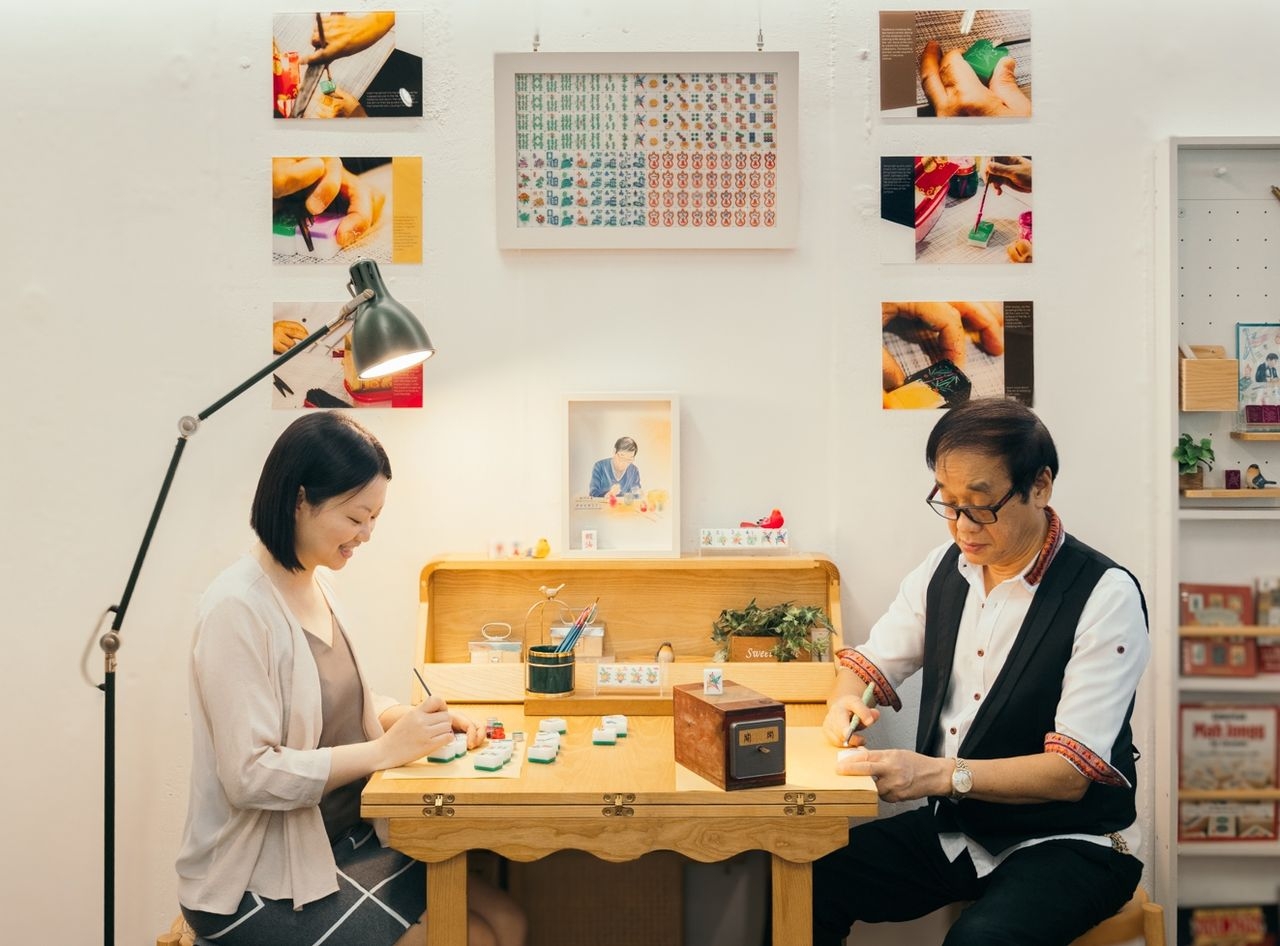
Working alongside her father has deepened their bond. He is open to her ideas, taking on challenges as long as he has time to perfect them. Their collaboration is a quiet act of care. When her mother faced serious health issues, Karen encouraged her father to leave his other job, spend more time with her and focus on carving. It became a way for him to stay engaged and present.
Looking ahead, Karen's vision is clear. She wants the craft to endure through education: more classes, more people learning the basics, even if they never master a full set. She hopes the studio remains a place where the public can see demonstrations on weekends. The goal is not mass production, but meaningful connection. In her hands, mahjong becomes a thread linking past and future.
In a city that moves at breakneck speed, Karen Aruba has chosen a slower path, spinning cultural loss into legacy. The tiles she helps create reflect history and family, quiet assertions that some traditions are worth the effort to keep alive. And in the hands of those who learn from her, the clack of mahjong will continue to echo.