Natalie Chiu: Salud to Sparkling Tea
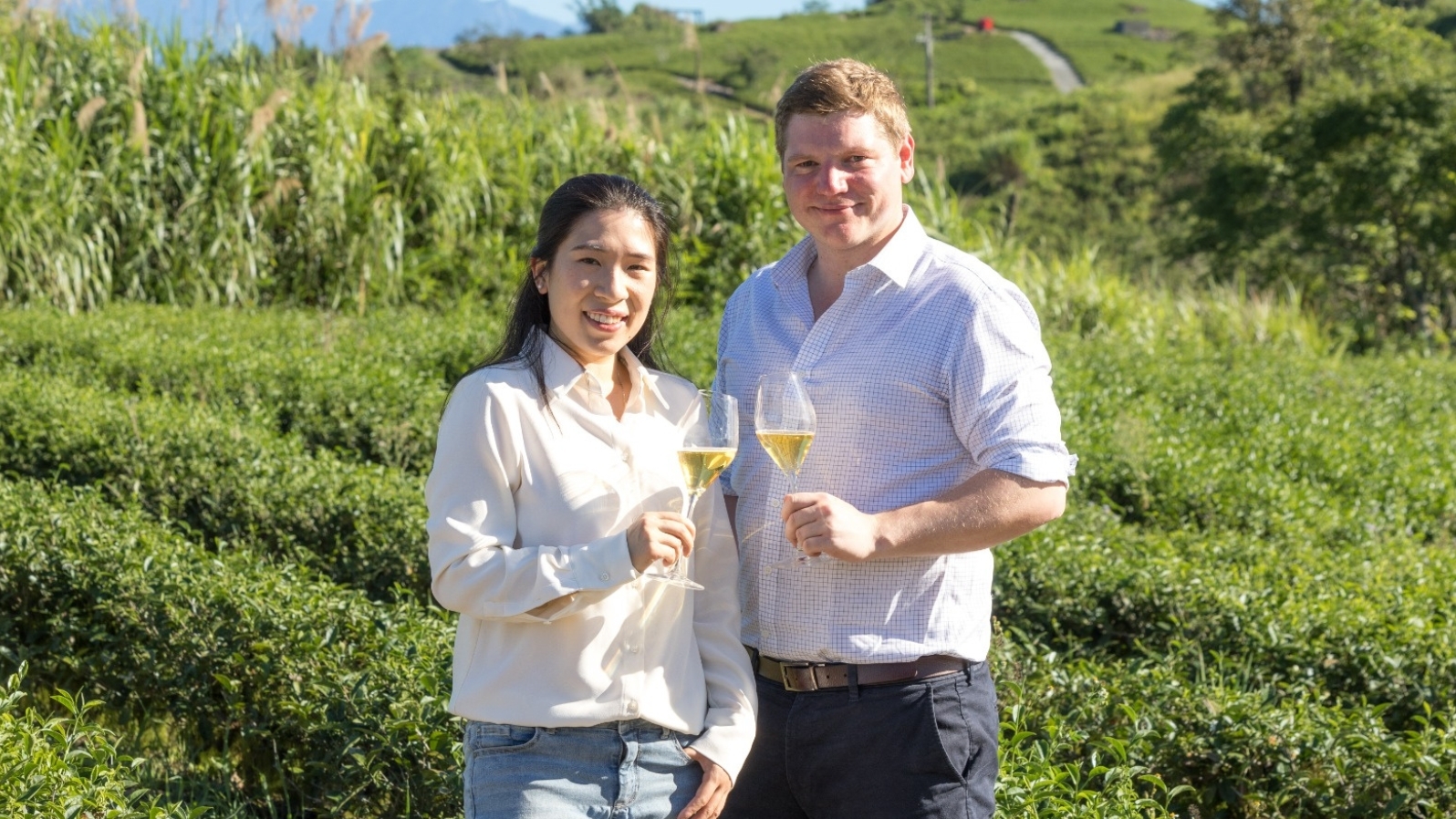
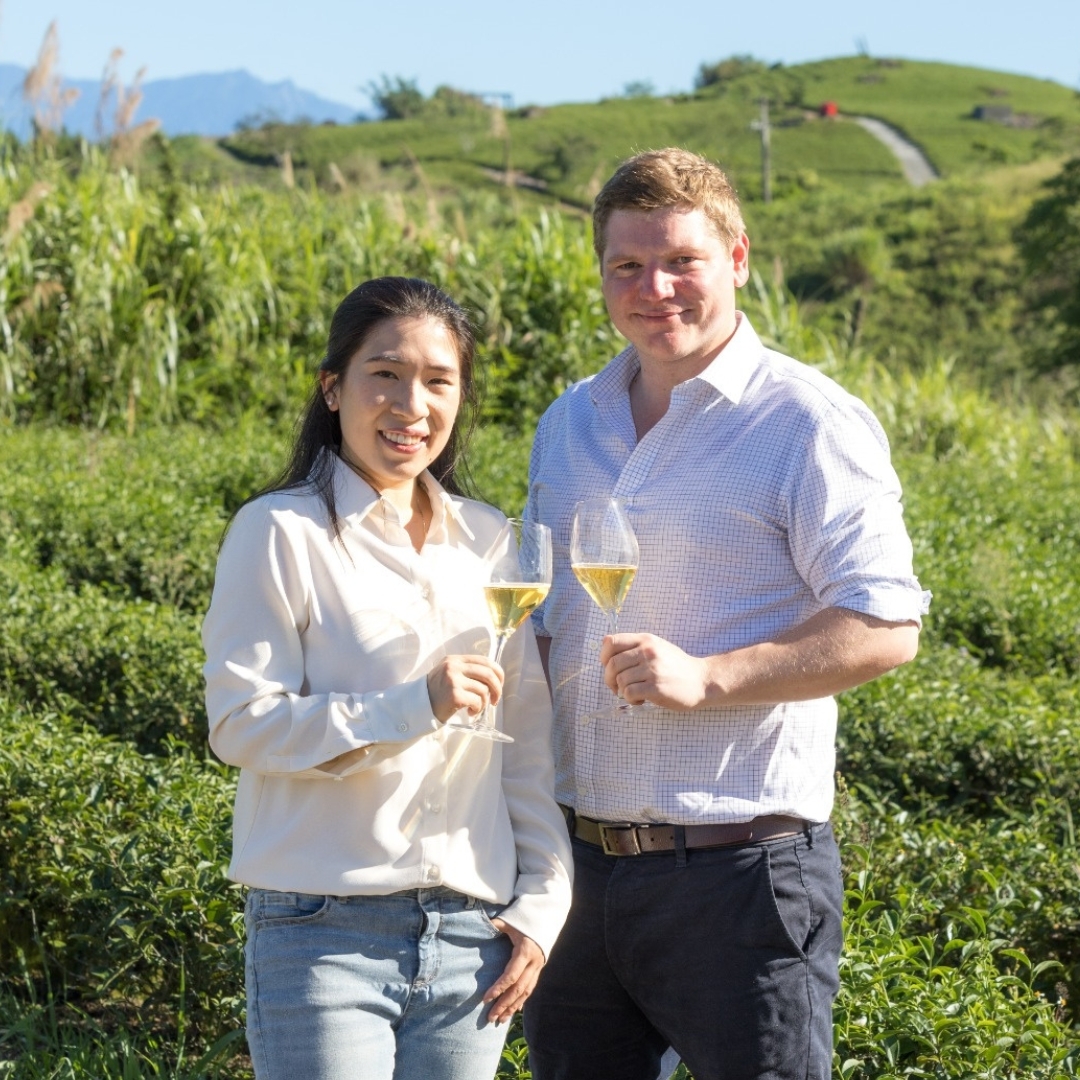
For their first date in March 2013, Charlie Winkworth-Smith and Natalie Chiu decided to celebrate their birthdays with a wine-pairing menu at two-Michelin starred restaurant, Sat Bains, in Nottingham, where they both studied food science. After the first course, her face flushed to a tomato red.
"I was so embarrassed: we had barely known each other then; I always knew I had an alcohol intolerance, but I hadn't realized it was so bad," says Natalie. Though they continued the meal – Charlie chivalrously stomaching all of Natalie's wines subsequently – Natalie knew she couldn't drink anymore. "It was still a wonderful experience, but I definitely felt left out while the sommelier came over and took Charlie through tales of far-flung vineyards and guided him through the nuances of wine pairings."
Aside from a good "how did you meet story" for the couple, this first date also fortuitously birthed Saicho – a sparkling tea label that has won over Michelin-starred restaurants and five-star hotels worldwide, redefining ways we celebrate in healthier ways.
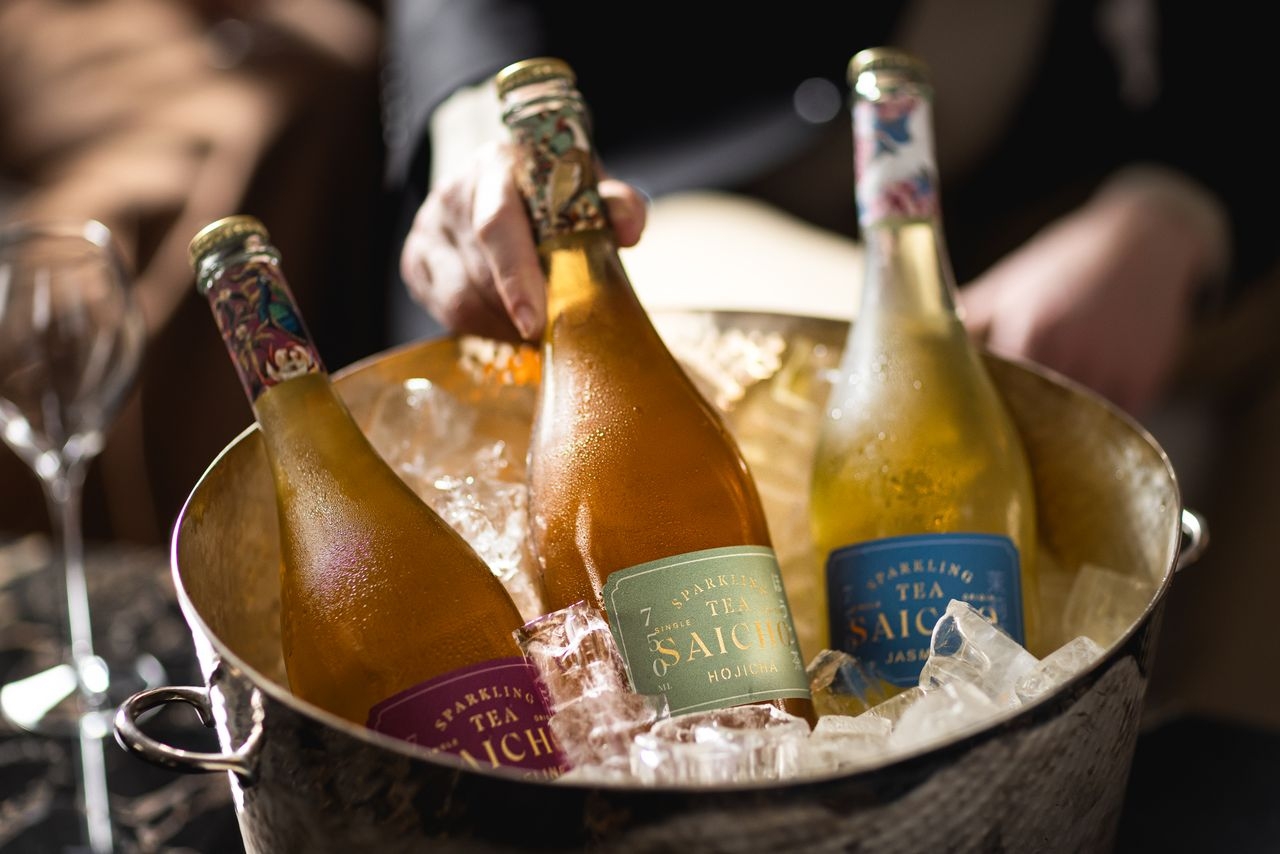
Named after the Japanese Buddhist monk attributed to bringing tea from China to Japan in the 9th century, Saicho is made from cold brewing single-origin teas for 24 hours to extract flavors and aromas like floral, fruity and umami notes without the excessive bitterness and astringency that often result from overbrewing hot teas. The cold brewing method also ensures tannins are kept smooth and balanced. Afterwards, the tea is gently sweetened with grape juice and adjusted for acidity before undergoing final carbonation and bottling. Saicho, Natalie proudly attests, is free of preservatives, artificial coloring and sulphates; it's also vegan-friendly and halal certified.
Since its official launch in 2019, Saicho's core line has included Japanese Hojicha, Darjeeling from India and a Chinese jasmine. Last October, it launched a limited-edition bottle brewed from Taiwan's Sixty Stone Mountain – a tea garden the couple had serendipitously discovered at the 2023 Great Taste Awards, in which Saicho's core range received recognitions. Just last month, it debuted the seasonal osmanthus sparkling tea just in time for the holidays.
Natalie grew up drinking tea with her meals in Hong Kong; whereas Charlie, too, has had his share of English Breakfast tea in his childhood, often mixed with sugar and milk. It's a drink that they knew could "fill the void of alcohol" and "stand up to all sorts of chefs' creations, regardless of the cuisine".
"We're not trying to replace wine. Admittedly, not every type of food works well with sparkling tea; but what we've found is that exploring individual dishes in different types of cuisines reveals exceptional pairings," says Natalie, adding that the umami, earthy notes in her sparkling Hojicha, for instance, complements similar flavours in Japanese food – think sushi or sashimi – as well as mushroom-forward dishes prominent in Italian cuisine. The Darjeeling, with its muscatel notes and crisp acidity, pairs well with grilled meats and roasted vegetables; while the floral and elegant Jasmine tea works well with desserts and, surprisingly, lightly spiced dishes.
"Saicho offers that element of inclusivity at a dining experience, where everyone – whether they decide to abstain or drink that meal – can share the stories of tea sourcing, production, terroir, history and how the product is made," says Natalie. "The conversation at dining tables today has shifted from 'why are you not drinking' to 'what are you drinking'. I am so lucky to be a part of people's journeys as they explore the drinks space.
"Abstaining is no longer a compromise, nor does it make a patron a 'second-class citizen' because non-alcoholic drinks are now equally as interesting as another guest's glass of wine or champagne."
The Future is NoLo
According to US-based market research and technology company Circana's third annual consumer sentiment survey published in November, nearly one in two Americans are trying to drink less alcohol in 2025, a 44 per cent increase since 2023. Of the 1,000 surveyed Gen-Zs, more than half said they simply didn't want to drink alcohol and 39 per cent planned to adopt a dry lifestyle in 2025, reflecting the generation's priorities of physical and mental health, not to mention tighter purse strings. Interestingly, 31 per cent of Circana's respondents admitted to feeling judged for not drinking.
The International Wine and Spirits Record (IWSR), meanwhile, also saw a boost in the no-alcohol and low-alcohol (NoLo) market. According to statistics published earlier this year, the US no-alcohol market is forecasted to grow by 18 per cent volume (compound growth by volume), 2024 to 2028, during which the no-alcohol market in the States is expected to be worth close to US$5 billion. Looking ahead, IWSR predicts that the no-alcohol categories will outperform their full-strength counterparts across all segments, bolstered largely by millennials.
Saicho, says Natalie, is riding this wave by doubling production every year – though she didn't disclose exact numbers – to meet demand across 20 markets, filling glasses at the likes of Mandarin Oriental Hong Kong, Four Seasons Hotel Hong Kong, Conrad Tokyo as well as more than 100 Michelin-starred restaurants such as 8 1/2 Otto E Mezzo Bombana in Hong Kong and A Wong and Da Terra in the United Kingdom, to name but a few.
Despite their success today, Natalie remembers the early days of pitching this breakthrough product to dubious restaurants who didn't quite get what they were doing. As food scientists, neither she nor Charlie had connections to the hospitality industry. The NoLo space, as well, was still at its nascency. The first-ever internationally acclaimed sparkling tea only originated in 2017 by award-winning Danish sommelier Jacob Kocemba, followed by the 2018-born Sparkling Tea Collection by Fortnum & Mason, which only opened its first shop in Hong Kong a year later.
"People knew tea, they also understood sparkling, but imagining those two concepts together could be a challenge for some. As soon as we opened a bottle and got them to taste the product, however, a lightbulb moment happens," she says, adding that rather than abandoning traditions of the century-old tea or sparkling wines, Saicho is an extension of both legacies.
"Tea has always had a history of innovation, whether it's ceremonial tea, afternoon tea, or bubble tea. At our core, we showcase some of the best and most interesting teas around the world. And for sparkling wines – Saicho is not trying to replace champagne, for instance: it's not champagne or Saicho, it's champagne and Saicho."
In the same year of the brand's debut, Natalie and Charlie bagged their first client – one Michelin-starred Simpsons in Birmingham. In 2020, their sparkling tea was served alongside the revered afternoon tea at Hong Kong's Peninsula Hotel. Last year, Saicho's limited-edition Sixty Stone Mountain sparkling tea was made exclusively available at Harrods – all "phenomenal partnerships that [Natalie] could only dream of".
The Future is Saicho
Going into its sixth year in 2026, Saicho is reaching far beyond non-drinkers, increasingly piquing the interest of those who'd otherwise opt for a tipple or two. To date, Natalie says the majority of her customers are aged 30 years old and above. "People choose Saicho because they want an interesting drink: these people still drink alcohol: they might be zebra striping (defined as alternating between alcoholic and NoLo drinks) or drinking in moderation," she says. "It's extremely incredible that our brand can represent those same celebratory and social moments as traditional alcohols."
2025 marked a few more milestones for Saicho: in January, former CEO of Mandarin Oriental Hotel Group James Riley joined the brand as non-executive chairman. In April , Natalie and Charlie received a £1.5m investment with West Midlands Combined Authority (WMCA) as lead investor so they can "take its alcohol-free fine wine alternative to new markets in the UK and abroad including China and the Middle East", wrote WMCA's press release. This injection will translate to new talent and opportunities for Saicho to "scale with quality", says Natalie, "It will help us hire exceptional people, expand production capacity, and support growing market demand."
Though Saicho is gaining traction in retail spaces, Natalie says restaurants and hotels will remain its bread and butter, believing that they are "simply one of the best places to experience Saicho". As for the nightlife scene, she welcomes mixologists to get creative with her product – it's currently featured in London's Asian restaurant and bar, Sexy Fish.
Now a parent to a four-and-a-half-year-old daughter and two-year-old son, Natalie confesses maintaining a work-life balance as a mother, wife and start-up founder has been, in her words, "unique".
"It's not without its challenges and definitely about taking one step at a time. I actually think that creating Saicho with my husband Charlie has been an interesting experience where a lot of the time – without necessarily communicating – he'll step in and take care of tasks that I don't have time for; and vice versa," she says.