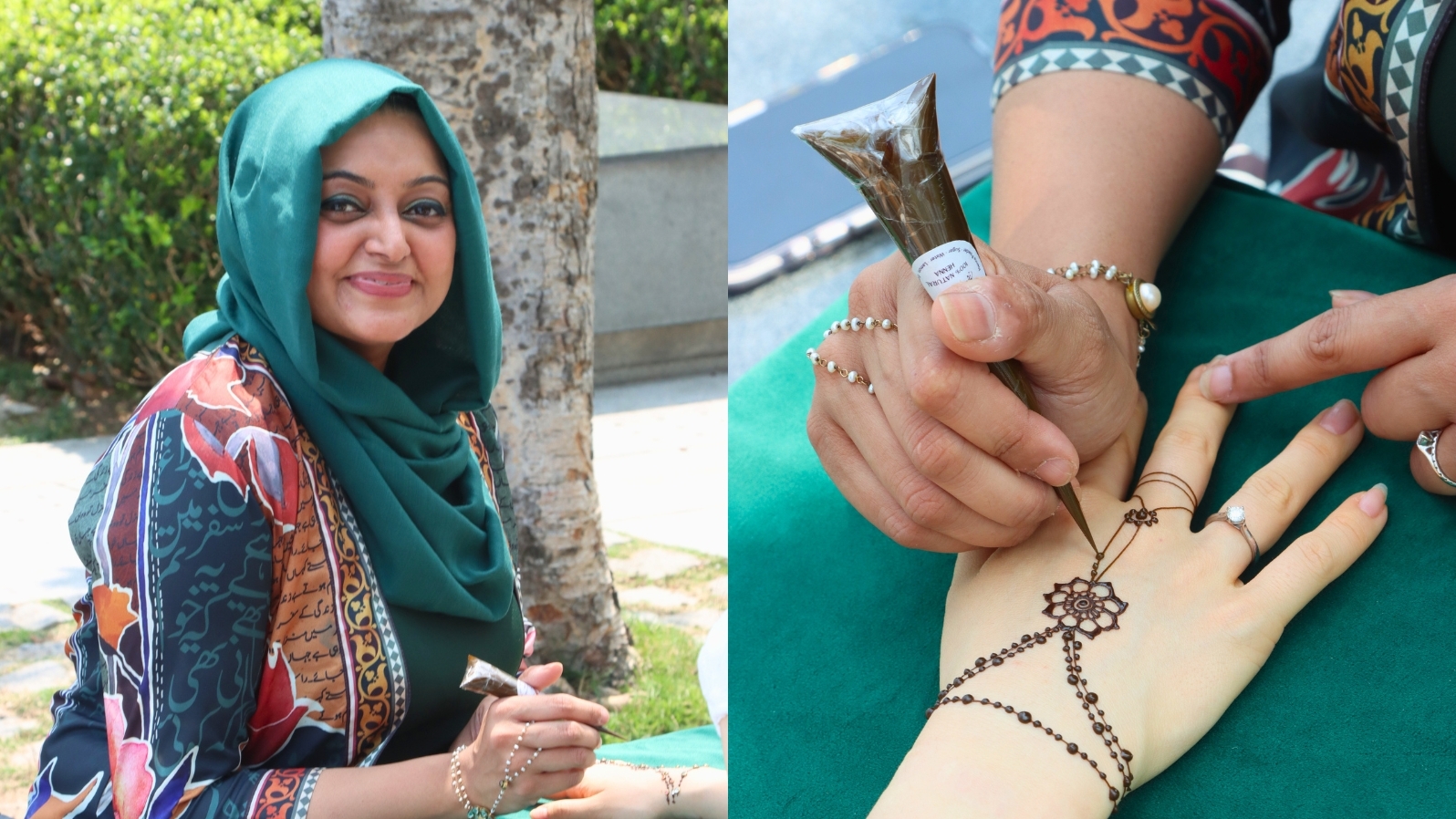
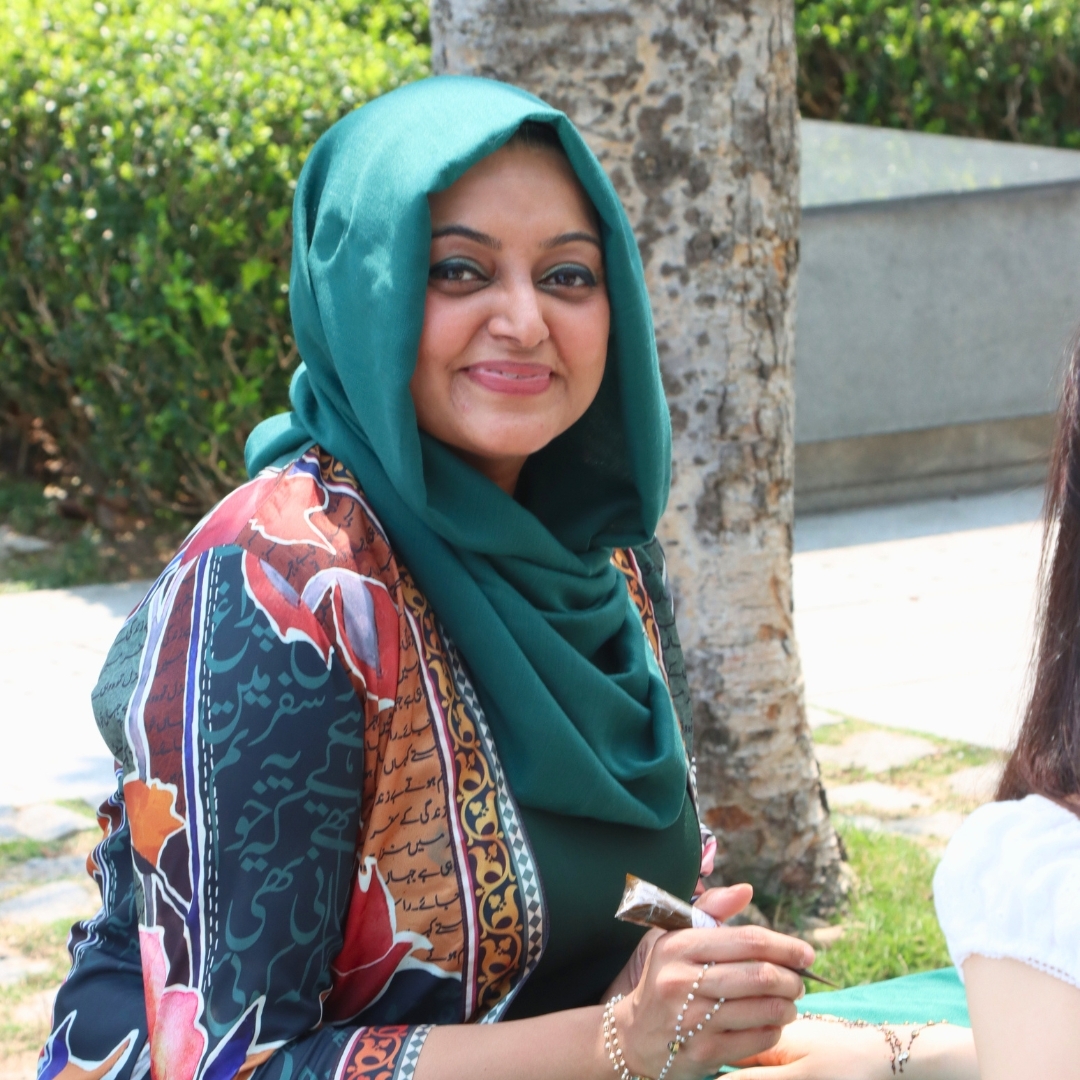
Sara Mush: How Henna Keeps Finding Her at Every New Beginning
Henna has saved Sara Mush more times than she can count. Every time she thought she "should" end her artistic journey, whether it was to get married, to be the perfect daughter-in-law or become a loyal office worker, the patterns returned stronger, guiding her into new chapters and quietly empowering other women along the way. Today, this mother of two continues to reinvent herself while creating space for other young women to do the same.
Where It All Began
Born in Karachi, Sara moved to Hong Kong when her father's job brought the family there. She was painfully shy growing up. Henna first entered her life during school cultural days, where she would run booths after watching her mother apply it for brides in Pakistan. "Henna actually gave me a way to connect with people and to talk to them without feeling shy because I was just sharing my work," she recalls. "The work was always so beautiful that it made conversation easy."
That same magic still happens today. "I go to events and I'm really nervous, but the minute I set up and people start coming for the henna, I forget all about it," she says. "It's all about the henna and it makes it so much easier to connect."
The Day Everything Changed
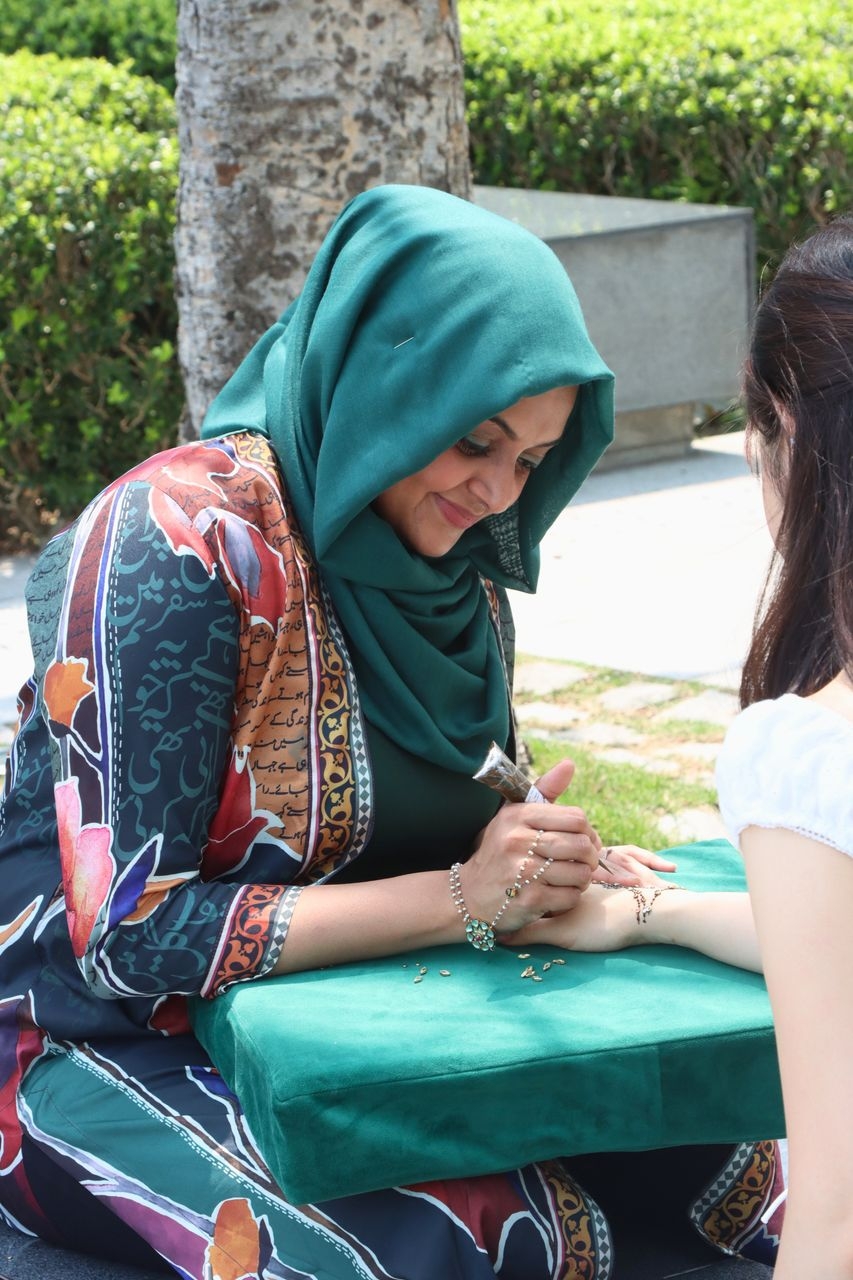
In 2009, at twenty-two, Sara set up her first public stall at Hong Kong's very first handmade arts and crafts fair in Soho. With just four henna cones, no decorations, and no sign, she charged twenty Hong Kong dollars per tattoo. For hours almost no one stopped. By midday she stepped into the street and offered two passing girls a free tattoo. The word "free" drew attention, and a crowd formed quickly as she worked. "That day changed the course of my life," she recalls.
From one o'clock in the afternoon until midnight, the booth had a nonstop queue. That night, her father helped print photos and encouraged her to name the business. Late and tired, she drew a simple logo by hand on poster paper and named it Sara's Henna. The next morning, before the fair even opened at eleven, a queue had already formed. She worked nonstop again, completing an estimated over hundreds of tattoos across the two days. By the end of the weekend, she had bookings for the next three months.
At the time she was working full-time as an events manager at a publishing company. The schedule became exhausting and within a few months, she submitted her resignation. Her father, a motivational speaker, supported the decision. "You're young. If you don't do this now, you might never get a chance. So forget it, quit your job, and just go after your dreams." From September 2012 onward, she worked only for herself. Within a week, she had designed a website, set up a Facebook page, and Sara's Henna officially took flight. Hong Kong had rarely seen real henna before, and people were hooked.
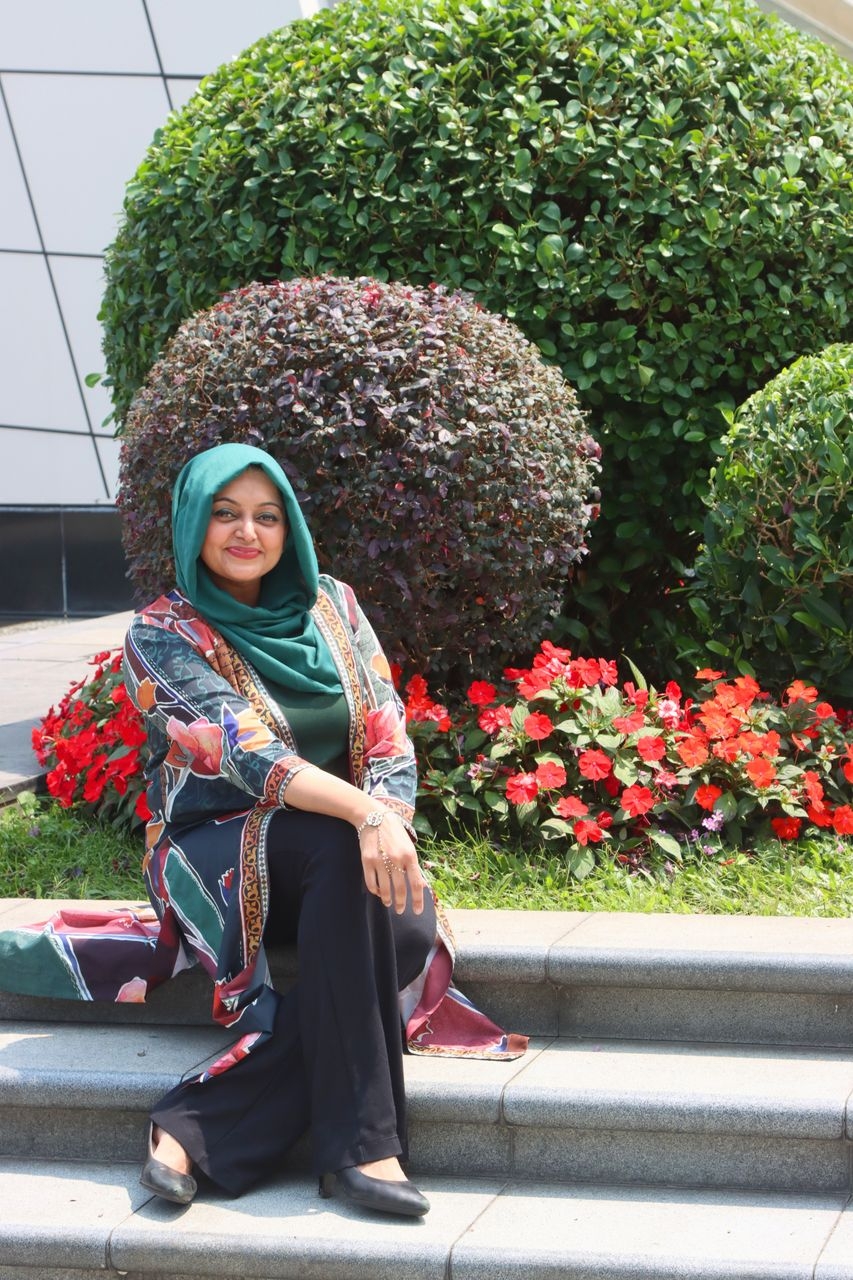
Identity, Motherhood, and Second Chances
Life repeatedly tested that commitment. After moving to Dubai, she assumed her henna career was over and prepared to focus solely on being a wife. Then a Russian bride requested white henna, a technique Sara had pioneered in Hong Kong. The bride posted the photos. Huda Beauty saw them, invited Sara over, and the session exploded online. Sara's followers jumped from twenty thousand to sixty thousand in two hours. Offers flooded in from across the Middle East and beyond. She even worked at the Royal Palace for the Queen of Ajman. "Every time I think henna is done, it comes back," she laughs.
When she became pregnant at the peak of her Dubai career, she and her husband decided to move to Pakistan so their children could grow up near family. Sara stepped into the role of daughter-in-law in a joint family, stopped taking bookings, and put everyone else's needs above her own as she was culturally taught to do. After her daughter was born, she slipped into deep postpartum depression, but could not name it in a culture where new mothers were expected to feel only gratitude: "You just had a beautiful baby girl. What are you upset about?"
Her daughter was two months old when a bride reached out through Instagram, pleading for Sara to do her henna. Sara took the baby in a carrier and went. The bride turned out to be an editor of a major magazine and, three weeks later, a four-page feature appeared, along with a YouTube interview. "Every single time in my life that I have hit rock bottom, henna has saved me," she says.
Sara began sharing her real life on Instagram, taking her newborn to appointments and rolling cones while the baby slept nearby as her husband and in-laws offered consistent support. Young women in Pakistan started reaching out. Many came from backgrounds where henna artists were treated with little respect. Sara gathered them. The first meetup had fifteen artists, which quickly grew to eighty. She taught them professional skills, packaging, and how to value their art. "We managed to create an entire community of young women who never thought henna could be a career option." Over six hundred women now run their own henna businesses, and the craft has gained recognition as a respected art form rather than a lowly side gig.
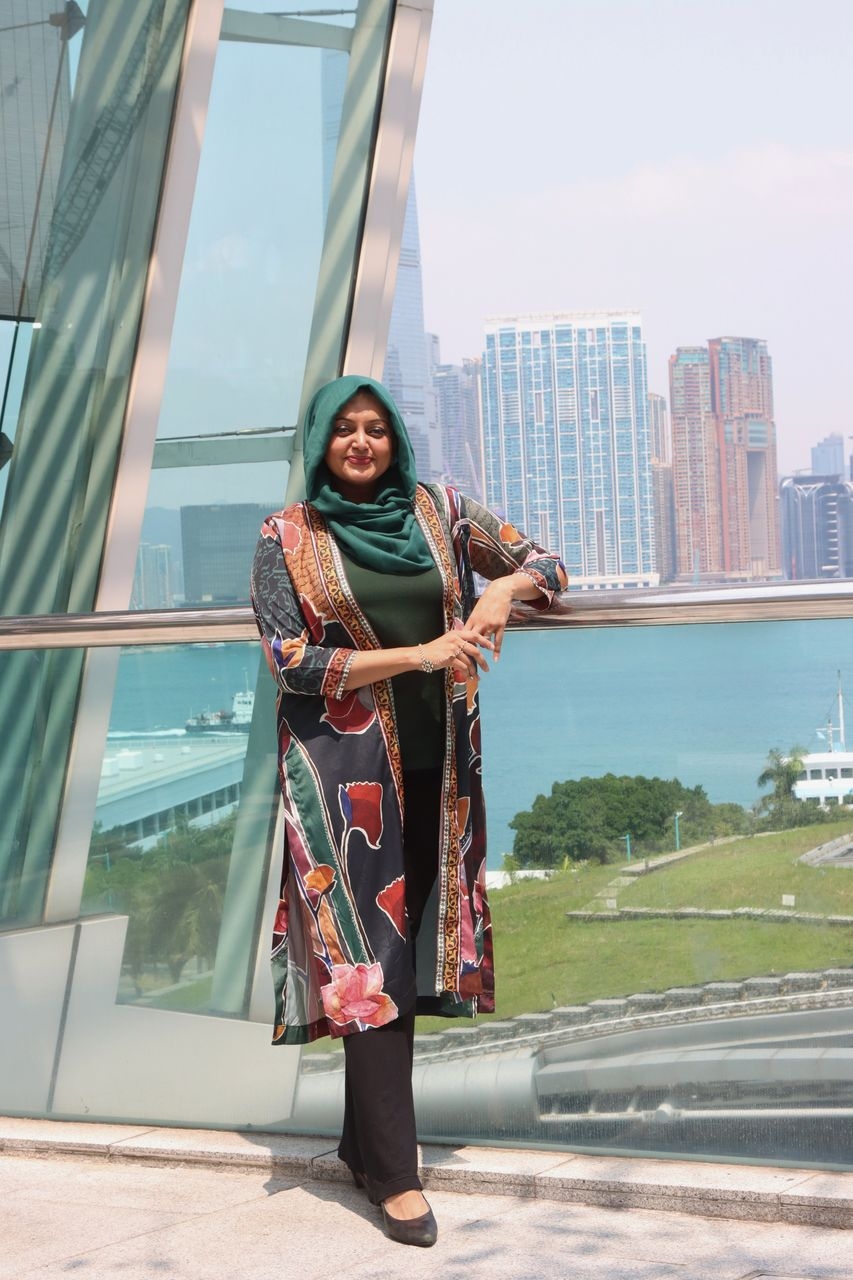
Faith, Flow, and Family
Sara never mapped out this path. "I have never planned to be successful," she explains. "Whatever happens, happens; if it's meant to be, it will come to me." Her strong Muslim faith anchors her. "My faith plays a very big role in that. I have extremely, extremely, extremely strong faith in God." She credits her parents for this mindset. Her father lost his job in Hong Kong, returned to Pakistan, started the country's first official coffee shop chain with seventeen franchises, then pivoted again at sixty to become one of Pakistan's leading motivational trainers. Her mother, a makeup and henna artist, taught Sara the craft but always viewed it as a hobby. "To her, henna will always remain a hobby." Sara understands. "It's the generation that she comes from. She has always put others first." During COVID, Sara even opened a small salon with her mother in Pakistan, helping to fulfill her mother's lifelong dream.
When Sara returned to Hong Kong in 2023, she took a full-time operations job at a wellness and hypnotherapy centre. Desk life did not suit her. Though she enjoyed her work, she kept feeling like something was missing as her creative spark faded. Her husband noticed her unhappiness and urged her to return fully to henna.
Today, she balances her art with family time while continuing to take henna bookings. She continues to push her creativity further, designing murals across Hong Kong while constantly experimenting with new henna techniques, including the crystal-gem style currently popular in India and Pakistan. The gems create a jewelry-like effect that lasts until removed, while the henna fades gently in a couple of weeks.
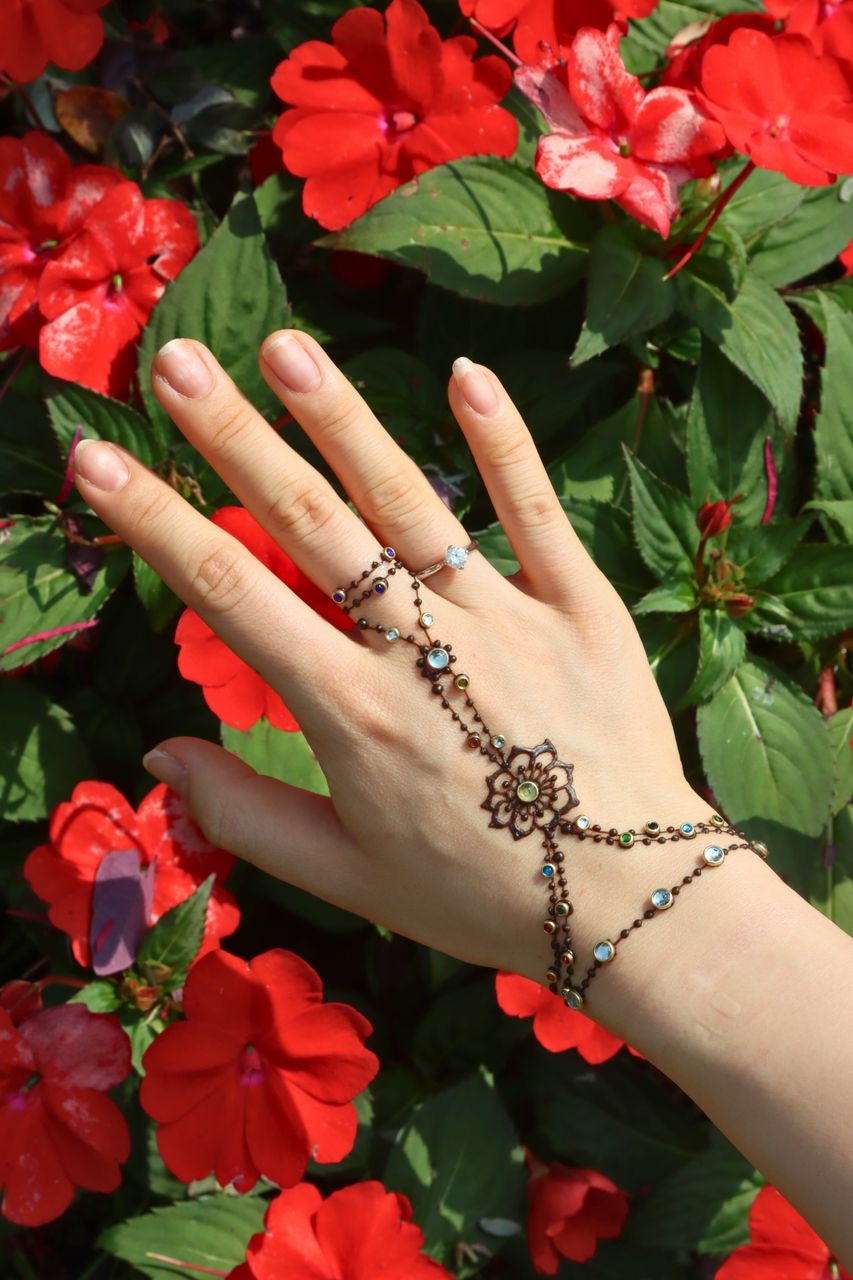
Creating Space for Other Women
This year, Sara launched something deeply personal. After noticing few young Muslim women at local networking events, she invited a small group to help finish a mural at an AIA carnival. They named the gathering Henna Hijabs and Hustle, welcoming young Muslim women who are hustling in their own fields. A recent Eid gathering brought together sixty women from Pakistan, India, Malaysia, Indonesia, the Philippines, and Hong Kong who gathered together simply to connect.
Sara still gets nervous before big events, but the act of painting centers her. She never plans designs in advance. "Somehow, the designs always magically becomes something that is very deeply connected to the person." Clients often react with surprise when a lotus or a motif matches their story or outfit. Five-minute sessions often turn into meaningful conversations.
She has reinvented herself five times now, moving countries, stepping away from her art, and watching it return stronger each time. Through it all she holds to her belief that everything happens for a reason: "I don't see any opportunity as a missed opportunity; I don't see any failure as a failure. It's just a learning."
Looking ahead, Sara wants to bring henna into high fashion and luxury collaborations in Hong Kong. She envisions henna conferences and retreats that bring women together across borders. Most importantly, she wants to leave a legacy for her children and teach them that when you stay open and trust the flow, the next chapter will find its way. "You can choose your dreams