VVIP | Emily Kwan: Reshaping Neurodiversity in Hong Kong

When Emily Kwan answered a tearful call from a frantic mother unraveling over her son's journal entry mentioning his ADHD and autism, it exposed the quiet cruelty of labels that still cast neurodiversity as a deficit in Hong Kong society. The boy, a high-achieving student and top athlete, had kept his diagnoses hidden for years. But when a school counselor discovered the entry, the mother agonized over potential discrimination, fearing the label would shatter his world.
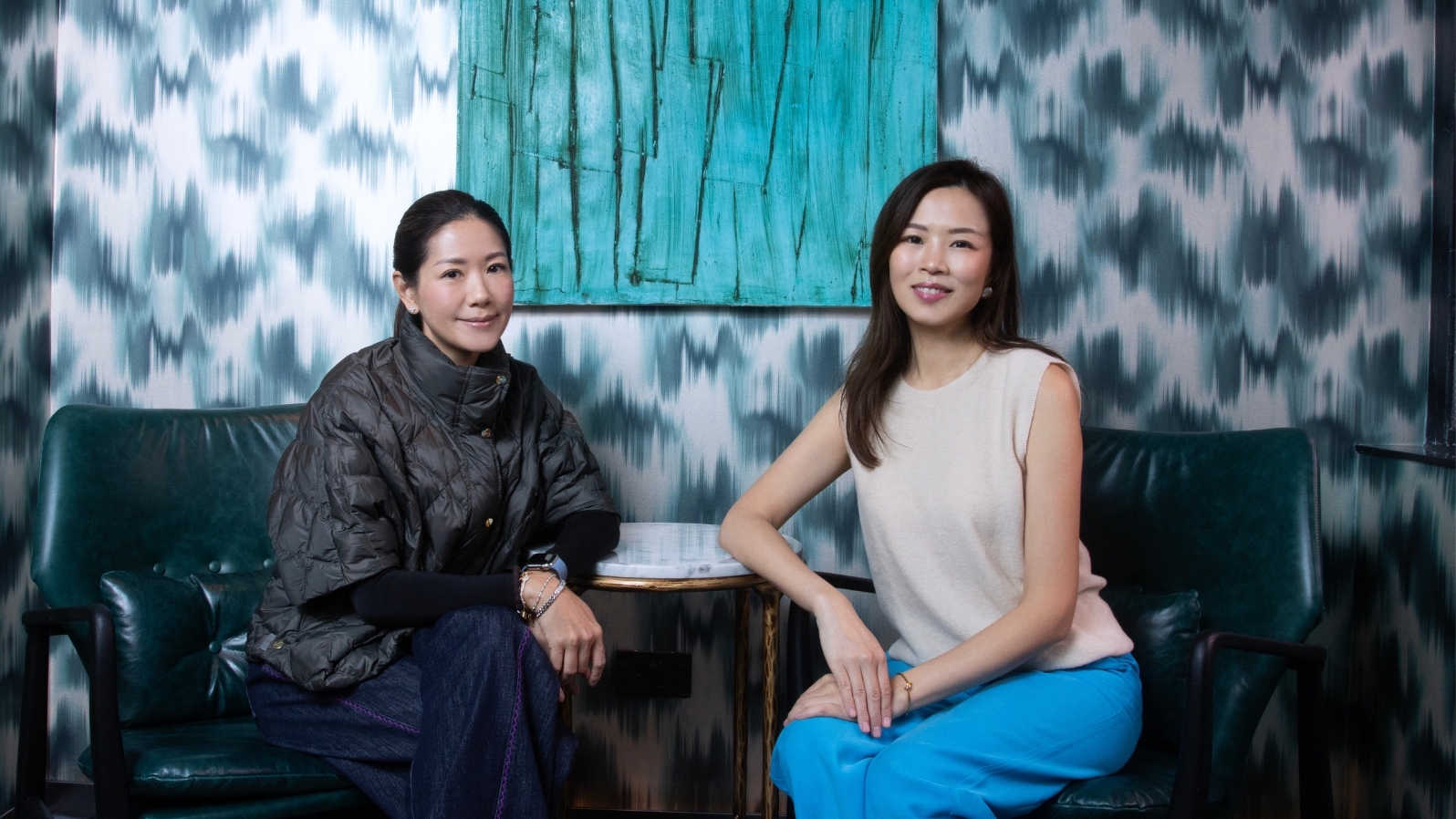
For Emily, the moment crystallized a painful truth: terms like "Special Educational Needs" (SEN), were confining potential rather than unlocking it. This intimate crisis ignited her mission to dismantle the language that has long confined neurodiverse individuals to narratives of deficit. In an intimate dialogue with Jessica Ng, founder and CEO of JESSICA, Emily reveals how her dual worlds as the Founder and Director of Kids Connect and Founder and Chairwoman of the NeuroDiversity Association Hong Kong (NDAHK) are forging a more inclusive Hong Kong.
A Journey Across Borders and Disciplines
Emily Kwan's evolution as an advocate mirrors the fluid, border-crossing life she has led, defined by an enduring impulse to foster transformation. Born and raised in Hong Kong, she absorbed the city's high-stakes intensity through local schooling before embarking on studies in Vancouver and Toronto, where she pursued a BA in Honors Psychology from the University of Western Ontario and a Master's in Applied Disabilities Studies from Brock University. She also spent time furthering her studies in America, attending specific programs from the Harvard Business School and the Stanford Neurodiversity Project. This nomadic path, she notes, gifted her a "privileged spot" as a Hong Konger abroad: constantly encountering diverse cultures, integrating Eastern perseverance with Western openness and diversity.
After an initial foray into clinical psychology left Emily yearning for deeper impact, she decided to pursue a Master's in Applied Disability Studies in Toronto with a specialization in Applied Behavior Analysis (ABA) while pursuing her Board Certified Behavior Analyst (BCBA) qualification. "I felt like I was in a very passive role in making change," she explains, prompting her to switch programs and embrace early intervention. The pivot unlocked something profound. "When I got into early intervention, I really learned about the power of change."
Returning to Hong Kong in 2010, Emily faced a stark reality: the local landscape for neurodiverse support lagged behind Toronto's rigorous standards. Undeterred, she founded Kids Connect, a center offering personalized programs for neurodivergent children, parent coaching, and school professional development. "I looked into a few different companies, and I didn't really like the way they operate, so I just decided to make my own," At its core, Kids Connect embodies her entrepreneurial spirit; a drive to innovate where systems fall short.
The Ecosystem Lens
Emily's work at Kids Connect sharpened her "ecosystem" worldview, a lens that views neurodiversity not in isolation but as a web of influences, from child to family to community. This holistic gaze, stemming from Canadian accreditations where quality spanned programming, parental engagement, team management, operation, funding, and policies, now permeates everything she touches, viewing neurodiversity not as an isolated trait but as a vital thread in a broader narrative. "When I look at how I built Kids Connect and NeuroDiversity Association Hong Kong, I see that it is more than advocacy work for neurodivergent individuals; it is also related to their family, our community, and how everyone in the general public understands this. This is the whole ecosystem."
It was this interconnected vision that birthed NDAHK in March 2024, evolving from the action circle that Emily was leading: a cadre of educators who participated in the Cultivating Leadership in Education Program by the Catalyst Education Lab, united in a bid to overhaul SEN's outdated frame. "It's not just renaming it; it's also rethinking and reshaping it." In this framework, Emily's dual roles at Kids Connect and NDAHK converge seamlessly: the former offers intimate, skill-building support for individuals and families, while the latter reframes broader narratives. "They have very different roles: Kids Connect is a private service, and NDAHK is an advocacy group," she clarifies. A family's school dilemma might demand Kids Connect's tailored coaching, while NDAHK reshapes the underlying discourse.

Dismantling Stigma: From Deficit to Strength
The mother's frantic call served as a catalyst for change, illuminating the ways stigma silences potential. SEN, conceived with supportive intent, had hardened into a deficit-driven lens, funneling children into remedial silos while dimming their innate brilliance. "It has the best intention, but unfortunately, the stigmatization that came with it became negative over time," Emily observes, her insight sharpened by years of witnessing families navigate these currents. Therapy often zeros in on deficits that define the conditions, such as attention span and academic performance, ignoring talents that could redefine success. "We ignore multiple intelligences because we always regard academic ability as the only way to measure someone's value," she adds.
At the core of NDAHK is a crusade against misconceptions that paint neurodiversity as a burden. With an estimated 15-20% of the world's population neurodivergent, overlooking these strengths carries a massive societal cost. "The biggest misconception is that they have no strengths, and that their needs are so substantial that they became the identity," Emily explains. She points to luminaries like decorated Olympian Michael Phelps, who was diagnosed with ADHD as a child: "There are so many neurodivergent people who have been successful, because they have been given the elements that they need to be successful." When neurodivergent individuals are not provided with the resources needed to reach their full potential, it becomes a big cost to society on an economic level: "A lot of them are left unemployed because of a lack of nurturing their strengths, and a lack of understanding on how best to match their skills with the job tasks," she adds. Prolonged focus on shortcomings also erodes self-perception, Emily explains: "If I grew up being constantly told about my specific needs and what my challenges are for 18 years, it will change how I see myself 18 years later." NDAHK's approach embodies the neurodiversity affirmative model, striking a balance by acknowledging the challenges while also recognizing the strengths.
Even translation posed a formidable barrier, as Chinese terms carried echoes of illness and impairment. "It was originally translated in a way that has a very heavy medical connotation." After months of consideration, they arrived at "腦力", or brain power, a term that reflects the interactions between the brain and the resilience and vitality one beholds. In Emily's hands, this linguistic pivot isn't just about semantics, but a form of reclamation, evolving terms from outdated slurs to more humane framings.
Orchestrating Change
Where stigma isolates, NDAHK thrives on synergy, weaving voices from neurodiverse individuals to academia into a "multifaceted approach." The November conference exemplifies this: "It's such a good reflection of how collaboration matters. If we were the only organization that changes how we see it, and if this knowledge were not widespread, then we would not be able to trigger a community impact," Emily reflects. With 20 partners spanning medical experts to academic leaders, participants recalibrated programs through affirmative lenses. "It's like an orchestra; we all have to play together, and we all have to use our different instruments to make change together."
A survey with The Chinese University of Hong Kong, engaging almost 600 participants, including parents, neurodiverse individuals, and teachers, lent empirical weight, found that while the Chinese term "腦力多元" (neurodiversity) was the least known, it was also deemed the most appropriate and least offensive. Echoes persist, with universities interested in conducting more research, organizations creating new materials, and nomenclature from the Jockey Club "Diversity at Schools" project reaching 175 schools.
For those outside the inner circle: the everyday parent, teacher, or colleague, Emily extends an invitation to simple, authentic engagement. "For the neurodivergent individuals, it might be helpful if they can speak about their journey... that will help the people around them to truly understand who they are rather than what others think they are." Families should believe in the underlying potential and strengths, while listening without presumptions, while organizations should invest in training and implementing policies with intention. The goal is seamless integration: "I think having the understanding that we all gain a lot more as a society if we can understand and appreciate the value of diversity from a spectrum of cognitive styles."
Workshops serve as vital conduits. NDAHK's forums plant seeds of awareness, reframing the wider narrative, while Kids Connect's sessions cultivate actionable growth. "We have done a lot of conferences, and we're trying to work on the social media and further collaborations with a lot of established organizations, because they have the network," Emily says.

Navigating Currents: Challenges, Triumphs, and Horizons
Obstacles remain. Building infrastructure hinges on scaffolding: "I need to start thinking about how to build an infrastructure where, if people offer help, we have the operational structure to leverage on their skills and contributions. I need to start thinking about how to move forward beyond one person and take this further." Resources, too, are pivotal: "It depends on funding." Yet, an undercurrent of appreciation sustains her: "I'm very grateful for the help that comes along the way... I've gotten a lot of feedback and encouragement, and I'm so impressed with how receptive and open other organizations have been. Everyone's like, 'Yes, I'm going to support that. How can I help?'" she affirms. Blossoming triumphs resonate deeply: the conference's impact on changing policies, medical professionals embracing affirmative assessments, and burgeoning research.
Five years on, Emily dreams of a world where diversity is valued. "I'm hoping that neurodiversity becomes a common concept and term," she says. "People have their own identities, and it's an asset to society that each of us is unique and different. Not everyone is neurodivergent, but every one of us operates on a spectrum of cognitive skills, so what really is typical?"
To those charting similar waters, whether emerging advocates or neurodiverse trailblazers, Emily offers unvarnished encouragement: "If you think something is right to do, just try to go for it. Energy works in a magical way; if you believe in certain things, you will attract people who will support the idea, and you will form a generative force."
Emily's two-decade odyssey reminds us that true inclusion is achieved when we honor the full spectrum, choosing to see strengths where they are often ignored. In a city racing toward equity, Emily Kwan isn't merely advocating for change, but paving the way toward a society where every individual can shine. "I just wish I started this earlier," she laughs.