
VVIP | Jennifer Veigel: Shaping Austria's Sustainable Future

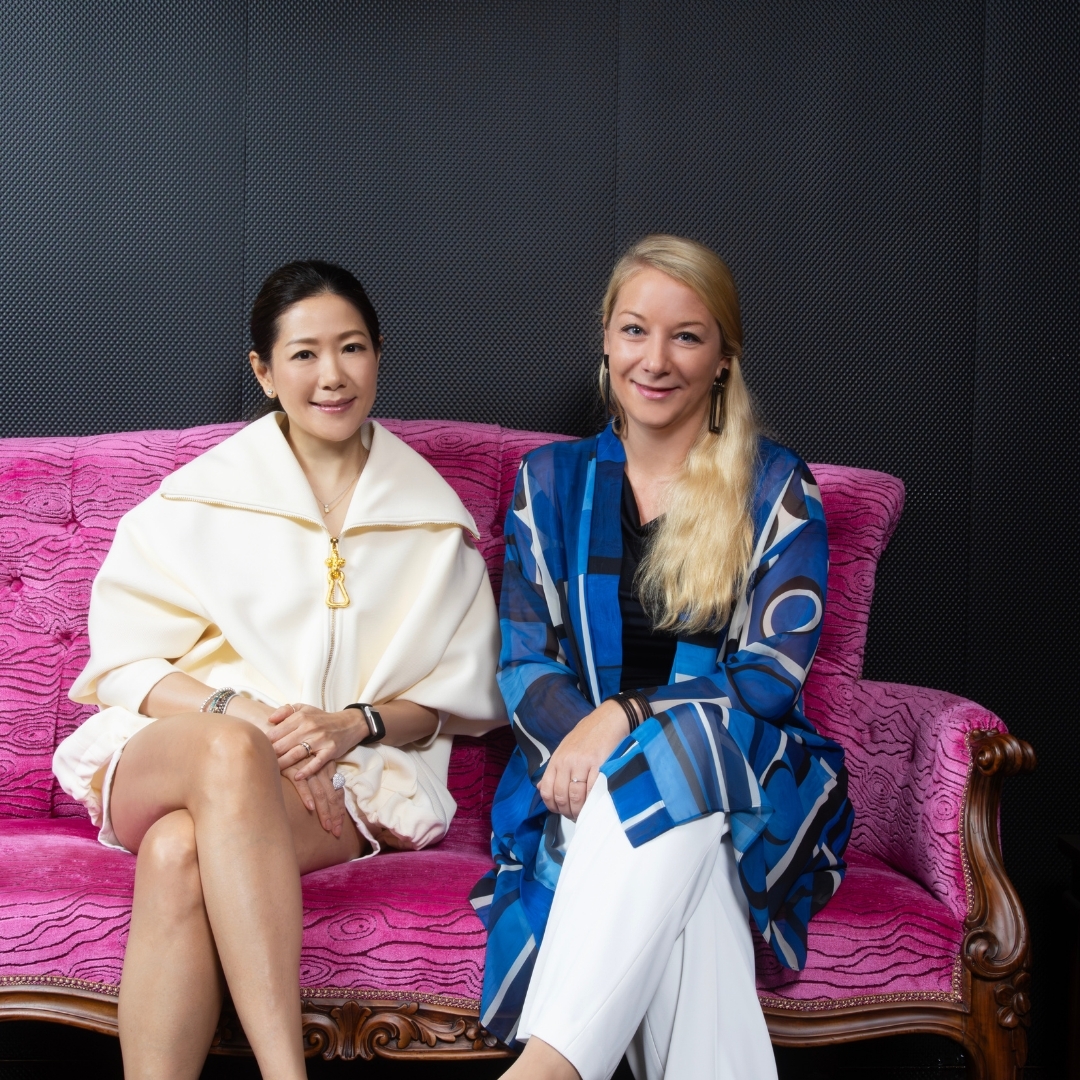
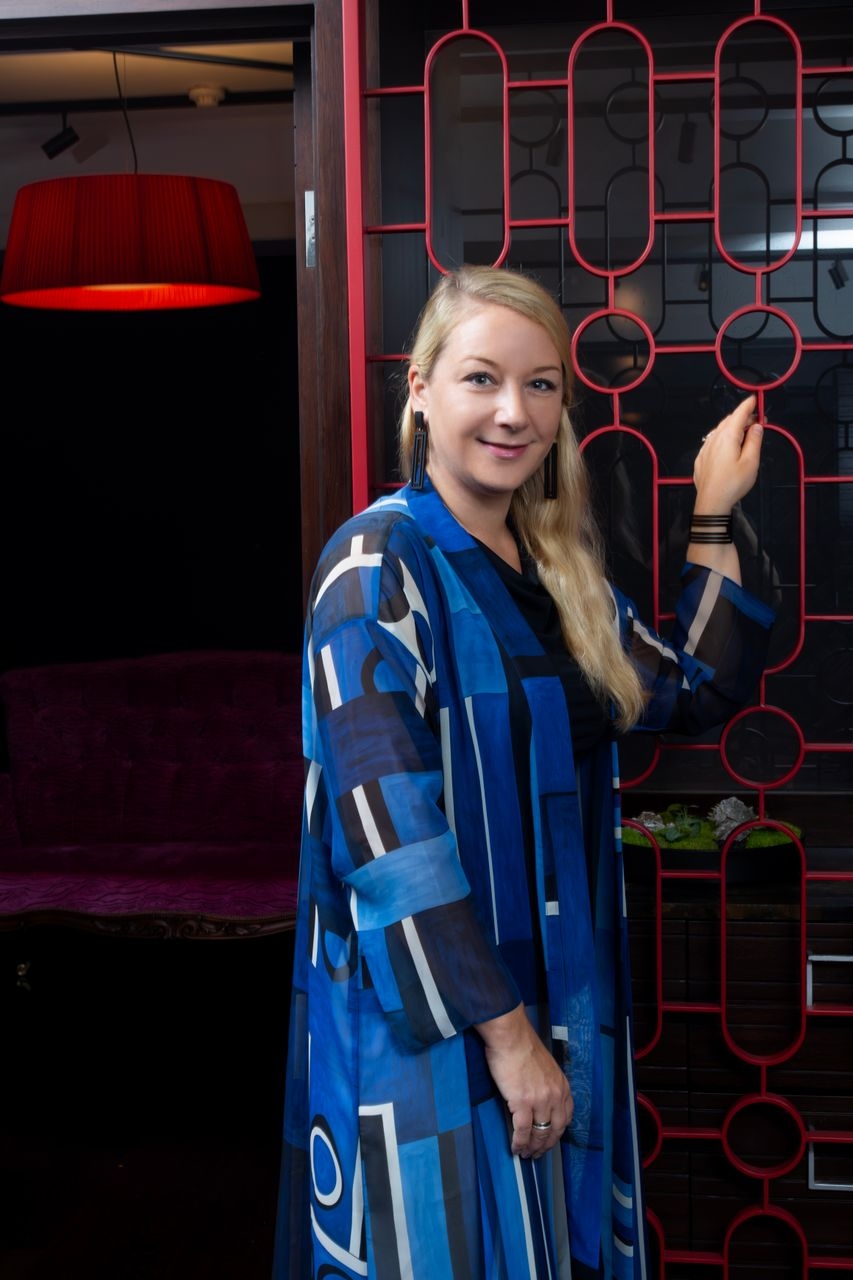
In the stifling midsummer heat of Hong Kong, adding an extra layer seems counterintuitive. But Jennifer Veigel's lightweight, custom-printed robe feels entirely suited to the climate: it requires no ironing, drapes with the elegance of a traditional kimono, and came together over a casual coffee chat in Vienna.
Designed by Dora Strasser, a retired Austrian schoolteacher turned digital artist operating under the boutique label dare2digress ARTS, the garment serves as a tangible, wearable prototype for a much broader diplomatic and commercial initiative: the Austrian Sustainable Fashion Initiative.
As Consul for Commercial Affairs and Austrian Trade Commissioner for Hong Kong and Macau, Jennifer is the driving force behind this ambitious cross-border effort. Orchestrated by ADVANTAGE AUSTRIA Hong Kong, the initiative brings seven pioneering Austrian design labels directly to CENTRESTAGE 2026, Asia's premier fashion showcase held annually at the Hong Kong Convention and Exhibition Centre. Bringing seventeen years of trade experience across Singapore, Shanghai, and Chicago, alongside a significant period managing corporate communications at the organization's headquarters in Vienna, Jennifer assumed leadership of the Hong Kong office in August 2023. Now, she is preparing to bring Austria's eco-conscious design delegation to CENTRESTAGE 2026 at the Hong Kong Convention and Exhibition Centre.
The Road to Hong Kong
The project has been two years in the making. Early concepts focused on academic partnerships, exploring collaborations with local Hong Kong institutions and a place in an existing student fashion show, but when those did not fit the timelines or internal requirements, Jennifer and her team made a decisive turn: they would build their own show at CENTRESTAGE, add a country pavilion, and bring the brands as exhibitors.
"It was relatively painful in the beginning to convince everybody that somehow this is going to work," Jennifer says of the initial efforts to align stakeholders across Europe and Asia. That tenacity was tested again when external production schedules threatened to stall the physical construction of the showcase. When the fair's booth production partners said they would only come on board in August, Jennifer's office took matters into their own hands. A talented Austrian intern used CAD software to produce the booth design. "We just did it ourselves," Jennifer recalls. "We handled everything, from the graphic design to the layout and planning."
By late July, the physical collections, sample lines, and exhibition materials had been packed and dispatched directly from Austrian studios. To avoid the high overhead and environmental impact of long-term warehousing, air freight schedules were coordinated so the goods would arrive at the fairgrounds just as the halls opened.
To document the initiative and extend its impact, Jennifer partnered with an Austrian film production crew establishing its footprint in Hong Kong. The filmmakers captured early strategy sessions and will document the live runway show at CENTRESTAGE. An Austrian composer has also been commissioned to write an original musical score for the runway, adapting classical Austrian motifs into a contemporary format tailored for a global fashion audience.
Built to Last
For Jennifer, environmental care is neither a new corporate slogan nor a compliance exercise. In Austria, it is deeply embedded in daily routines, shaped by alpine geography, regional history, and household habits passed down through generations. "It's not just a buzzword; it is part of people's DNA," she explains. "People naturally do it."
This intuitive approach stems in part from Central European post-war history, when repair, maintenance, and careful use of resources were practical realities rather than lifestyle choices. "You take care of the resources you have, because you don't have that many," Jennifer explains. "You wear things as long as possible, you repair them, and when you can't use them anymore, you recycle them into something meaningful." This philosophy is physically woven into traditional Austrian garments like the Dirndl. Historically constructed with extra internal seam allowances, these dresses are designed to be adjusted over a wearer's lifetime and handed down to daughters and granddaughters.
While commercial mass-market fashion continues to sell well in Austria, public understanding of sustainable choices remains high. "Fast fashion brands are still doing well," Jennifer remarks candidly. "It's not like everyone is only wearing sustainable brands, but you don't need to explain the concept as much because the awareness is already there."
The Austrian Seven
The seven labels visiting Hong Kong represent a carefully curated cross-section of Austrian design, ranging from fiber technology and high-performance outerwear to upcycled historical textiles and 3D-printed modern accessories. Each of the seven participating labels reflects a distinct approach to responsible manufacturing. At the industrial scale, the Linz-headquartered Lenzing Group represents international leadership in wood-based specialty fibers such as Tencel, collaborating with international fashion houses to replace petroleum-based synthetics. On the technical outerwear side, Cape de Coeur creates luxury technical weatherproof capes using its proprietary wind-, rain-, and snow-proof CoeurTex fabric.
Handcrafted precision and circular principles define the independent apparel labels. Dora Strasser's dare2digress ARTS produces custom, made-to-order garments with print-on-demand textiles that eliminate excess inventory. In Vienna, studio km/a turns retired parachutes, alpine-cabin textiles, and weathered tent canvas into one-of-a-kind upcycled garments. Meanwhile, MONTREET, founded by circular-economy expert Nadine Schratzberger, combines functional outdoor apparel with strategic consulting to drive systemic change.
The innovation extends into accessories and footwear. MY MAGPIE Vienna creates feather-light jewellery 3D-printed from recycled polyamide and finished by hand with gold-plated sterling silver. Woody, a century-old family workshop in Carinthia, handcrafts shoes with flexible wooden soles designed for joint health, repairability and lifelong wear.
To connect with these independent creators, ADVANTAGE AUSTRIA partnered with Ronja Scherzinger, founder of FashionTouri, a specialized IT platform that connects travelers with authentic, sustainable local artisans in Austria. Ronja played an instrumental role during brand recruitment and is currently developing a Hong Kong version of her platform to highlight local regional brands.

Style Meets Substance
While environmental ethics provide the baseline for these brands, Jennifer is realistic about commercial realities. To move sustainable fashion beyond a niche market, products must compete on daily performance, comfort, and actual cost per wear. In Hong Kong's heat and humidity, breathability, weight, and ease of care become decisive factors.
Jennifer emphasizes that shifting the conversation toward practical benefits makes sustainable design far more accessible to broader consumer markets. "I am well aware that the international conversation around environmental protection has shifted," Jennifer states directly. "That is why we highlight quality, functionality, and long-term cost savings."
In daily wear, natural wood-based fibres offer clear practical advantages. "If a garment is made from natural wood fiber like Tencel, it resists odor when you sweat," Jennifer points out. "It feels like silk, so it feels like a luxury product, but it is meant for everyday wear."
Her own custom robe from dare2digress ARTS was designed around these exact principles of urban utility. "I met with Dora in Vienna and explained what I needed," she says. "In Hong Kong, it is hot, so I wanted something thin and light that I don't have to iron."
Bridging Two Markets
For small, independent European brands, entering Asia can be intimidating. ADVANTAGE AUSTRIA structured the trip to remove most of the barriers, managing logistics and providing cultural briefings on local business pace, sizing, colours, and retail preferences. "When people ask how we motivate small fashion brands to come all the way to Hong Kong, my answer is simple: we take care of everything," Jennifer says. "There is no financial risk involved for them; they can simply showcase their work and see if they find potential collaboration partners."
The exchange runs both ways. While European designers prioritize local materials, sourcing specific sustainable hardware such as zippers or buttons can be challenging within European supply chains. Hong Kong's established trade networks offer access to vetted regional suppliers specializing in sustainable components.
Following a successful preview at Hong Kong's China Club in May, the delegation arrives at CENTRESTAGE 2026 prepared to turn creative dialogue into lasting partnerships. "We are not expecting millions of dollars in exports overnight," Jennifer reflects as she looks toward the opening runway show. "It is really about bridging two markets."
While the coats, shoes, fibers, and jewelry are the visible centerpiece of the Austrian pavilion, Jennifer measures success in the relationships that take shape between two places that, on the surface, look very different, and in discovering just how much common ground they already share. "It's really about collaboration and lifting each other up," she smiles.