Kevin Bayashi: The Beauty of What Remains Unsaid
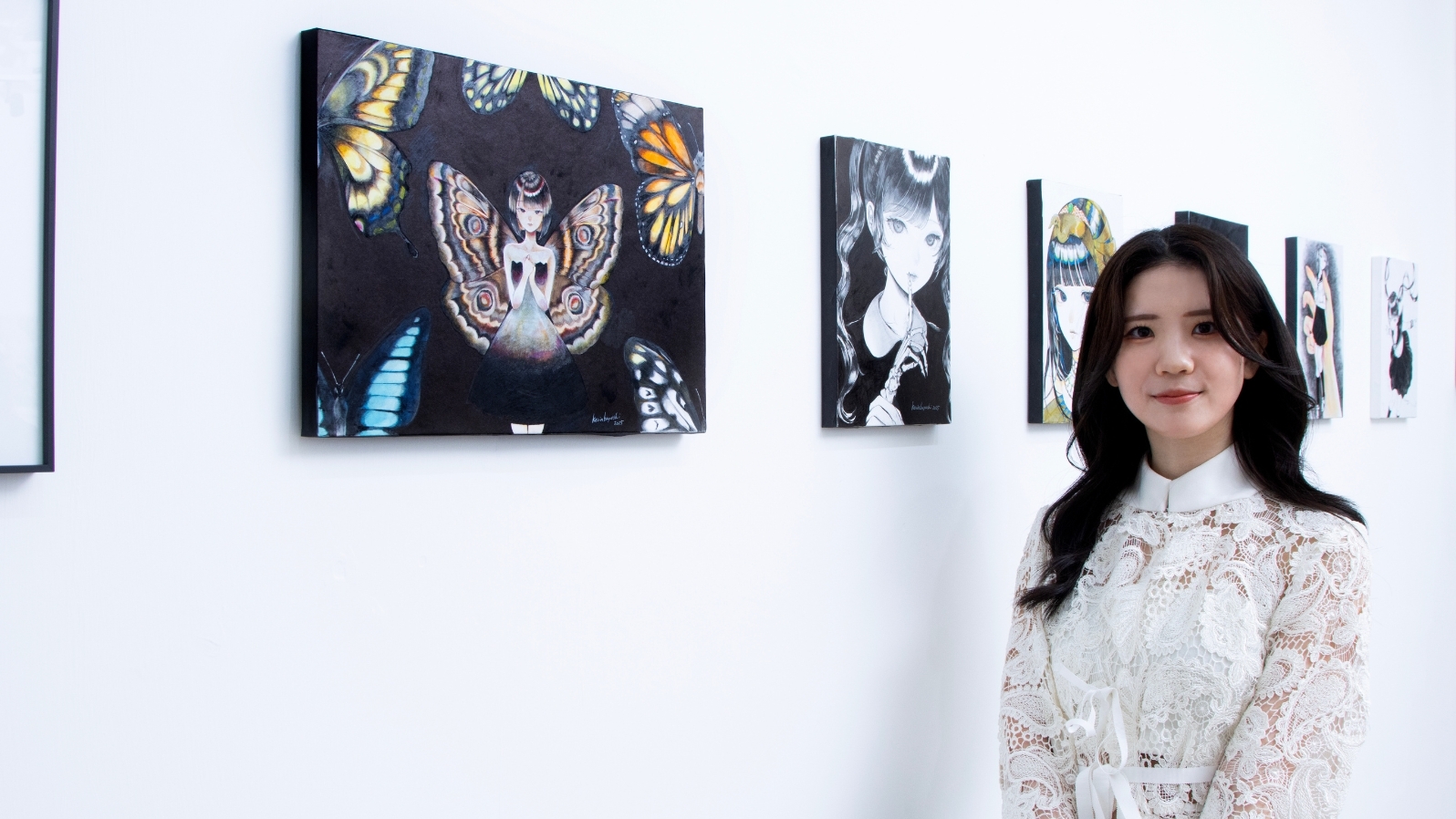
Kevin Bayashi talks to her dolls every day. They never answer, which is exactly why she keeps going back to them. For over ten years, these silent companions have been the core of her art: porcelain skin, fixed expressions, an unchanging calm that she translates into portraits of women who refuse to bend for anyone.
The silence in Kevin's paintings is a deliberate choice, representing the quiet armor worn by women who refuse to perform cheerfulness for anyone else's comfort. For Kevin, this silence is power, a steadfast form of beauty that doesn't beg for approval or explanation.
Kevin discovered her calling early. At fourteen, a best friend's offhand comment about wanting to become an artist inspired her to begin her own artistic journey. The friend never followed through, but Kevin did. She began sharing her work on Twitter (now X) in 2013, and in her second year of high school in 2014, a gallery in Osaka discovered her online and invited her to exhibit. One visitor bought a piece on the spot. That moment felt like validation that art could be more than a hobby: it could be a path forward. She decided to pursue it professionally, even though her parents initially did not fully understand or support the choice.
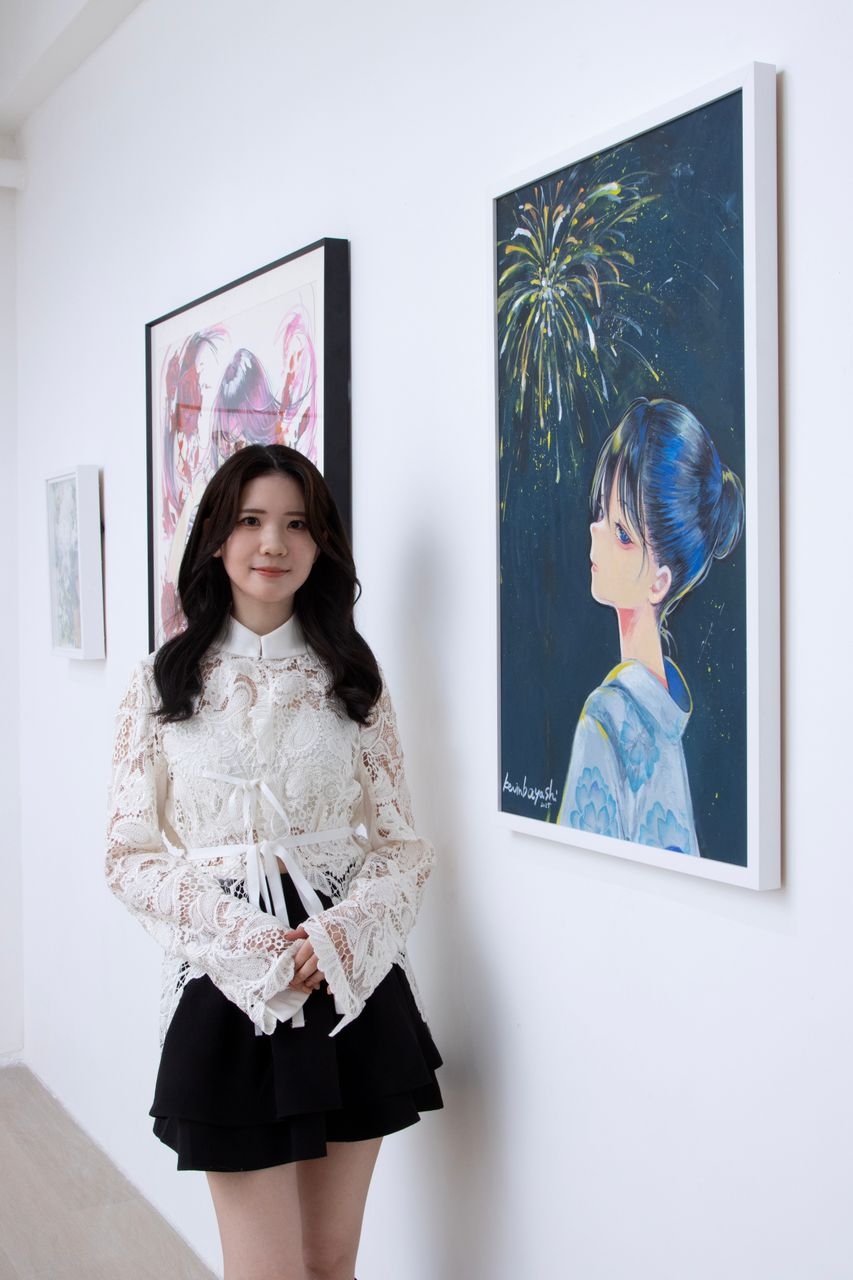
"I remember pushing myself hard, thinking, 'I'll prove it by earning money through my drawings first, and then they will understand,'" she recalls. The pressure of proving herself so young was the biggest challenge in those early days. She felt alone in her determination, but that independence built her resilience. By around 2015, she had debuted as a full-time artist, gradually growing her audience through social media.
The Doll That Never Smiles
Her central motif emerged almost immediately: dolls. Kevin was captivated by their stillness. "Dolls don't smile; dolls don't talk," she explains. "That silence is strength." Humans often laugh or smile to hide vulnerability, but dolls stay unchanging and unapologetic. This refusal to adapt struck her as profoundly empowering. Her earliest works, like a rough 2015 piece titled "knife," captured a raw fascination with doll-like beauty. As a student, dolls were expensive and unattainable; drawing became her way to claim that beauty for herself.
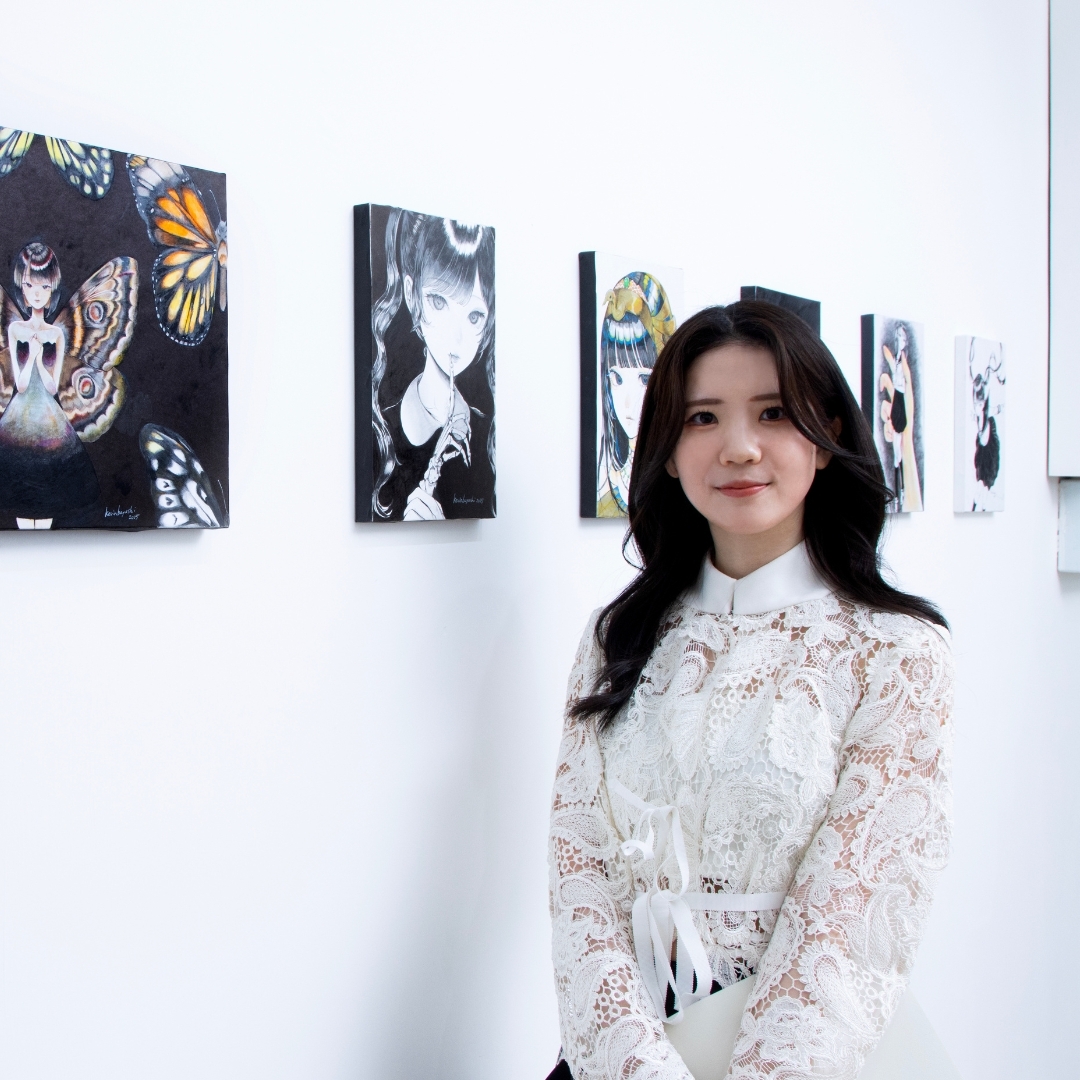
Over the past decade, her style has evolved into delicate, glamorous portraits of women inspired by real dolls, particularly ball-jointed ones from China, Korea, and Japan. She collects them, photographs them extensively, and uses them as direct references; many of her figures share similar expressions because they stem from the same models. The women in her paintings have porcelain skin, large expressive eyes, and an aura of preserved beauty; fortress-like, they hold their allure inward rather than offering it outward.
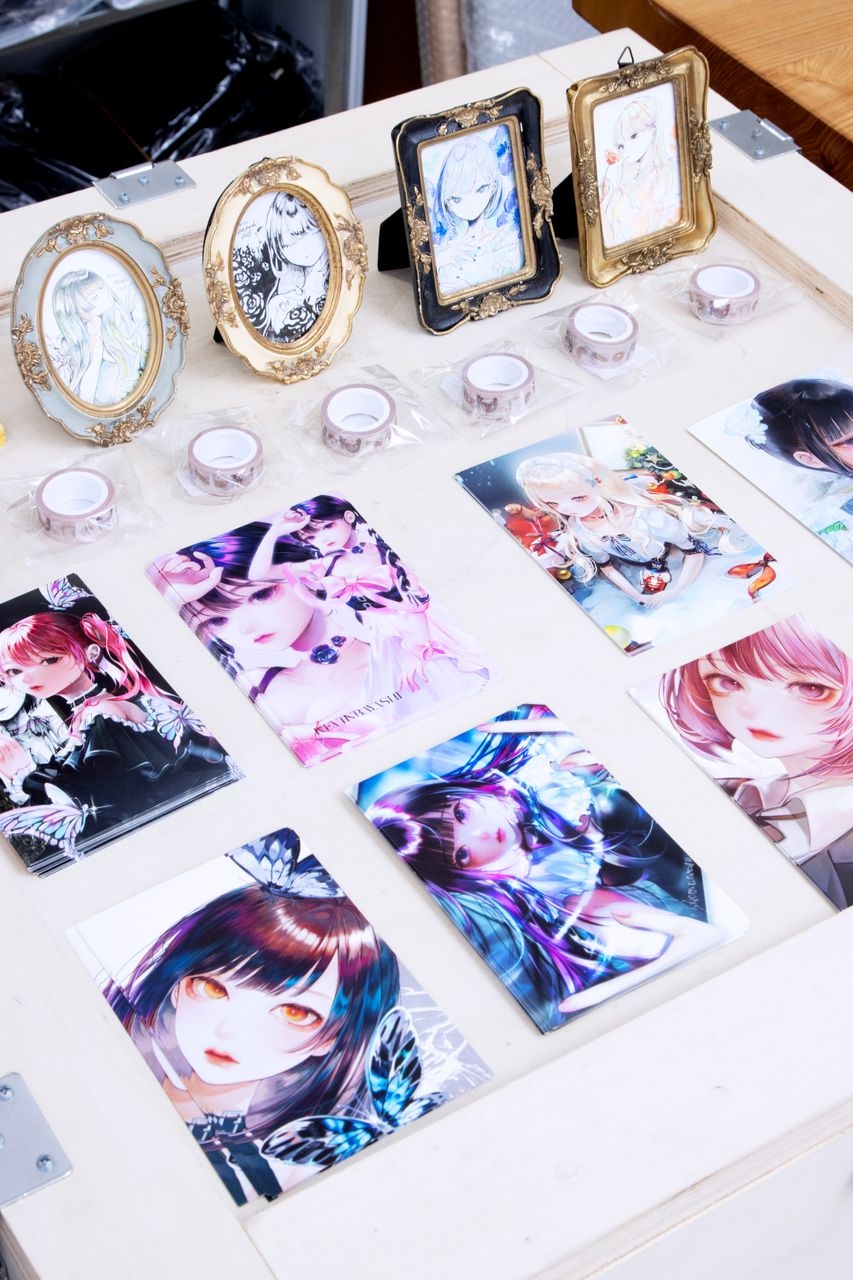
Building the Fortress
The depth in her work grew through personal hardship. In 2017, Kevin was hospitalized in a psychiatric ward for a full year as she grappled with struggled tied to her identity as a woman: relentless online harassment, attacks on her character, and cruel judgments about her appearance. These experiences were painful and isolating. "I had been drawing dolls even before that," she says, "but after this experience, my work began to reflect my inner world and my relationship with society much more deeply."
Recovery brought transformation as she emerged stronger. In 2018, just one year after her release, she held a solo exhibition showcasing artworks created during her hospitalization. The response was overwhelming: visitors approached her to say the pieces had helped save them in their own dark moments, or that seeing her continue forward despite everything gave them courage. Around the same time, her persistence and vision earned recognition at Miss iD, a Kodansha audition project that celebrated women who break free from conventional expectations, a recognition that launched her into Tokyo's art scene.
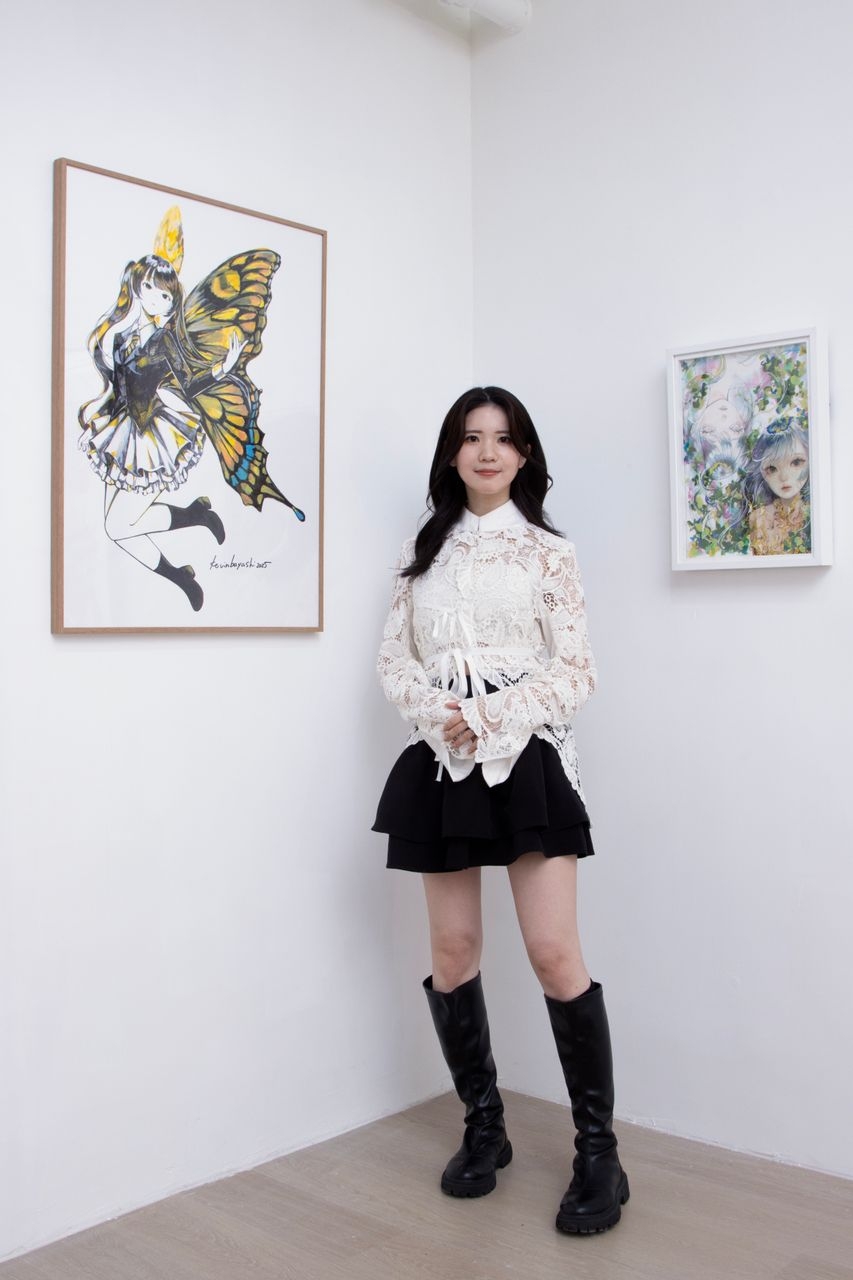
The Birth of MUTE
The dolls in Kevin's art embody her resilience: never smiling, yet radiating an inner strength. Kevin balances fragility and fortitude intentionally, creating tension that draws viewers in. Her Hong Kong solo exhibition, MUTE, brought this theme to life. The show featured 25 pieces, including 20 new works made specifically for the space. It delved into the one-sided bond between humans and dolls: distant yet tender, fragile yet resilient. Love is given freely, but no reply ever comes. "No matter how much love you give, there's never a response," she explains. "It feels cold, but also warm."
A pair of companion paintings in MUTE illustrates a powerful reversal. In the first, the human appears dominant, able to speak, laugh, and live fully. But humans age, weaken, and eventually fade. The doll, unchanging, outlasts them. In the second, the doll emerges as the stronger presence. "I wanted to flip the power dynamic," Kevin notes. "What we think is strong eventually disappears." This idea was built on an earlier solo show themed "The Origin of Beauty," where she presented dolls as sacred, perfect beings. Soon after, she began crafting physical dolls in her own studio. Caring for these flawless yet completely dependent creations revealed a new layer: she could devote endless time without ever growing tired. That realization led straight into MUTE's atmosphere of near-intimacy, where connection hovers but never fully lands.
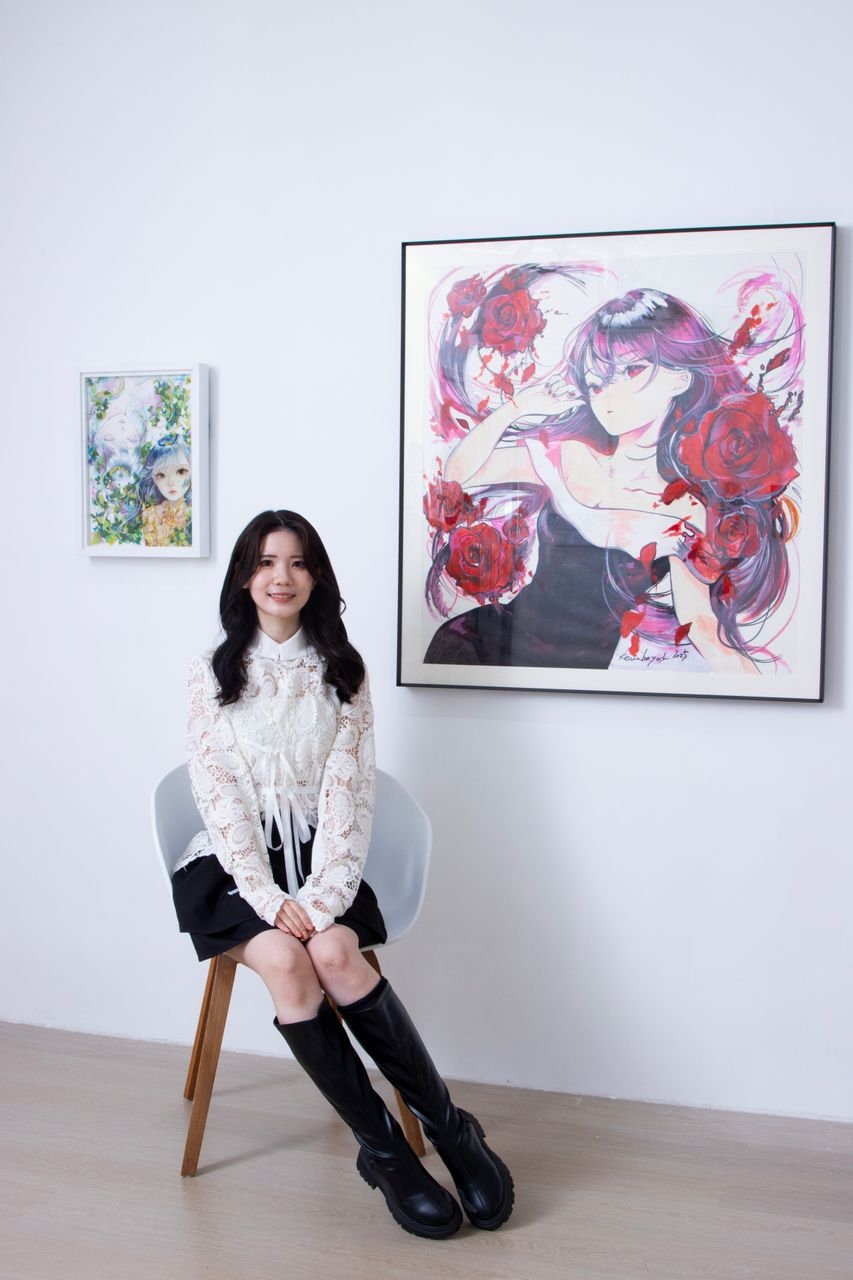
Inside the Studio
Kevin's creative process begins with an overarching concept for an upcoming exhibition, brainstorming around ten ideas at once before sketching at least two rough compositions to find the clearest expressions. Details of the face come only in the final stages. A single painting requires about 15 hours of drawing time, plus roughly five hours of planning and refinement. The most challenging aspect is imbuing the work with an undeniable presence. Sometimes the energy clicks; other times, no amount of revision quite captures it.
Women stay at the heart of Kevin's artwork because she is one, and she has wrestled with that identity for years while striving to remain strong. Childhood memories of playing with dolls, dressing them up, and finding simple joy in them add a layer of personal nostalgia. She feels occasional pressure to make them smile or appear more approachable as comments labeling them "scary" or "hard to relate to" began to appear over the years, yet she resists. If a viewer pauses to wonder why the woman isn't smiling, she explains, that curiosity becomes the first meaningful step toward deeper engagement.
Her work has extended beyond gallery walls through collaborations. Projects with Hatsune Miku, a character she has long admired, and brands like YAMAHA and Pentel push her to adapt her quiet intensity to cuter, more approachable aesthetics. The shift is challenging; she often declines offers that don't align. The Miku live-painting collaboration felt natural, tying into her growing interest in performing authenticity live.
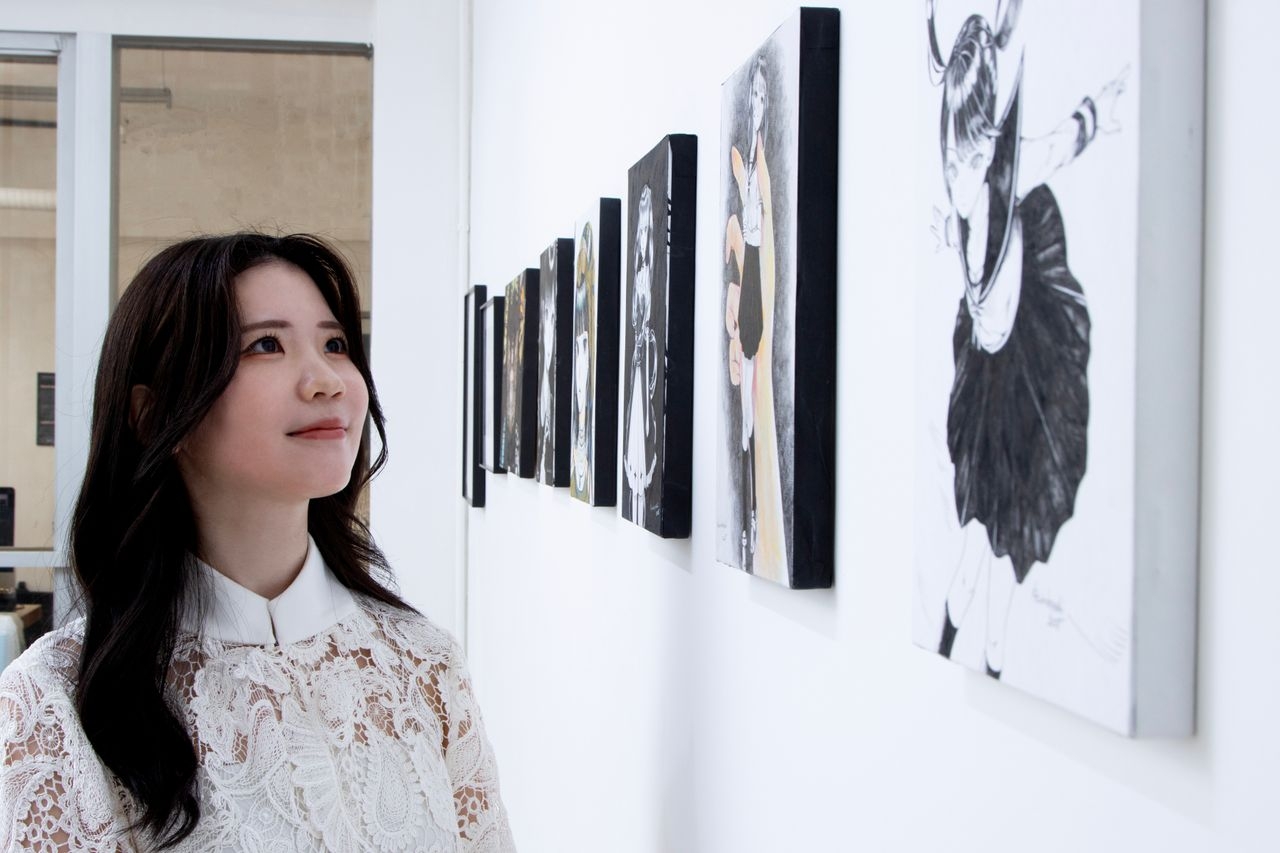
Beyond the Canvas
Since 2021, Kevin has served as a part-time lecturer at Kyoto University of the Arts, teaching mostly online from her home in Tokyo. She approaches students with great care. "I'm careful not to break their hearts with one wrong word," she says, aware of how fragile creative confidence can be. Her advice: identify one theme you truly want to explore from the heart and pursue it deeply over time. Trends come and go quickly, particularly as generative AI raises doubts about handmade art in recent years, but sustained dedication, she argues, creates lasting depth and meaning.
Audience reactions have differed across cities. Though Kevin hasn't traveled much before her Hong Kong exhibition, fan messages continue to arrive steadily from places like Taipei, Shanghai, Beijing, and Jeju. Hong Kong supporters were particularly vocal, sending messages urging her to visit and expressing excitement for MUTE. Meeting her fans in person felt deeply rewarding.
New Horizons
Looking forward, Kevin envisions expanding her reach, dreaming of more international exhibitions in more cities, and performing live drawing events worldwide. These performances serve as proof of human touch in an era of AI uncertainty. Since last year, she has been creating physical dolls; she hopes to present them in public soon, with plans to integrate them into future shows.
Kevin's journey, from a determined high schooler selling her first piece to an internationally exhibited artist and educator, mirrors her figures. They are silent, enduring, and beautiful on their own terms. Her artwork invites viewers to linger with the silence of the unsaid, discovering strength in restraint and beauty in self-possession. Her dolls don't explain or apologize; they simply exist, and in that existence, they empower quietly, steadily, without apology.